I don’t know about you, but I’m excited about the speakers so far, okay? But so far. So thank you for this introduction. Today I’m going to share my life story and the current crisis in South Sudan. So yes, my name is Jacob Atem. I’m a PhD student at the University of Florida, Gators. I’m married to my beautiful wife Linda, and we are actually expecting our first-born child. So that’s a fatherhood. How many of you guys heard of the term Lost Boys of Sudan? Oh, wow, everybody, 99%. So I am one of the original Lost Boys of South Sudan. You can, there’s a lot of coverage since 2001, and up to now there was a huge coverage back then. But to tell you more about the story of the Lost Boys, I grew up in South Sudan in a small village called Mar. I’m a cattle herder. My job was to look up to the cattle along the Niles. That’s my job. Some other chore would be make sure when I grew up, you know, I have to make sure I take care of my father and my mother. And so, you know, you can see we are a nomadic society. So I grew up where there’s nothing but fishing and taking care of the cows. Now the Lost Boys stories, and we never actually wish on anybody, what we have gone through is really, really terrible from 1983 to finally when the Comprehensive Peace Agreement came in 2005. Now my story is I was looking after the cattle one day when all of a sudden there’s a war broke out in my village. And that’s where my village was attacked. As you can see, we start walking at that time they called Ethiopia. And at this time, I’m about six or seven years old. And when we start walking, you imagine like it’s three to four months, it’s not just like take your time here, you know, from Gainesville, it’s like Ocala, okay? We’re talking about over 2,000 miles here. And as we were walking, you can imagine there’s no cars. A lot of things that are happening is seeing your friends dying, animals, people shooting at you, the enemy is following you all the way. So we start walking from South Sudan to a country called Ethiopia. You guys are good in geography, so you guys know that, right? Where geography is, where Ethiopia is. On our walk, as you can see, we didn’t have water or food. And this is where a lot of us ended up drinking their own urine when you can find. And I always tell my friend, it’s nasty, but if you were one of the lost boys of South Sudan, you would do what you need to do. So fast forward, we came to Ethiopia. We stayed for a couple of years, and then after that, in a couple of years, we were chased out at the gunpoint to come back to South Sudan. The same is to start all over, diarrhea, diseases, facing starvation. You know, we were very, very skinny and mild nurse at that time. And then we came back to South Sudan. The enemy from the North Sudan was following us, and then we’re like, okay, what’s next? We have to walk another three or four more months to a country called Kenya. We stayed there in Kenya for nine years. And you can imagine the feeling that one has. It’s like you leave your house or your hut, and you think you’re coming back tomorrow. So first, we left South Sudan, Ethiopia. We’re like, okay, tomorrow we’ll come back to our home. And then you leave Ethiopia to South Sudan, and then you’re like, okay, we’re going to come back. And then you go to Kenya, and then you can see nine years. Well, in 2001, the United States government said enough is enough if we can be described as tired and hopeless. That would be us. And they decided to bring us to the United States to be called the refugee asylum or refugee status. And so at that time, that’s where there’s two groups. If you’re 18 and above, you’ll be under foster care. But if you are over 18, you will be coming to America. Once you came to America, you have to find a job three months and welcome to America. That’s America for you, American dream. Oh, and by the way, if you are 18 and above, you have to pay Uncle Sam for the airplane ticket that you took from Africa to here. So you can see the difficulties that the lost boy has faced. So this is Michigan. Wow. You can imagine hot weather, and then you come to Michigan. The first time it was so cold. It was really, really cold. They said, oh, it’s snow. It’s white as snow. What does that mean? I remember being so freezing cold to the point that I’m like, oh, mom, if I go to school, would I die from snow? Would I, you know, can I? The first time I go, I said, make sure call 911 because the snow is coming. So life in Michigan was good. And then I work hard. That time I barely speak English. I work hard, and I graduate high school in my bachelor’s and my master’s. And then I co-found an organization called Southern Sudan Health Care Organization. I have no idea how to decide an NGO, but we started this NGO. And my goal is to give back. I mean, America is a land of opportunity. As I just told you my life story, I eat three times a day now. At least I’m not walking over 2,000 miles. But what is my calling? So this is where I started Southern Sudan Health Care Organization to build a health clinic in my country. So and this is right now, that dream came true where we are seeing over 100 patients a day. I couldn’t believe it, but hey, it happened. So we go back. This is where I went back. We go back each year because I’m a student to go take the group. Unfortunately, as you know, Southern Sudan became the 193rd country in the world. It’s the nearest nation in the whole world. And this last December, unfortunately, when I went back with the two faculty from San Juan in Florida to Southern Sudan to do the mission work, the war broke out. The war, to just summarize it, is it started out as a political struggle. The Sudan People Liberation Movement is the liberators who fought for us for all these years from 1983 to 2005. But when we got independent, one of my colleague, the speaker who we’re talking today about accountability, to tie it back up, there was political struggle. There’s no accountability. They kind of lost the vision. They are unfortunately, that political problem turned into an ethnic conflict right now. And if you read New York Times, we are now everyday reporting on Southern Sudan. So just again, there’s a political struggle. On the left-hand side, you can see there’s the president and he’s former vice president. The Yigmechar, they actually from the same party, but there’s a political struggle. The Southern Sudan, it’s a new nation. You know, it’s just a baby. But the question is, how do you move from a guerrilla war to a democracy? And how to define democracy is a different one. So you can see that struggle is going on right now. When I was in Juba, actually, my wife was working in Southern Sudan already, and I was with two Americans. And what happened is, I went to the nearest state, which is Jaleh State, heading to the clinic. This is December 15th, the war broke out. I was stranded in Juba, in Bortown. My wife was on her way, in Juba, on her way to be evacuated to Rwanda. And so you can see what we have gone through. And I’ve gone through again twice because I had to call my American government, and our government actually came and tried to rescue us. And some of you guys who read the news, our plane were getting shot at when they came to rescue us. And three or four suicide men were critically injured. They had to be taken to Antebi. Thank God, eventually, I made it out of that. And so you can see the devastation that I’ve gone through as a lost boy is a recycling of the violence again, where now there’s more lost boys in different cities. Internal displaced people, there’s almost like a quarter million right now. And I remember when I was in the butch for that long, that if I didn’t have American passport, you can just imagine what they’re going through right now. So what is the political solution? As we speak today, there is actually a ceasefire sign in Addis Ababa. That ceasefire is not holding. For some of you guys who saw it on TV a couple of days ago, John Pandegas, a special envoy booth actually made a testimony at the White House. This is really a current issue that is going on. So the solution is you hope you have a democracy where you have interim government, where you can have freedom of speech. So there’s no political space to actually talk. When you say something, you go to jail. So just to tie it back to a human right watch, there’s actually a report on South Sudan on that one. So you can actually check it out. But again, I am so glad to be with you today and share my testimony. And thank you. And one thing we say as the Lost Boys, we are called Lost Boys, but we never lost from God despite of all this. So thank you.



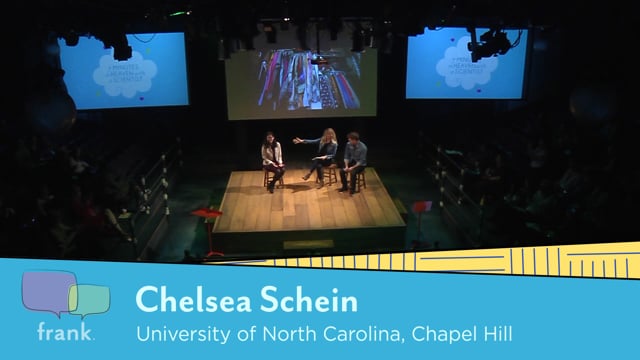 Seven Minutes In Heaven… With A Scientist
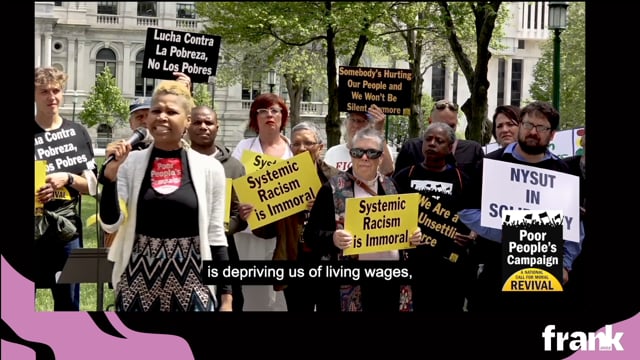 Moral Uprising with the Poor People’s Campaign
 The Unintended Consequences of Emotional Appeal