Thank you. All right. So I’m going to share a little bit about what I do. And I promise the language I use is going to be way more fun. And as much as I’m talking about what I do, I’m also going to talk about some things that are happening in my world that I think are going to have some profound and I think very exciting implications in your world, particularly for those of you out in the business of public interest communications. So we’ll talk a little bit about what I do. So in a nutshell, I help make brands cool. And the way that I do that is by creating content and experiences that connect brands to the passions of people. But more specifically, the things that people are passionate about with popular culture, music, and entertainment, and fashion, and culinary, and all these different things. But beyond just making brands cool, I also try to make them good. And the way that I do that is by trying to find ways to make sure that the content experiences that we’re creating are somehow making a positive impact in the lives of the people that experience and consume them. And so for the majority of my career, for the better part of the last 10 years and even beyond, my work has been with this amazing group, this amazing generation called Millennials. Yes, you’re so surrounded with love. And this generation, I find fascinating just because I just think they have such an amazing set of values, which I’ll talk about. But also, in some ways, I’ve kind of grown with them. Even though I’m a little bit older than them, I’ve still kind of grown up with them in a lot of ways. And what I find really interesting is that not only do they impact popular culture, but they have the power to shape what we buy and sell, what we value and we don’t. And I’ve been very fascinated by that. And that fascination, that curiosity has taken me around the world. On a quest to better understand their passions, their values, what do they value and why, what are they passionate about and why, and how are all these things impacting their world for you. And with that, I’ve found this fascinating shift in values that are being driven by this generation that’s having a profound impact not only on my world in marketing and branding, but also in popular culture overall and in public interest. And this impact is going to be profound in large part because of the size of this generation. We’re talking about the largest generation in history. In addition to their size, just in population, their buying power is tremendous. They have the most buying power that we’ve ever seen. And in this lifetime, I think we’re going to the next five years expected to be over two trillion dollars. And so the shift in values coupled with that shift in buying power is going to have significant impacts on the marketplace. And I share this stat because I think it’s important. Over the next 10 years, 75% of global workforce will be millennials. For the next 10 years, 75%. So I’ll tell you that for two reasons. One, if you’re not a millennial, you need to be very nice to them because they will pretty much be running shit in the next 10 years. And the second which I find really exciting is that they’re entering with a whole different set of values than previous generations. And I’ll give you a couple of examples. 80% of this generation want a job that doesn’t just pay the bills, but also has a purpose that matches their passion. And I’ll just take a pause for one second because yesterday Aaron and I told you that these Carell Fellows and these students were going to come up here and they were going to burn the stage down. And they have done some amazing presentations that are all around their sense of purpose and their sense of passion. And they’re entering into the workforce with these values. 84% of them say making a positive difference in the world is more important than professional recognition. And they also have a different expectation in the brands. 85% have a more positive image of a product or company when it supports the cause. And I was very interested in why this shift is occurring. And again, no matter who I talked to, whether it was kids at a skate park in Shanghai or in Favella and Rio or in South Side Chicago, whatever the language or the context, a lot of the reasons why they said that it’s so important to them was the same. And that is because the older generation fucked it up. And now it’s up to us to fix it. And they are. And they are. They are activists. And they are also supporters. And they’re using their voice and their wildest to help shape the world and in the way that they want the world to be. And I knew this was going to have a big seismic shift and implication in my role as a marketer and brand and marketing and advertising and so forth. But what I didn’t know was the impact this was going to have on me personally. And the way it was going to impact my peers in the marketing and advertising world. Because what I found out when talking and having a conversation with a lot of my peers is that there was this growing, unstated, but yet definitely feeling of unfulfillment. No matter the amount of campaigns, the number of events, all these different things, increasingly there was this kind of feeling of there has to be more. There has to be more than just selling more products. I mean, we’re using the power of cool to make a profit. But the question we were asking ourselves increasingly was can we also make a difference? And the more I started having these conversations, the more I realized that it wasn’t just marketers, athletes, entertainers, artists, designers. The creators and curators of cool were increasingly asking themselves how can I use more of my social influence, my popularity to impact the greater good. And this quest and this thing that we’re all looking for is also inspiring a whole new wave of entrepreneurs. Entrepreneurs, not just social entrepreneurs and people who are creating nonprofits and things that are just making a great impact from a societal standpoint, but people who are looking to build multi-million dollar, multi-billion dollar businesses that are putting social good at the core of what the brand stands for. I’ll talk about brands such as Tom’s and Wobby Parker and even you see Zappos with a lot of these ethos as well. It’s this fascinating time where brands and all of their resources and infrastructure and technology and consumers with their trillions of dollars in buying power and celebrities with all their social influence are all coming together and asking themselves the same question, how can I use all of this to impact the greater good? And I think it’s like the first time in history that we’ve seen these things coming together. And I think it’s fascinating particularly for this group because this has literally led us to your doorstep. And as I stand in front of you here, Frank, I stand here as one of these people who are here because I’m trying to figure out how to continue to make a greater good through the work and the resources and the talent and the access that I have. And this is a field that you’ve created and dedicated your entire careers to. And now you have this interesting set of assets and resources potentially to fight or address a very significant challenge. And this industry has historically been about serving the public interest but increasingly which you’ll see moving forward is not just about serving the public interest but how are you going to earn the public’s interest. And earning the public’s interest is going to be the key challenge of the public interest industry. And the reason why is because the media landscape is changing. We all are on mobile devices and because of the way that we can program our phones and our social fees, we don’t have to pay attention to anything that we don’t want to pay attention to. We don’t have to see anything we don’t want to see. And we can program and filter out everything else. And in addition to the fact that we have control over, there’s all these other algorithms that are invisible to us that are also filtering out things that we may not care about or that they don’t think that we need to see. As Eric Schmidt from Google said, it will be very hard for people to watch and consume something that has not in some sense been tailored for them. So the question that is going to be increasingly asked for the future of this industry is how do you make the public interested in the information that truly is in the best interest? And the way to do that increasingly is use the power of popular culture, connected to the public’s passions, including popular culture and make it stand out. Sophia spoke early about the power of satire. We’re seeing people such as John Stewart and John Oliver and Bill Maher from a satirical standpoint. But we’re also seeing new media properties such as vice explode by just telling people what they feel they should know. And what this is doing is now is making public interest now more relevant and cool than it was, than it has been in generations, maybe ever. I mean, just think about this. The field that you ran is probably more relevant and cool than popular culture than it’s ever been. You guys have become the new rock stars. And brands are taking notice. You know, they’re paying attention and are tapping into the public interest. And you see brands like Starbucks trying to figure out how can they help address employment issues. But even with all of these things, the driver still lives this generation. Because this generation is the one that’s just saying, fuck the lines, forget the rules. Corporations of popular culture can all be forces for good. You don’t have to choose. They don’t have to be enemies. Because the things they’re looking to solve and the impact they’re looking to make, they want all hands on debt. But the key is beyond just starting with purpose and a genuine desire to impact change, we must also, and we need, we must also have and we need knowledge on how to do so. And that’s what you all bring to the table. This shift needs your leadership now more than ever. It needs your experience. It needs your desire to collaborate, to co-create, and to lead. We spoke yesterday in terms of the big tent here, Frank. And that big tent is intentional. And it’s a credit to Ann, and Kristen, and Aaron, and all of the people who have helped make Frank possible to create this tent that’s big enough for all of these different careers and industries and backgrounds and personalities and perspectives to all fit within. And so with all of us being here together, I want to lay out some challenges to the people that’s in this room. For those of you like myself who work in the brand space and the corporate space, we must find ways to make brands understand that they need to represent and they need to stand for a greater purpose and mission. We need to find greater meaning in brands. The communications consultants in the room must move beyond the traditional silos. It’s not about profit and non-profit. It’s not about public interest and self-interest. It’s not about good or bad. It’s about finding ways to bring everyone into a tent, towards working for a greater good. The non-profit and foundation representatives in the room, we need you to be our storytellers. You are the ones that are in the streets. You are in the communities. You know how all of these things are impacting people in very real and personal ways. And we need you to elevate those stories in ways that all of us can see and be touched by. And the researchers must hold us accountable and share what they learn and what truly motivates people to have. And last but not least, to the young people that are here, I also have a challenge for you. I want to challenge you to stay true to your convictions. You are walking into the workforce with a different set of values, with an ideal of ways that your work and your talents can impact a greater good through employment and through jobs and through organizations that haven’t been tasked with solving these problems before. And some of you would be very fortunate to work for the Spitfires of the World and some of the great public interest organizations. But a lot of you will not. You will be working in organizations that don’t value these things when you walk through the door. But I challenge you to stay true to these things because this time needs your leadership and needs your conviction and needs your courage. Because you’re right in a lot of ways the generations before you have fucked it up. But together all of us in this tent can help fix it. And it’s an exciting time for all of us to do it because the first time may be ever, good is now the new core. And your time to lead is now.




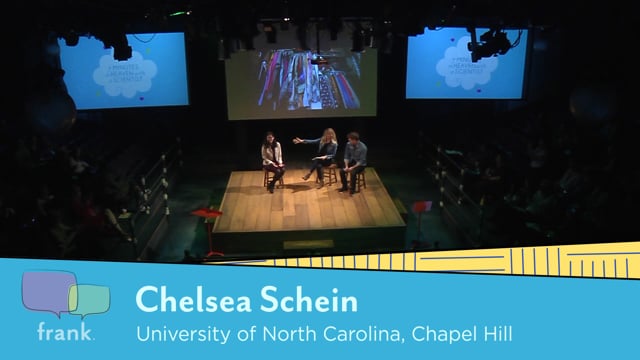 Seven Minutes In Heaven… With A Scientist
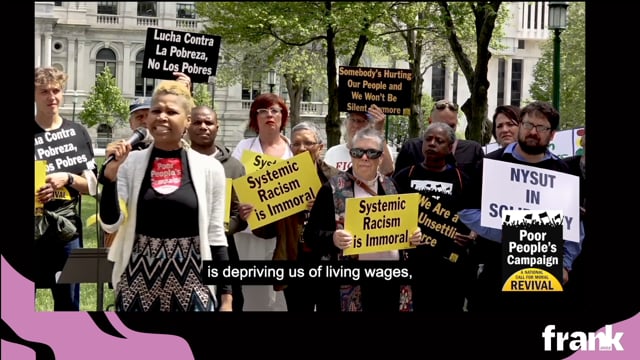 Moral Uprising with the Poor People’s Campaign
 The Unintended Consequences of Emotional Appeal