Thank you. Very nice to be here. I wish that I had been up front to share this last talk. I think there’s going to be a lot of overlap between the talks and I think a close relationship. I need my slides. So the title, the arithmetic of compassion, where did it come from? Came from a poem by a Polish poet named Jupy Gniew Herbert titled Mr. Kojoto reads the newspaper. And I’ll just kind of paraphrase it. So Mr. Kojoto is reading the paper and on the front page there’s a story of the killing of 120 soldiers. And right next to it is a story about a murder family crisis and the father killed the wife and two children. And Mr. Kojoto’s eyes slips very indifferently over the killing of 120 soldiers. I said the war lasted a long time. You could get used to it. Onto the murder and he dwells with delight on all the details of this gory incident family tragedy. And he says then for 120 dead you search on a map in vain. Two greater distance covers them like a jungle. They don’t speak to the imagination. There’s too many of them. The numeral zero at the end changes them into an abstraction, a subject for meditation, the arithmetic of compassion. And when I read that I realized, well, this is what I’ve been studying the last 15 years. And it’s an appropriate term and that’s what I’ll be describing. I’m a researcher. I do experimental research in psychology and try to apply it to what goes on in the real world. So wider good people and their governments fail to act against genocide, mass atrocities and other large scale human and environmental catastrophes. And so I do a lot of work focusing on genocide and mass atrocities. But the principles apply just as well to other things that happen in large scale like, you know, famine, pandemic, disease, poverty, and also environmental degradation. Things that are large in scale and that we learn about through the statistics, the numbers, the science. And generally we tend to, I believe, underreact to these. And I’ll try to briefly in a few minutes describe some of the psychology behind this underreaction. And in hopes that by doing so it will help us confront this strange way that our minds work in order to perhaps overcome some of these obstacles. So, oops, the obstacles, the three that I’ll focus on. And I’m seeing that I’ve got to get my slides right. I’m looking at the wrong side. Okay, so there’s three things. One is psychic numbing. The other is pseudo inefficacy. The other is the prominence bias. So the first two of these are very well known. When you hear about them, you recognize, oh yeah, that’s the way I think. But it’s one thing to kind of know and recognize it. It’s another to really take it seriously. And I hope that by doing the research that we do, we’ll get people to confront these quirks in their arithmetic of compassion in order to deal effectively with it. The third, the prominence bias, is a little different. So psychic numbing and pseudo inefficacy are related to what Conerman talks about, thinking fast and slow. You may have seen this book. It sold 3 million copies. And he describes how the mind thinks in two ways, very fast, intuitive, gut feelings. And of course we can think more carefully, more analytically, more scientifically. But as he says, the mind is lazy. The default mode of operation is this fast gut feeling. And most of the time it works. This is how we get through our day by kind of sensing things around us, reacting quickly, instinctively, and it’s a good guide. But just as when we, like the human eye, is also a very skilled faculty that we have, visual perceptions, very accurate. We couldn’t navigate the world if we couldn’t trust what our eyes were telling us. But if you’ve ever seen visual illusions, you know that there are certain patterns of visual stimuli that fool the eye. You think A is larger than B when B is really larger than A. So as good as the eye is, it fails in certain circumstances. Well, as good as this intuitive gut sense of feeling is for most of our decisions, it too fails in certain circumstances. And one way it fails is that it can’t count. The feeling system can’t count. It can’t scale up. It’s designed to protect, to help us react to the individual, to protect ourselves, the people right in front of us, our family. It wasn’t well designed through evolution to think about large numbers of people at a distance being brutalized. There we have to do the math and scale things up with more analytic thinking. Let’s illustrate this very briefly. So here’s what we call two normative models that if we’re thinking carefully, this might be how we might want to value human life. So the figure on the left shows that if we believe that all lives matter and they matter equally, then as the number of lives increase, the value of saving and protecting them should increase in a straight line. We add them up. There’s another normative model. We might want to tweak this first model so that if we get on the edge of, say, an extinction, like a genocide or extinction of a species, the very next life lost is even more important than the one before it because it could be a tipping point and cause extinction. So these are ways we might want to value the risk to human life. So how do we value human lives when we’re working on our feeling system? Here’s two figures that come from empirical research, but we’ll all recognize it in ourselves. One is on the left, we call it the psychophysical numbing. The very first life is most important. The difference between zero and one is huge. We’ll do anything almost to protect an individual in distress. The second life doesn’t feel twice as valuable as the first and it’s going to get this diminishing sense of importance. So that difference between zero and one, which is so huge and it will do so much to save that life, if I tell you that there are 87 people at risk, oh, suddenly, no, it’s 88, you won’t feel any different. 87 and 88 feels the same. So the life that’s so important when it’s the first life becomes less important in the context of a larger tragedy. So we talk about all lives matter, well, they don’t all matter equally when we’re operating on this feeling system, when we’re not thinking carefully enough about it. So when we first heard that there were 200,000 people murdered in Darfur a few years ago and then said, well, no, maybe it’s 300,000. It’s all the same. It’s 100,000 lives that just kind of bounce by us as though they had no value. But that’s not the worst of it. Sometimes, not only do we flatten out and become insensitive, we actually lose feeling. And that’s what the figure on the right shows. It’s a decrease. At some point, you just stop caring. And we’ve got experiments that show that. Let me briefly illustrate with some data from Syria. I know Syria was just spoken about. This is a cumulative death toll in Syria, a Syrian conflict from about 2011 to last fall, heading up to 250,000 cumulative deaths. I’m now told it’s 440,000, so it’s even worse. But that arrow is pointing to a point in 2012 when the stories were coming out of Syria and people were saying, this is horrible. Do something. Help us. This is just one of the stories that came out from the refugees. We’re being killed here. Help us, please. There are a lot of these stories. This is at the low point of that curve. And you see that, well, nothing happened. It just kept going up and up and up. And then related probably to the last talk, we all saw this picture on September 3rd. And this picture was front page news all over the world. And if you look at searches on Google for the terms, Alon, that’s the boy’s first name, if you look in Syria and refugee, these three terms, and you track the searches before and after that picture, here’s what it looks like. So you see that before very low level, of course, no searches for Alon before he became famous in that tragic way, but you see very low level interest in Syria refugees. This goes way back. You see a flat line. Then you see the spike when the picture came. And then you see afterwards, of course, people after a month, they stopped searching for Alon. But the interest in Syria and refugees has continued on at a higher level than it was before. I have some colleagues in Sweden who sent me some related data. In Sweden, they have Syrian refugees coming in. The Swedish Red Cross collects money for Syrian refugees. And think about the money that they collected on the two days before the picture showed. It was about $30,000 per day. And this is what it looks like. And then the picture came out and it went from $30,000 to $500,000 the next day. And it stayed elevated. Of course, it’s going down, but you see the impact of that one photograph. But then there was a news story that came out the day after Alon’s picture was shown. Basically, the headline, 14 Syrian children drowned yesterday. Why do we care more when it’s only one? So you see the difference between the importance of the one and how we lose it if we’re relating to our intuitive feelings. We need to do the math and think about what the appropriate response is. So bottom line, what do we need to do? We have to think about this interplay in our minds between feelings and reason. And what I’m saying, which comes out of research, is that our fast, intuitive feelings are not reliable, or not dependable motivators in these situations. They’re like these illusions. They lull us into complacency. We can’t trust them to guide us in the face of large-scale human and environmental crises. We need to create laws and institutions and ways of education and communication that are designed in light of understanding the psychology in order to combat psychognomic and other psychological obstacles to effective intervention. And I’ve kind of skipped through this, what we call pseudo-inefficacy. It’s a false sense of inefficacy in situations where you really can make a difference. But I’m happy to talk with you about that later. My time is up. Thank you for listening.



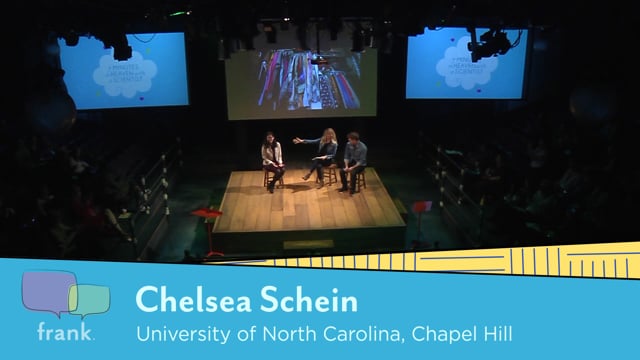 Seven Minutes In Heaven… With A Scientist
 Moral Uprising with the Poor People’s Campaign
 The Unintended Consequences of Emotional Appeal