Hi. Hey, everybody. Hi. Everybody wanted us to get stools. We had like nine people ask us, we didn’t want to do stools. We’re going to stand. Our pace. Before we start, can I have just a minute, because I’m on stage with Amy Ray. Yeah. I have a question. I’m going to stand. Before we start, can I have just a minute, because I’m on stage with Amy Ray. Yeah. I have a question. I hope someone’s taking my picture. No, I mean, you got to understand this how I listen to music. I like the end of the day, I’m worn out. I find a quiet place in the house. I get my headphones, good headphones. I lay down and I just like disappear into music. And for a lot of time, for a lot of years, it’s been your music. And so, I just have to say, I mean, we’re going to have a conversation now with somebody who I truly think is one of the most eloquent and brave songwriters we have. And so, I think that’s going to be a great opportunity to talk about this. And so, I just have to say, I mean, we’re going to have a conversation now with somebody who I truly think is one of the most eloquent and brave songwriters we have. And so, I’m thrilled to be here. And so, fanboy moment over. Thank you. Can I say that I lay down at night and listen to NPR? Oh, that’s fine. And the podcast. I think we’re off to a great start. A great start every night. Okay. We didn’t get stools. So, if I’m in your way, somebody just holler almost. We’ll just, we’ll pace around. So, let’s, here’s where I’d like to start. Everybody kind of knows the story of the Inigo Girls, Greed School kids. You got a guitar, I got a guitar. We start playing to come big stars. And that’s, it’s a great story. But what’s interesting to me and doesn’t get much discussion is that at the very same time that you guys were starting with music, from the very beginning, being engaged with community and sort of doing things for your community was very much a part of what you guys were giving back before you even got. Can you talk a little bit about kind of why community involvement was such an important part of? I think it was a function of, we were both raised in families. I mean, our families were very different from each other’s. She was raised in a very progressive family with a mother who was a librarian and a father who was a minister. And a professor of theology. And they grew up in Connecticut until she was nine and then she moved down to Georgia. And they were very much aware of the politics around them and the importance of being engaged. Black Panther movement, the, you know, all the, there were things going on in Connecticut where there were highly, like racial things that she was learning at a very early age and learning about the idea of being engaged and being, trying to change things. And then I was raised in a very conservative family that went to church about four days a week. And what we learned was you give to your community and you tithe. But fortunately I had really, my parents, although they were conservative, were really cool and they were super generous. And the whole, and very southern, and the whole thing was you worry about others before you even worry about yourself all the time. And probably not a good thing. But, but I, so we both came together with this idea that you are part of a community and you give back, but we just did it for different reasons. And then in school, you know, I had two older siblings who were involved in student government all the time. And so that was like the path that you took. You ran for office, you were part of the student senate, you did this, you did that. So I went through like a period of being very conservative. I had like a Reagan bumper sticker on my Camaro, you know. It was pro-life, you know, all this, just very like a completely opposite of who I am. And then I just had a moment where I just shifted and the idea of being involved in the community took on, you know, this more progressive left kind of thing. And it was probably some teachers, some high school teachers I had that really did it for me. And taught me the right stuff at a public school, which is very, yeah. So I think, I think we came at it from different places. But when we got together to play, we were in high school, we were in 10th and 11th grade and we was a year older than I and then me. And it was all, I think it’s easier when you’re young because it’s for fun. You’re doing it with your friends. You’re never thinking about profit. You’re learning about lyrics in English class and you’re reading all this great literature and it’s all like in this space. I don’t know, community space immediately because it’s friends and teachers that you’re doing it with. So we carried that through. That’s so cool. So do you think that the music sort of fueled the activism in you or does the activism fueled the music? It works both ways. I mean, for us, you know, when we were young, when we wanted to get together and do a gig, it wasn’t, let’s go play a gig because we want to play music. Only it was like, what can we do with this? We’re going to have this opportunity to have 50 people in a room. Let’s raise money for the Meals on Wheels for people with HIV in our community. Or, you know, let’s work with this green piece issue. I mean, it’s just like little ideas in the community or there was a homeless shelter we really worked with. You know, so I think the point of us, just for some reason, we just lucked into being with each other. And both of us had this idea that whenever you do something, you try to make it a little bit bigger than it is. So you don’t just get together and play music. There’s got to be some other reason just besides that. Once you’ve got the room for it. Yeah, yeah, because then you have this tool. It’s like a resource. So, well, let’s talk about music art storytelling. So, one of the things that we sort of think about is that music can kind of change perception. Or at least, you know, it can be a very effective way of influencing perception, which we think of as kind of a foundation for social change. You think that’s true? That music can influence perception. I think it can be true. It can be sort of a foundation to change. I think different artists have different ways of approaching that. And some do it very quietly and they just use their money to fund things that are happening. And I think some artists write great songs that are didactic and tell you a story that you needed to know. Like maybe Zach Diller-Rochert from Rage Against the Machine was very good at sort of like explaining what’s going on with his appetizos. Or Joan Baez might have sung a song or Mavis Staples that was like specifically about some situation. And then I think what Emily and I do is more around we think that we, that you gather people together in a space and you try to break down the barriers by just having people focus on music and the act of listening and the act of being together and forgetting all the things that divide us in one space. And that’s another thing I think that can create, that’s a catalyst for change because it emboldens you and empowers you in some way. So I think there’s different ways. But I also think like I learn by listening and by listening to music and reading books and poetry I’m learning about things and events that I might not have known about. And then I’m going to look further into them. What do you think you’ve changed? You yourself or you and Emily? I don’t think we’re, I would say that we’re part of a change. Uh-huh. Yeah. And it’s still evolving, you know. So… Do you ever look back for how you’re doing? Look back at… Feeling progress or not progress? You mean in the grand scheme of things? Yeah, the grand scheme of things. In the context of like liberation or like career? Well, no, you feel like you’re part of a change or an evolution. I see change happening and all the time because I think that I see that when we started, when we were very young, there weren’t that many people running sound that were women or you had to be really in the closet if you were gay and you wanted to be safe in some situations. You know, like at a gas station in the middle of some small town or area or something. Right. And I see that that’s changing and shifting. But it’s hard for me to… And I think like Rock Camp for Girls has really helped from a feminist perspective things and I think I see our audience shifting where it used to be that people that were in some areas, people that were identified as straight didn’t come to our shows because it kind of gave them away as being an ally of gay people or something. And then people that were gay might have been afraid to come because then it showed that they were gay. But what we have instead is in some certain cities, depending on the area we’re playing, a very mixed audience, very mixed as far as gender and sexuality. Right. Not in race because that’s still very segregated I think and there’s a lot to talk about with that. But I see progress in that way and I see progress in experientially, just going into radio stations for interviews or doing press or whatever and just the conversation is different now than it was. And we’ve grown. Less focused on sexuality? Often less focused on sexuality unless it’s a political conversation than it is and that’s fine because I love that. But the language around sexuality for instance and the language around the ideas of being queer have shifted from something that’s very elementary to a larger complex discussion about gender and transgender issues. The language is different. Even for us, we didn’t know when we were in high school what gay meant. Do you know what I mean? We weren’t even… We were living in small suburban outside of Atlanta, in a public school. We thought gay was like bestiality. We were really sheltered to the point of crazy and it was crazy. And then so even… We grew with the changes as the thing. That’s why I don’t feel like… We made these changes happen. I feel like we were changing because our audience was changing us and making us braver and we were trying to make them more brave as well. What role do you think you have played? I think the role that we play as activists is to amplify the voices of the people doing the work and the trenches. We do a lot of work that’s anti-racism and we do a lot of work on immigration issues and we do a lot of work in Native American communities. We do a lot of work around gun violence or the basic left-wing palette, I guess. But we see them all connected. We see that it’s a tapestry. The point is that you amplify people that are not being heard and people that are doing the real work. You try to find ways to fund them. You try to find ways to get the word out about what they’re doing. And that’s kind of what we see ourselves as. Let’s talk about that for me. You have a big platform, right? And you could certainly be an activist who just does the big platform thing. You could just sort of jet around and lend your name to things. It’s not that big. No, but I mean you could just… Just to give a perspective. I drove a van down here. Well, I’m sure. But the point is that you are very grand level about, when you think about activism, right? You said one time, small format important community stuff. Yeah. Why is that the approach? Well, I mean when we were young, it was obviously the approach because we were playing in little five points in Atlanta and what we saw around us was immediate need. We saw people that didn’t have anything to eat. Our friends were getting AIDS and our friends were addicted to drugs. And we said, okay, well, this is… We can work on this to start with, right? And then as we got older, in the early 90s, we started a group called Honor the Earth with an activist named Winona Ladook. He’s a great native activist. And we formed this group and we said, what we want to do is we want to fund existing native led groups that are working on cultural sustainability and environmental issues that are community based. So maybe they need a $500 grant to buy gas to go to a powwow to talk about a pipeline issue, you know, whatever. So we said we’ll do small grants and it’ll be community based and our board members will be representative of all these different tribes and groups in the Americas and they’ll come to us and say, it’s need-based. This is what we need to do for our community. And we won’t dictate that. And then we’ll do program work that’s derived from Winona traveling around the country and figuring out where the needs are. And then one of the things we did during that was we went down to Mexico and visited with the Zapatistas and we saw how they were working, which is also like they have that directive of work in your own communities. Come here and report back. And so we learned from them as well. So what we learned was that it’s just easier to work like that. So rather than work with a bigger group like for queer issues and stuff, like for HRC or something, we’re going to work with Southern nurse on new ground in the South or something. We’re going to work in the streets and we’re going to talk about queer suicide rates and homelessness rates and addiction rates and racism within that paradigm. And we’re going to talk about that. So that’s the idea of us is that we’re not this huge band that can raise $500,000 for a cause, but we can raise $50,000 and do a lot of good with that. So that’s how we look at things is like, what is our… We’ve never been ambitious like we never have been. We’ve always been like, where can we play next week? The really like the hometown girls, maybe we can get a gig at that sandwich shop. I got a deck in Arlington. Exactly. That’s exactly what we’ve been like. And so our activism kind of is the same. It’s like we know what our limitations are, but we know we can do really big things by doing something really small. So the title of this, of our talk, I didn’t do a slide deck thing, so it’s not on the screen. I apologize for that. I’m going to fall down. Is the persistence of optimism. And that was something that came up in our conversation. We talked on the phone a couple of weeks ago. So what does that mean? For me, it means just that there’s always something to be optimistic about when you’re doing what you’re doing for activism. And to find ways to little battles that you can win or little things that you can achieve that make you feel good. And that make other people feel good. And that you know, fuel you to do something else. And you are an optimistic person. I am an optimistic person. Even now. Even now? I’m cynical too. So I have like both things going on. I’m very acerbically cynical. I’m optimistic because I think that because we’ve seen a lot of great things happen in our work. I was thinking about this because I was thinking about a few things that I could talk about or answer your question with. And one thing that we hadn’t talked about was one of the things that fuels me is watching other activists and people that are truly activists. You know, really doing the work and just like amazing people that I get to be mentored by. And they have a persistent optimism. You know, they do. Or they wouldn’t keep doing what they’re doing. And so I was thinking about this letter I got about seven or eight years ago from a man named Herman Wallace. He was one of the Angola three. He wrote me from prison in Louisiana from Angola. And he’s since passed away. But his letter and I wrote a song for him called the rise of the black Messiah after that. And his letter was one of the most beautifully eloquent written letters and so positive. Yet he had been sitting in a six by nine cell for 30 years with one hour a day of outside time. That’s it for 30 over 30 years by the time he got out. He had been in there for over 35 years and then he died two days later. And now Albert Woodfox has been released and Robert King had gotten out a while back. But the fact I go back and read that letter because I’m like that is what it means to be positive. Is in the face of that to still have faith in humanity and it’s still be willing to reach out to people and say, can you talk about this? Can you talk about criminal justice system? Can you talk about racism? And then I was thinking about what I talked to you about when we were through honor of the earth. We go on these tours and we go in and we go do where some of our program work is or where the grants are that we’re giving. One of the grants we had given was to the school in Arlie, Montana, the Salish Nacusum School, which is teaching kids from kindergarten through the 10th grade their language because there’s only about 50 people left that speak their language. And the Salish and Kootenai tribes, it’s like a language that’s shared by a few different tribes. And when you walk into something like that, when I walk in and I see these kids, they’re like so happy and they’re learning all these, they speak English already. And they’re learning all these incredible words of their own native language and they’re being taught by elders who they have massive respect for and they’re completely enrapt in it. They’re not like acting up or can’t pay attention. They’re like so into this thing because it’s them. It’s their culture. They’re being mirrored. And that school doesn’t take that much money. You know, it’s not that big of a… You know what I mean? It’s like you can give them a $25,000 grant and they’re doing this thing that is so much bigger than that. So that’s the kind of thing I look at and I say, oh, okay, this is worth it. I don’t think that’s for us. It’s a phone. We saw what happened earlier so we want to be really careful. So that’s just like, it’s like every time I’m going around and doing whatever we’re doing things, it’s um… That’s great. We’re in a submarine. Oh, someone lost their phone. Thank you for jumping on that grenade. That’s awesome. That is awesome. So what were we talking about? Optimism. You know, and I’ll say the last thing because this is about kids is that we were at Standing Rock and Emily and I and we were visiting the O’Shea Tay-Sacowan Camp, which is like the main camp that’s broken up now and you know, all that has gone on. But we were there visiting and we were playing and I was standing in the middle of this little area and there’s a dirt road that comes down with all these flags behind it. And I looked up and there was just this whole trail of like high school kids, all Indians, coming down the road like dancing and they all had their like mascot shirts on and everything. And it was their field trip, you know, to go to the Standing Rock camps for the day. That’s amazing. First of all, their parents felt good enough to let them go to this area that’s highly militarized, like not the Indians, but the people around it. But they trust the elders enough to let them go. So they all stream down and it’s just like a line of kids and they just sit in this open area and they listen to one speaker after another, elders in their community, talk about the history of the American Indian movement or you know, whatever. And it’s like this is their moment where they’re finally given something for God’s sake. It’s like, you know, big and proud and everything. And it’s really, it made me feel so good, you know, because it was bigger than the pie. It’s not just the pipeline. This was like a moment, a galvanizing moment for so many people around treaties and around youth and what the youth have to be proud of and what they can carry on. And as well as like a lot of the activists running that event were very young and were children and grandchildren of the activists that had taught Emily and I 20 years ago. So they were taking over, which is like, you know, that’s the way it’s supposed to be in any movement, you know, and I see that all the time. So along those lines, I want to ask you about this. So one of the words that has come up a couple of times here, I think it came up earlier today, is this question of this idea of otherness, which is something that I know you’ve talked about. I mean, there are a lot of ways that you could be an environmental activist. You do it through working with Native Americans. So I’d like to talk a little bit about otherness and your own life. I mean, when you were writing songs early on, you write a love song, you have to be careful about the pronoun, right? And think about that. I didn’t think about it because I might have thought about it at some point. Maybe right after we got signed or something. But I always, you know, I didn’t realize what was going on with me gender-wise, but I just sang songs from male perspective and it didn’t occur to me. Actually, until later. Until we got signed by a major label. Yeah, I think I just, and I’m being a southerner from like five generations of southerners with all that crap and baggage and religion and all the stuff that I love, but I hate too. It’s like, I have these filters inside that are automatic and I just filter everything out and just take the stuff I like. And it’s not like denial. It’s just like, this is how I can use this to make something good. And part of it is that, you know, I had a lot of, like I sang songs from a male pronoun and I just, it felt good to me and I’m just going to do it. Right. You know, right? So that, but the otherness idea, I think, was just an early, you know, you just, you don’t know where that comes from when you’re a kid. You just feel everybody’s got an otherness about them. Yeah. And everybody does and then you decide, like, how you relate to that and how you help it, how it makes you have compassion or empathy for people that are really more other than you or more disenfranchised than you are. You know, and then you check yourself in your own privilege and racism and bias that you have yourself too. And it just leads to all that. And so that’s, it’s a gift. You know, it’s like, it’s like when you go to an Al-Anon meeting and you’re thanking people for the, you know, people in your life that have you go to the Al-Anon meeting. Right. So, it’s a gift. Well, you know, this makes me think of your most recent album, Good Night Tender. And I hate asking questions like this because it’s one of those things. I want to ask you about a song. But there’s one song that I just wanted to talk about when you come for me. Which, to me, is as beautiful a song about dislocation. Yeah. As I’ve ever heard. Right. And so there’s a line that I’m going to, I’m going to read it to you guys because I want you to know how good this is. This is a perfect sentence. I didn’t write this. You didn’t write it? No. Who wrote this? This song was, see, this is the thing about that record. That’s the one song on the record I didn’t write and it’s a one of… Which I love you for. But it was one of my favorite songs. It’s written by a songwriter named Heather McIntyre who also sung it. So she’s one of my favorite writers in the South. And I’m kind of like, this is like, I’m going to do a record and I want you to put a song on it. She’s like, all right, well, I’ll let you sing the song. I’m like, no, no, no, I want you to sing the song on the record. And it’ll just be on an Amy Ray record, but it’ll be you. It’s like when you go to a show and you have someone sing during your break. So that’s what she did. And so, yeah, so I picked that song because of the… Because she’s Southern and it’s about displacement in a weird way. Yeah. She’s a gay Southerner raised by a fundamentalist Baptist parents. But you, this song spoke to you in some way. Oh, yeah. Yeah. I’m recovering here. I could have gone with you on that, but I didn’t want to take credit for it. Okay. What’s the sentence? What’s the sentence? All right, here’s the line. Okay. Mama, I dreamed I had no hand to hold and the land I cut my teeth on wouldn’t let me call it home. Yeah, the south. Damn, that’s good. Okay, we’re out of time. We’re going to go to one last question for you. Okay. Obviously, we’re in a new political environment, I think, is what we get to call it. And I’m not going to characterize it, but I think it’s fair to say that Southerners are not going to characterize it, but I think it’s fair to say that social change in the current administration is probably not the same idea of social change as you think about it. I was thinking particularly about the executive order on transgender, doesn’t let transgender students use the public restroom in school that they identify with. So my question to you then to wrap things up is, are you still optimistic? Yes. I am. I am because I see that in very small towns, I live in a very small town in rural North Georgia with a deep history of racism and homophobia. And I live there because I like to live in an area where no one likes me, but no. No. I don’t like to judge a book by its cover and what I find is that there are some really good people enmeshed in this society that will come out and make themselves be known and we can make change. And I believe it. And I think this is how you make change is by having conversations with one person at a time and eradicating these things. And so we, I’ll just say really quickly, we had this woman, this crazy woman who was having a fight with our city council. And to get back at them, she erected a sign on her building in the town square that said historical meeting place of the Ku Klux Klan. Right? I mean, it’s funny. It’s so absurd if it wasn’t so sad. But so this is a town that’s pretty like, it’s a tourist kind of town and it’s very conservative. And we had a march that day. They took the sign down. There were over 300 people that showed up. Now y’all know this is a really small town, so that’s a lot of people. 300 people showed up to get this done. The students at the local college boycotted the woman and the signs down and everything’s out in the open now and there’s a dialogue now going on about racism. That’s killer. I mean, you know, it can still happen. So it can still happen. Thank you very much. Thank y’all. Thank you. Thank you. Thank you. Thank you. Thank you. Thank you. Thank you. Thank you. Thank you. Thank you. Thank you. Thank you. Thank you.



 Seven Minutes In Heaven… With A Scientist
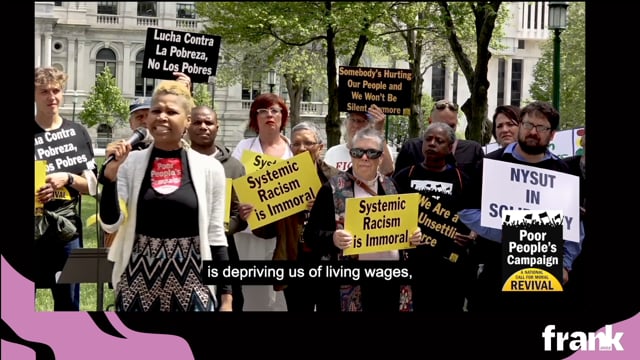 Moral Uprising with the Poor People’s Campaign
 The Unintended Consequences of Emotional Appeal