What’s Your Motive?
AdvertisingBusinessEmotional IntelligenceProblem SolvingStorytellingSustainability
Thank you for having me. It’s been an inspiring day. I’ve been so impressed with all of the speeches but I just want to manage expectations. I am not good at jokes so no humor will be coming from this. I came into social impact and social enterprise a little bit later in life. It really started with a really simple question for me. It was what’s your motive? What’s the reason that you do what you do? It started to creep up on me in 2007. I was in advertising and I was running the Levi’s business globally. I had been working in advertising for about 15 years and I absolutely loved it. I loved the diversity of the sectors. I loved the people that I worked with but I especially liked using creativity to solve business problems. I think that’s something that we don’t really think about when we think about advertising because we look at it as kind of this intrusion but it really is taking innovation and creativity to make a difference. But then a crazy thing happened. I was running this big huge brand that I really loved and I got a call from a friend just to talk. It was this new thing that I just launched at the end of 2006 and it was called Red. These are some of the brands. I’m going through my slides a little fast. These are some of the brands that I worked on so you can kind of see the diversity and your age will tell whether or not you get that dot com that’s up on the right hand side that I launched in 1999. But I got this call from a friend to come and talk to somebody about Red. And my first question was what’s Red and the answer was well it was started by Bono and Bobby Shriver. It’s like well at least the interview process might be kind of cool. I’m interested in talking and they said they’re looking for someone to help build a sustainable business and a global brand to raise a lot of money for people with AIDS in Africa and they need someone to help professionalize them. So it wasn’t the most interesting job description that I’d ever heard. But it really did intrigue me. But my first response was you know I work in advertising right. You know I really don’t have time to volunteer. I work nights and weekends and I just sell stuff. I’m selling jeans and phones and all that kind of stuff. And they said that’s exactly why they want to talk to you because you know how to build a brand and you know how to sell stuff. And so I went to Red and I talked to them for about a year because it was a big leap. It was very new and going from a career that I was very set in felt very confident in to go into something that was new that even if you talked to Bono and Bobby in the beginning they are amazed that it worked because we just didn’t know that at the time. And so what I did was I really wanted to talk to them and it really made me think about what I was doing in advertising. You know I build the brands of my clients. I sell more stuff. I raise awareness for new services. But really was that enough for me and had I built muscles that could actually make a difference in the world. And so I spent a long time. I talked to Red for about a year because I just wanted to understand the business model. I wanted to understand their mission. I wanted to really know what their hope for the brand was. And so I decided by the end of the year I absolutely had to go there and it was the best thing that I ever did. But I went for the business model because I really fell in love with this idea of getting business to be able to impact social issues but not at the sacrifice of building their business. And that really inspired me coming from the business perspective. But I ended up staying for four years because I really fell in love with the mission and I saw the genuine interest that these big global brands had on impacting millions of people’s lives. But what Red really did after four years was it inspired me to start my own thing. So I left Red in 2011 and I started two companies. I started one called Motive which works with very large corporations to help position and scale their social impact. And I started another one that was just mentioned called Whole World Water which is a social enterprise that works with the hospitality and tourism industry to replace commercially bottled water and plastic which I see a lot of plastic around with filtered water and reusable glass bottles. And they give a percentage of the proceeds to clean and safe water initiatives around the world. And I say around the world because as we heard this morning the global water crisis is a global crisis. It’s affecting every country on the planet right now. So it probably gave me too much courage to do them at the same time because it is that has been very hard. But it really did help me define my motive because Red’s motive was very pure. AIDS is a preventable and treatable disease. It’s not a death sentence. It was as simple as that. And Red was about justice not about charity. And that is really something that I started to embrace around how could you scale a model like Red to raise awareness of an issue and create a sustainable flow of funds to a crisis and really realize this motive. And you can see I mean I hope you are all familiar with Red. If I did my job right. That we had amazing incredible brands some of the biggest brands in the world doing some of the most innovative work that I had seen at that time. So the most important thing though stepping back that I’d like to hone in on is really what my motive is which is about a sustainable flow of funds. That’s really my passion. Charity is important. Philanthropy is necessary. Activism is absolutely part of it. But large scale solutions need a lot of money. And that’s where business comes in. And that’s where we need the most creative minds minds like you all to really look at the diversity of solutions the sectors the energy and the focus because business can reach the masses. This is a Manchester United game and that says lace up save lives that Nike did in 2010. And really that’s what we need to be able to do to engage large groups of people to solve some of the most pressing problems of our time without having to sacrifice the bottom line. So when we look at it’s almost like we need to redefine what a successful company is isn’t a company that’s successful balancing economic environmental and social progress not one in spite of the other two. Right now we’re looking at a world where corporate profits are stabilizing margins are shrinking. So we need to redefine what shareholder value is because successful communities are the foundation for successful business. Social impact in my opinion is as much a determinant of ROI as increasing sales. And that’s one of the things that we work with our clients on. So communities that aren’t weakened by poverty or disease or joblessness or depletion of natural resources are all necessary for the future of any business. I mean granted for the future of our world. But where does a business start. And so we think they start by defining their motive. Why do they do what they do. What is their role in society and vice versa. You know as professionals in communication which is what we all are. We need to start by redefining social impact. We’ve talked a lot about language today. And I think one of the things is that gets in our way. I think Liz you talked about activism has a sheen on it that people don’t want to be a part of. So we have to reframe that language and start moving from this idea of CSR to ROI especially when you’re talking to business. So there is some legacy language that I like to kind of break apart that CSR is about a partnership with a charity. That’s it can be. But that’s not what it’s about. CSR can’t engage all stakeholders that it sits in its own little room and its own little area or it’s the passion project of the CEO CSR should what we’re doing in social impact should be impacting the bottom line. And that means it impacts everybody in the business. CSR is this moral obligation. Not anymore. Or CSR is serious and it can’t be fun. And I would say tell that to the man you fans that are in that stadium right now or were and that we can’t talk about the good things. I hear this from a lot of companies. We can’t talk about the good things that we’re doing because it’s too chest beating. And I find that very funny coming from the world of advertising when I think advertising is some of the most arrogant messaging out there. And it’s just about how you talk about it. And the last one. And I know you guys all know this but that sustainability means green. And that’s probably the biggest one that we the biggest fallacy that we have to have to break sustainability means long term. It means that it lasts and then come to think of it. I hate CSR. I think that that’s the worst name for this. This is about social impact for social issues driving the bottom line. So I think this works right. So whole world water. So whole world water was developed to help. And this is going to sound very arrogant but it was designed to help end the global water and sanitation crisis. It’s very ambitious. We are a small organization. We’re very new but we’ve set ourselves very audacious goals. So we are first and foremost a business model. We’re designed to unite the hospitality and tourism industry like I said to replace commercially bottled water with filtered still and sparkling water served in reusable glass bottles. And our members hotels and restaurants give 10 percent of the proceeds that they sell to the whole world water fund. 100 percent of that money will be invested in clean and safe water initiatives around the world. And that sounds 10 percent on a two dollar bottle of water. If you’re in San Antonio or an eight dollar bottle of water if you live in New York sounds like like a little bit of money. But the hospitality and tourism industry is a multi trillion dollar industry. It employs one hundred and six million people around the world and it serves a billion guests. All of us traveling all over. So those 40 cents or that 10 cents from a bottle of water can really add up. And so we are not joking when you know my days at Red we raise two hundred million dollars and about four and a half years. We could raise two hundred million dollars in a year getting the hospitality and tourism industry on board if not more. So it’s really about a groundswell. And there are only just five of us working on it right now. Because the irony is if we don’t start doing things that are changing business models especially on the water sector we’re going to run out of water and drown in plastic. And that is not a joke. So when we look at this we look at this as a win win win win business model because the hotels and restaurants that are joining are reducing their costs by selling their own water. They’re increasing their revenue by offering a premium product to their guests. They are reducing their plastic waste significantly and they are increasing the money going to clean and safe water initiatives around the world significantly. So we held ourselves accountable when we started doing this business model because about a year and a half to look at the business model. And there were a few things that we really wanted to make sure that we were tracking against one that it had to be measurable that it focused on ROI as well as ROC or the return on the community so that it was balanced that it had to be brand building so that it could be engaged current customers but also attract new customers. You guys all know the research research shows and whether or not you think this is a good thing or not. It is a fact that young people and people all over the world think that business is going to change the world more than governments and NGOs. And you know we would hope that maybe our governments could help us change the world a little bit more but they’re a little busy right now and NGOs simply don’t have the opportunity to scale like a business does. We wanted it to be collaborative. So talking about partnerships we’ve been talking about partnerships all morning public and private academia and private public and all of us together consumers employees I’m a huge fan of employee mobilization. I think we should move away from employee engagement to employee mobilization because I think when you get all people pointed in the right direction we can make incredible things happen and I saw that with the partners that we had from red. It should be transparent. Nobody likes this word. Everyone thinks it’s very very scary but it is so necessary when you’re looking at social impact. It should be inclusive. It should be sustainable as an ongoing. It should be solution oriented and I learned this from red because it should be based in the issue but grounded in the solution. Red was not about people dying of AIDS. Red was about people living with HIV and I think as much as that is almost the same thing. It’s that turn on the solution. People want to be part of something that’s working and the potential to change lives and it should be all the stuff that we like. It should be fun and focused and creative and game changing and bold. So there are a few out there that are doing it. I’m a big fan of where you Parker. I have them on right now. Social enterprise is definitely leading the way in this area and I hope that there and I think they are setting setting the example for business to follow. So you look at some that have reinvented the model like Tom’s and then you see other really big shoe companies following Tom’s with Bob’s. You see Warby Parker who is going to change the way glasses are sold. Glasses are basically a monopoly by one company based in Italy and Warby Parker has really turned that around. Two degrees foods is another one. Some are redefining their categories like Patagonia and Nike and Puma and Unilever really big companies changing their business models. Some are creating new sectors. One of our clients called Tau investment management. They’re looking at investment schemes with social impact as a direct correlation or whole world water turning a cost center like water into a profit center. And then some are creating new business streams. The New York Stock Exchange with their small business initiative. The big startup or Morgan Stanley with their sustainable investing challenge. So these companies are getting involved in these initiatives because they’re inspired by what they’re seeing. But not only it’s not all kind of the they’re inspired by what they’re seeing but they also know that it’s going to impact their business. And if they don’t change now they’re going to be left because somebody else is going to do it for them. So whether it’s sourcing opportunities in Africa like we had with Motorola or innovations in replacing plastic or filtration systems that provide water from atmospheric condensation which is real and a company based here in Florida. We’re really seeing new platforms to connect for services and their involvement in their involvement being the company’s involvement in a new way to do business has inspired them to look beyond CSR to product to marketing to social impact and results. But it all started with taking a risk and trying something new and trying something different. And I think that that’s giving them the courage to inspire others to follow them. I think you’re seeing that across the board especially in finance especially in product manufacturing because we simply have to change. So I’ll leave you with kind of a list of some of the things that I’ve learned from the companies that I’ve worked with from running red from starting motive from starting whole world water these kind of very new social enterprises that may sound counterintuitive as I as I talk about them and especially the first one which is don’t over complicate or oversimplify. Messaging is so important and simple messages that can be understood are really important but they’re very hard to do. And you have to do the work on the back end to be able to get to a simple message on the front end. And I think that’s something that you know we take for granted something like just do it. It sounds really simple but it takes a lot of hard work to be able to cold down a brand like Nike into three words. Celebrate the different. I think this is especially when you’re working with businesses. Different is a very scary word. It’s much easier to do the same things that you’ve been doing. It’s very hard to change especially when you talk about capital investments or changing your manufacturing process. Embrace the crazy. I live by this because I can tend to be very rational. I have to push my crazy every day. I need to surround myself with people who think very differently than I do to make myself ask why not or what’s different or what’s next. Break old rules and I think this especially goes into activism around social impact. We have a legacy of language that people just aren’t inspired by and we have to break those really those old language. And I think it’s you guys in this room that are going to be able to do that. Don’t talk do. And this is my my personal mantra. There are a lot of people that have inspiring stories and that are telling inspiring stories but until those stories are actually actionable. They’re just words right now. So you have to go out and do stuff. Encourage a new way of doing business because like I said the change is scary but we are at a critical point in our history. You know we’re running out of water. We have climate change or global warming and which I am a big fan of but we have to change the way that we do business and we need people to push every single day and then challenge everything in a nice way. You know you know you don’t want to be that person but you know a business model that decreases costs increases revenue reduces plastic waste increases the money going to sustainability issues sounds very unrealistic but it’s not. And I think that’s what I’d like to encourage you to challenge. Be positively positive. And this is one thing that I am also these are all kind of my tenants. We are very lucky. We are very fortunate to be born where we are. And it is really the role of the dice and I use the example of AIDS. If in 2002 I was diagnosed with AIDS and whether I had the money or not I could go to my local CVS and the ARVs would be there. If it was 2002 and I was born in a Kragana and I had AIDS whether I could afford it or not the drugs weren’t there. We are very lucky to be where we are today and we need to use that positivity to really help change the world. Respect differences but beliefs and opinions and approaches but embrace what unites us. And this is I last week I saw President Clinton speak at the Nelson Mandela’s the first celebration since Nelson Mandela’s passing and he made such an eloquent speech as usual. But he talked about what Mandela believed is that what we have in common is most important than our interesting differences. And I thought that was such a positive way to talk about how we are different from each other. But then he went on to say as he does is that we are as humans 99.955 exactly the same. It is that our human genome. It is that one half of one percent that makes my hair brown and yours blonde the color of my skin. So it is really what unites us as humanity that is what we need to start embracing. Be bold audacious goals helping solve the world’s water crisis and AIDS free generation by 2015. Really. I think those bold audacious goals are what helps drive you no matter how long it takes. These things don’t happen overnight and then leave a legacy. I think you know change legacy thinking but leave your mark. So those are kind of the things that I have learned. I think we all have this unique talent of using communications and storytelling to help change people’s behavior to help change their thinking. So my suggestion to everyone would be to not go out and tell great stories but to go out and make great stories and ask yourself what is your motive. Why do you do what you do. And what are you going to do. So this is not my favorite forum I’m just talking to people so I do hope that after this you’ll come and we can converse and ask questions. Thank you.




 Seven Minutes In Heaven… With A Scientist
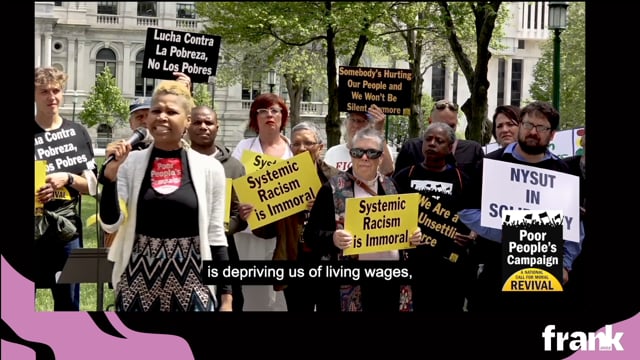 Moral Uprising with the Poor People’s Campaign
 The Unintended Consequences of Emotional Appeal