
Fresh From the frank Stage
Standout talks from the most recent 2023 gathering, featuring bold voices, urgent truths and unforgettable moments.

Amahra Spence
Liberation Rehearsal Notes from a Time Traveler

Shanelle Matthews
Narrative Power Today for an Abolitionist Future
Nima Shirazi
Irresistible Forces, Immovable Objects
The Speaker
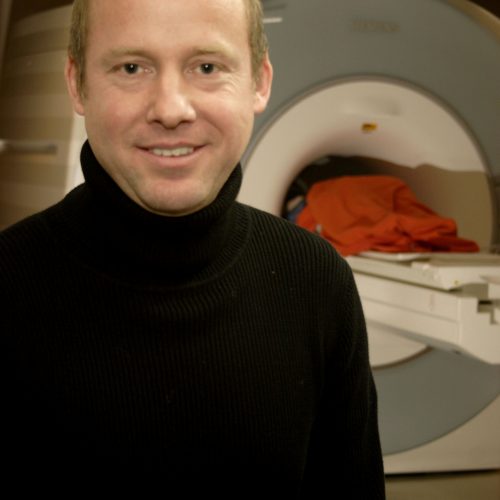
René Weber M.D., Ph.D.
René Weber's lab investigates complex cognitive responses to mass communication and mediated narratives with an emphasis on the neural mechanisms of moral conflict, persuasion, media violence, cognitive control and flow experiences.
Watch Next
-
 Seven Minutes In Heaven… With A Scientist
 -
 Moral Uprising with the Poor People’s Campaign
 -
 The Unintended Consequences of Emotional Appeal
Moral Emotions and Conflict Motivate Actions
Behavioral ScienceCommunicationsEducationEmotional IntelligenceProblem Solving
Transcript
Hello everybody. So good to be here. Frank is the best organized conference I’ve ever been. So a big thank you to the organizer and to all of you for having me here today. It’s a pleasure. I have to say I indulge myself in all these great talks and in free food and free drinks. It’s almost unfair to my coworkers and my students in my lab. They work hard. The Oscars are coming up on Sunday. They get some stuff done. And I feel guilty. The same time I think I’m getting the message out. I care for their well-being, for their careers. So I’m a good person. I deserve this indulgence. So that’s what I mean with moral emotions. What I just did was moral framing and was moral justification. And we have heard here a number of times that emotions motivate actions. But what are emotions? Emotions are superordinate adaptive programs designed to orchestrate subordinate emotions or cognitive programs to create an optimal response that is survival relevant for humans. So let’s take fear for example. Fear is an adaptive response to threat. And it increases attention, which is good. It makes you literally think faster, which is also good. There’s a predator around and it deactivates lower order needs, such as impressing or looking for mates. Bad idea for predators around. Or craving for food or craving for sleep. So basic emotions are emotions where one have to monitor your own physical response to the emotional trigger. Social emotions in contrast are emotions where we have to monitor and understand the actions and thoughts of others. Moral emotions is a special class of social emotions. Moral emotions are not just about positive or negative or about intensity. They are about what is good, what is bad, what is right and what is wrong. So we know that moral emotions even motivate actions even more. So we know for example from the literature that voting behavior is influenced by moral emotions obviously. We do know that messages that contain moral messages are more persuasive. We do know that moral appeals increase charitable donations. And we do know that messages with moral information diffuse faster through large audiences. While basic emotions are kind of a response to emotional displays with emotional triggers, moral emotions are more complex. So if you look at this chart here, as I just said, moral emotions are obviously a part of monitoring actions of others. But they also depend on the intention of people. We assign morality depending on what was the intention for an action. They even depend on outcomes. Well, we infer intentionality if outcomes are negative. But if they are positive, sometimes we do not infer intentionality. Sometimes we justify good outcome makes behavior suddenly moral. Most crucially, they depend on individuals, individual sensibilities to moral norms. I’ll talk more about this in a second. And of course, their own experience, what they have learned, what is good and what is bad. Crucially, they depend on the type and intensity of the moral conflict. Moral conflict defined as situations where we have to violate one moral norm in order to uphold another moral norm. We had a wonderful example two days ago with Senator Romney. He violated the norm of loyalty to his party, what he believes he need to uphold in his view, what is just and what is fair. So with this, let me go to this model here. So moral foundation theory talks about so called five moral foundations. There’s a six moral foundation in the making, not out here, but it says essentially these moral foundations, they are universal. They are represented in all human cultures. They are innate. So these are care and harm, care, the positive side, harm would be the violation of a care moral foundation. Fairness, cheating, addressing reciprocity between humans, loyalty, betrayal, protecting your group, authority, subversion, and sanctity and desecration. So you can test your morals. Here you can go to yourmoral.org. And for the fun of it, I just did it for myself with the threat of disclosing too much about myself here. But let’s see here though, this let me explain the chart. Green here is my moral sensibility, so 4.2. Blue one is the average value of about 230,000 liberals in the United States. And red is the number of about 70,000 conservatives in the country. So as you can see, my sensibility for care and harm through the roof, 4.2, better than all these liberals here. So then if I look at here, fairness, cheating, doing well. I have sensibilities towards fairness and cheating. But now, sorry, my loyalty is not really high. So keep that in mind if you think about the collaborate with me on a project or something. Then authority, oh my God, it’s getting worse. I’m not into authority and subversion. And to my own surprise, I have to say, I am not at all into sanctity and desecration. So that means framing the right issues in sanctity or desecration is not a matter for me for what is right or what is wrong. So with these, there’s a model. When we look into campaigns and in media messages and how they work, this model within the last 10 years has received a lot of attention, a lot of evidence. So the model of intuitive morality and exemplar or in brief, the mime would say, let’s look into how issues are morally framed or how text campaigns that you create contain moral information. And let’s see how this information interacts with a moral individual sensibility of different groups. And let’s see how these messages are embedded in a larger context. Then the mime will describe very specific moral conflict pattern, which then in turn will predict how people self-select or select certain messages and how they evaluate these messages with them, also feeds back again because messages that we expose ourselves to will influence our own moral intuitions, will reinforce them, and also it will influence how content producer will create their messages, give the audience what they want. So this dynamic can be very nicely described. So there’s a lot of evidence for this model and if there’s evidence, wouldn’t it be cool if we could sort of measure that and do that on a large scale? And that’s what MONA does. So if you can see it here, MONAMedieneroscience.org, feel free to explore it. MONA analyzes data at a large scale and what it essentially does, it has a computational pipeline, it looks into intuitions from large crowds, it crawls the Internet, we have a fire hose of global news, actually every 30 minutes update, you can see the moral composition of the world as represented in news, and you can score text, oops, you can score, that was too fast, sorry, you can score text and there’s kind of a modeling interface and also an interface where we can distribute our findings. We have applied MONA in various contexts, so for example we can look at news and events dynamics, so how do events obviously drive news, but how do news then create new events that are up spring would be a great example, we’ll look into movie and story performance, how do sequences of moral conflict predict the performance of movies, and now upcoming Oscars on Sunday will look into how moral framing of women and underrepresented minorities and address some myth that women and underrepresented minorities do not do well, box office, not true, and much more, follow us on media, neuro and talk to me. Thank you very much.
Watch Next
-
Seven Minutes In Heaven… With A Scientist
-
Moral Uprising with the Poor People’s Campaign
-
The Unintended Consequences of Emotional Appeal