
Fresh From the frank Stage
Standout talks from the most recent 2023 gathering, featuring bold voices, urgent truths and unforgettable moments.

Amahra Spence
Liberation Rehearsal Notes from a Time Traveler

Shanelle Matthews
Narrative Power Today for an Abolitionist Future
Nima Shirazi
Irresistible Forces, Immovable Objects
The Speaker
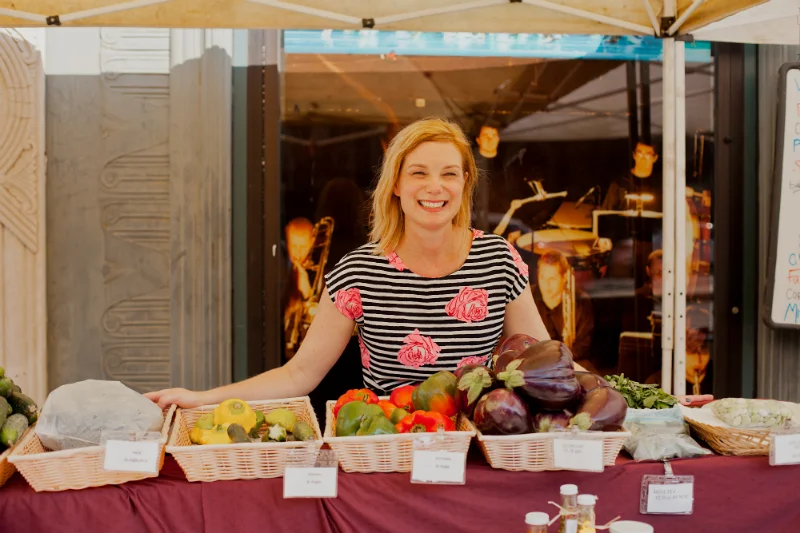
Yael Lehmann Chief Administrative Officer, Families USA
Yael Lehmann is a veteran nonprofit leader driving partnerships, health and food-system innovation. With experience at The Common Market and now at Families USA, Yael builds cross-sector coalitions and mobilizes resources for accessible, community-centred impact.
Watch Next
-
 Seven Minutes In Heaven… With A Scientist
 -
 Moral Uprising with the Poor People’s Campaign
 -
 The Unintended Consequences of Emotional Appeal
Attacking an Epidemic from All Sides
Behavioral ScienceBusinessEducationFarmingPublic ServiceSustainability
Transcript
All right, so I’ll just start from the beginning and I’ll tell you a little bit about me. I grew up in San Francisco, as was mentioned earlier. I was born in 1968. My birthday is actually tomorrow. 47 years old, not that exciting. But it’s like whatever kind of birthday, whatever. I don’t know. And then on top of it, it’s kind of like midlife crisis moment a little bit for me too. My husband and I just separated. It’s kind of like a weird birthday for me. But so feel sorry for me and be really nice to you. I’ll give you the sock. It’s like you’re amazing. And that’s live. That’s live on the internet people. No, no. No, it’s really okay. I’m fine. I’m safe. No, but I grew up in the middle of this whole hippie bohemian era in San Francisco. We had the lime green car with the crazy stickers on top of it, the big flower cartoony stickers. That was my car. We had the VW vans and all that stuff. But my parents met each other and were married five days later. It was kind of those crazy days where everybody was just excited. Today they’re both happily married to other people. And actually my mom’s a lesbian and is married to a wonderful woman named Lisa. And my mom’s originally from Eastern Europe and Jewish. And Lisa is a former Catholic nun. So it’s this awesome kind of yin-yang relationship. It totally works. I’m telling you. And just in case you have a weird misconception about nuns and Catholic nuns, Lisa is totally hot. And I want you to know that. No, but as was mentioned earlier, one of the things that had a big impact on my life was, along with my family upbringing, was the city of San Francisco and growing up during the AIDS crisis. And when it first hit, it really was this very, very scary time. Mostly because there was no cure and it just felt like people were dying by the dozens. The local paper and the Castro would just have pictures and pictures and pictures of all these people dying. And there was this yard sale, not yard sales, but you know, sidewalk sales every weekend where everybody was selling their stuff from their roommates who had died or friends who had died. And just as an example, I worked at one restaurant where half of the staff had died of AIDS. And actually I had one friend, just to give an idea of how it felt at the time. I had one friend when he was diagnosed, he was like, forget it, I’m going shopping. And so the talk about MasterCard earlier brought this made me think about this. But so he and his boyfriend went up and charged up their credit cards like crazy and bought like all the shit you wish you could buy, you know, and they’re just like, forget it because it just like, this is it. But I just want you to know that he is totally fine right now. So if you can diagnose the terminal illness, just hold on. Don’t jump right there. But no, but the but but watching as people came together during this time to create social services from scratch, whether it was delivering meals to somebody who was at home because they were feeling so sick or so depressed, or whether it was actually organizing and marching in the streets, whether it was advocating for federal policies, eventually successfully for the Ryan White Act, whether it was pulling together the AIDS quilts and bringing them to Washington, watching, watching everyone come together during that time had a profound impact on me. And yes, that intersection of public health and social justice was something that that stayed with me and it stays with me in my work today. So I’ll just tell you briefly a little bit also of history about the Food Trust, which is the nonprofit that I’m the executive director of. We’re based in Philadelphia. I don’t know if any of you guys have been to Philly. It’s an underdog city, so I want you to applaud for Philly. But Philly has an awesome public market called the Reading Terminal. And I don’t know, maybe you guys have been there. Okay, good. But Reading Terminal, it’s cool. All these farmers come in. It’s got every kind of food you could ever want. In the late 80s, early 90s, Dwayne Perry, who founded the Food Trust, he managed all the merchants there. And there was a big problem with Reading Terminal. The roof was leaking and there would be spontaneous fires erupting in the middle of the market. And so he led this effort to save the Reading Terminal market. And they did it. So as a thank you back to everybody in Philly, he founded the Food Trust in 1992. But one of the things that he noticed as the head of the Merchants Association at Reading Terminal was that people were traveling excessively long distances just to get to Reading Terminal market. Because the prices were really good and the quality of the produce, the other foods that were really high. And he knew that from talking to the customers, they were just so happy. From talking to the customers, they were saying, this just doesn’t exist in our neighborhood. That’s why I’m taking two buses to get here. Actually, to this day, Reading Terminal market has the largest food stamp snap sales in the state of Pennsylvania. So he wanted to make what was available at Reading Terminal and bring this out to some of the parts of Philadelphia where this high quality and affordable food didn’t exist. And Dwayne has an interesting perspective on this stuff because his background is in city planning. And so, you know, I think he was kind of, in my mind, he’s a little bit ahead of his time on his approach on how he wanted to bring this healthy food out to neighborhoods and make it accessible for people. He was really interested in the environment, the physical environment. So rather than talking to people individually and being like, what’s up with you? What’s wrong with you? How come you eat all this crappy food? He was saying, why don’t we look at the environments that we’re living in, that people are living in, and what if we just try to make it as easy as possible so that they’re surrounded by these healthier choices? And also as part of his approach to the agency that we still keep today is what we call, for lack of a better way of describing it, a real comprehensive approach. So making sure that while you’re doing research and working on the public policy side, we’re making food accessible, teaching kids and adults how to eat healthy. And in this food education piece, I also put all the stuff that you guys are doing out there, communications. You know, marketing the food, making it appealing and talking about the food in a way that public health people usually don’t. Usually it’s like, you’re bad, don’t eat that, right? So we want to be able to talk about healthy foods in a way that makes it appealing and present it in an appealing way and get people excited about it. And as part of that excitement, really celebrating food and using, and knowing that food brings people together and there’s a lot of joy around food, and we want to use that in our work. And so yeah, I just wanted to again emphasize this education piece, and even though we use the word food education, it’s really, communications is a key part of that. And so I’ve been very excited to be here today to learn from you all about that communications piece along with making healthy foods accessible. So how do we make, what are some of the parts of this comprehensive approach? The idea is you bring farmer’s markets and grocery stores and make healthy foods available in schools. We also do a lot of work in corner stores. Here’s a few examples of before and after pictures. And in some neighborhoods all you have is the convenience store or the corner store. Here’s a couple examples of before and after. Another one before and after. So not every corner store in Philly looks like that. But this is what can be possible. I just wanted to give you a few examples. We work with over 700 corner store operators in the city of Philadelphia. And we start them off real small and just say, hey, can you just introduce one, two, three, four products? But eventually with some of the superstar operators, we move them up to and bring in things like refrigeration and shelving like you see here. So this comprehensive approach is consistent with something that public health people call the socio-ecological model. And basically it’s saying, all right, the reason we make the choices we make in life are for multiple reasons. There’s all these layers to it. There’s the individual side. There’s the part about our friends and our family. There’s what’s up at school. There’s what’s happening in our neighborhood. There’s public policies. And all these things have impacts on us. And just like how for me personally, the family I grew up in and the city I grew up in had an impact on me. It’s saying, let’s look at all these layers. So instead of just, and what I like about it is instead of just blaming the individual, it’s saying, what if we tried to remove the barriers at all these different layers and try to make it as easy as possible for people to eat in a healthy way? Then maybe that could have an impact on the choices that they’re making. Oh, shit. This is the wrong, this is the wrong, this is the wrong PowerPoint. Okay, rock on. Rock on. I was just at the Children’s Hospital of Pennsylvania and I hope you enjoyed that shot. I’m here to talk to you about hospital partnerships today. It’s really good. Okay, but no, as one thing that I did want to bring up was by using this comprehensive approach, by trying to bring in healthy foods at multiple places in people’s neighborhoods and in their lives. And it’s not just on the food side. Of course, there’s the exercise piece. We are starting for the first time in 30 years to see signs of progress in different parts of the country where childhood obesity rates are declining in several communities. And of course, there’s many different health impacts that happen when you’re not eating well, diabetes, all kinds of stuff happens. But one of the things we are looking at very carefully are things like childhood obesity rates. And thanks to multiple people and partners and all kinds of stuff, we had this remarkable result in Philadelphia recently where we saw 5% decline for all kids, 7% decline for Hispanic girls and an 8% decline for African American boys. And this Philly was actually the only city in the country where we didn’t see what they saw, what they call health disparities, where the white kids are doing better but the children of color aren’t. This was like where it got flipped and everyone’s like, whoa, what the hell is happening in Philly? We got to check that out. And one key piece of this I do just want to hone in on is that we need to have access to affordable and healthy food as part of a larger comprehensive approach. So I thought I would just end by telling you, talking about my hero, of course, the first lady. And of course, it’s been a very special time with having her be the champion for this kind of work and for caring about kids, eating healthy and around childhood obesity rates. But one of the coolest moments of my life was being invited to the White House and there was this great moment where I got to be on stage with her and she talked about the food trust was so awesome and everything. And I didn’t realize I was going to get to meet her like this, but there’s this point where I’m waiting in line to go and see her. And you can imagine she’s standing where this orange thing is or something. And I’m standing in the doorway and the Secret Service person brings me over. So I’m walking over, it’s just so nervous. And she comes up to me and she’s like, oh my God, I have that exact same dress. And I thought she was fucking with me. So I’m just completely speechless and don’t know what to say. And you know how these moments in your life are like, when that moment happens, I’m going to be so awesome. I’m pretty outgoing. I’m going to be able to rock this. I’m going to rock that. And I’m going to bring it. No, no, no, no. I was just a super jelly fishy, weird. I was out of my body. I didn’t know what was happening. And just in my head being like, don’t fall down. But it was awesome. Of course, after she says that, then my brain goes into like, oh my God, what if this was like a fashion emergency? And they had to like run me to her closet, you know? And they’d have to be like, you have to change your dress to do the same dress on the two doors. But no, I’d just be like the coolest thing ever, right? They’re like, you must leave a building, you know? But no, at one point, she’s, at one point, I remember her looking her beautifulness, looking down on me and saying, yeah, we’re like to a barbecue. And just so you know, at 70% off, that was the most expensive dress I have ever born in my life. And I’m like, I’m not the way I know this. This is the wrong. I’m like, all wrong. I don’t know. But no, I’m happy to say that meeting her, she’s everything. And maybe some of you guys have met her too. She is the warmest, most coolest person on the planet. Anyway, that was fun. But of course afterwards, I had to Google it. And yes, she wore the same dress three days before. And that’s a picture of her, like, I think that’s her Gornia church in the dress. So anyway, since we didn’t play the video, I’m going to end early. And just thanks for having me.
Watch Next
-
Seven Minutes In Heaven… With A Scientist
-
Moral Uprising with the Poor People’s Campaign
-
The Unintended Consequences of Emotional Appeal