Good afternoon. I’m going to start off with a few disclaimers. First as you can see I’m going to use old fashion notes even though my current research is on digital communications and social advocacy. And here’s why. Occasionally I forget the point that Thaddeus made this morning about adolescents and lack of impulse control. So I let my son, my younger son borrow my tablet to play some online games. And when I went back to retrieve it, you might notice this here. Okay, the glass was shattered. Wasn’t me, wasn’t me. Also I wanted to warn you that my topic really isn’t funny. Or all that cutting edge. After witnessing some of the other just absolutely humorous engaging and innovative presentations, I feel like I’ve been called to the stage to play a violin solo in the middle of a JZ concert. So why am I here talking about building the scholarly body of research in public interest communications? I’m going to make that a little… So I don’t have my back to people. In the early 1990s, the phone rang in my office. A male voice on the other side of the line said, I’m a fan of yours. And I remember thinking to myself, what, am I getting a great call at the office? But he went on to say he was an alum of the college, so a little voice in my head said, Linda, be nice. He then said something to me that no other communications professional had ever said to me or has since. I read your research monograph about measuring relationships in public relations. And I’m coming to Gainesville and I want to take you to lunch and talk about research. So over sandwiches in that fine campus bistro known as Subway, I was blown away by this larger than life man who was Anne said earlier. Got it! He understood that for public interest communications to be more than a skilled trade or a creative craft, to be a true profession, the field must be grounded in a scholarly body of knowledge that gives the field academic rigor. He understood that nobody hires a plumber to do brain surgery. That wonderful man was Frank Carell and that’s why I’m here to talk to you about research. You may have heard the story that rocket scientists don’t say this isn’t rocket science. They say this isn’t the social science. And I understand what they mean. I mean, surely making observations of the predictable waxing and waning of the moon or the red spot on Jupiter is easier than understanding human behavior. Human beings are notoriously complex, unpredictable and sometimes irrational. Yet years of social science and communication research have given us a body of knowledge that public interest communicators can use to make strategic choices. And I think we are on the verge of a renaissance in public interest communications. So I’d like to focus my comments on where we need to go to develop scholarly research further in public interest communications and how academia and the profession can work together to get there. Erin told me to make sure I ate something so my hands wouldn’t shake. That worked! I was helping my son, the tablet crushing one, the other day with one of his writing assignments, the subject he chose with a little help from me, was eras of life on Earth, the geological time scale. I couldn’t help but think about the similarities to the development of social science, scholarship and public relations, as well as the current scholarly state of public interest communications. That may sound strange, but let me explain. Now, Kvall actually made this point earlier. The earliest part of the first era of life lasted billions of years, but not a lot happened. The Earth was scalding, violently windy, and therefore unhospitable to the building blocks of life. However, by the end of the era, the building blocks, such as the accumulation of oxygen in the atmosphere, began to take shape. What followed was an explosion of more complex and diverse life. In other words, once the essential building blocks were in place, the Earth experienced a proliferation of life that resulted in enormous varieties of plants and animals we see today. Yet, as you know, these periods of amazing development were also punctuated by several mass extinctions that wiped out most existing life. At the same time, these extinctions provided the eventual conditions for other forms of life to become dominant. Alright, so using the analogy of the geological time scale, let’s talk next about some of the necessary building blocks for the development of scholarly knowledge in public interest communications. The first building block is a definition of public interest communications. I know we’ve been talking a lot about that, and given the many textbook definitions of public relations, I don’t think there has to be tolu agreement, but we need some common jurisdictional boundaries. What is public interest communications exactly? And what is it not? I know that one of the goals is to crowdsource a definition and to begin to develop some language about talking about the field. But this step is critical for research, because the definition specifies the concepts we’re going to study, and ultimately the variables that we need to measure. But like a public relations, I can’t say PR, I’m sorry, public relations, defining public interest communications is neither straightforward nor critical. It’s straightforward nor static. This is especially the case in public relations, in public interest communications, because the term public interest is hotly contested and constantly under negotiation. And as you know, the term social change, with its liberal progressive slant, is problematic too, since some people might prefer to keep things are, like my father-in-law, or the way they used to be. His second wife. These delimits of definition for public interest communications lead us to the second building block of scholarly knowledge. Values that guide an underlying philosophy of the field. And I’m going to give a shout out to my colleague Kathy Kelly, who actually has done a lot of thinking about that. Still, I believe we made progress in developing some shared values, such as authenticity, transparency, and the ethical priority of dialogue over propaganda. But identifying underlying philosophical truisms that transcend all aspects of the profession, or academia across the globe remains elusive. Physicians are supposed to heal. Lawyers are supposed to serve justice. What is our reason for being? Or does the advocacy nature of what we do ensure controversy, leaving us forever caught in the vortex of colliding and often intractable value system? I love Cynthia Barnett’s concept of the carry middle. Thank you. That was wonderful. At the same time, though, I think all public relations professionals and scholars can agree on the following. Two-way communication, not spin, is the essential process of public relations between organizations and stakeholders. The most effective and ethical practice is strategic and managed, not merely historic, we’ve always done it this way, or merely technical, oh, we need an intern who can tweet. And perhaps most important, an organization’s interests are best met in the long run by balancing those interests with the interests of the organizational stakeholders. Perhaps identifying the underlying values for public interest communications will be easier. I hope so. I remember talking to Ann about this, and we discussed that public interest communication deals with outcomes and produces benefits that are grounded in scientific knowledge. For example, surely no one would argue that drug addiction is a healthy lifestyle. Yet we seem to live in a time when the scientific process itself is contested and competing interests insist on differing interpretations of the data. I think David Vinton yesterday made such a wonderful case about that. The laws of physics and global warming. I don’t call it climate change. But putting the important questions of definition, values, and philosophy aside, what other essential building blocks are necessary before the time scale of public interest communications reaches that critical stage of burgeoning life? The most essential building block is curriculum. Of course, undergraduate curriculum is necessary and important, but since my focus is building scholarship in public interest communications, I want to emphasize the necessity of graduate education. And for truly meaningful graduate curricula to develop, we need a group of dedicated teachers and scholars whose passion is building theory for the field. I’m used to moving around as a teacher and you’ve got to keep the students away. Now we have great students. Super spins. Okay, and what I mean by building theory is going beyond the case study approach that seems to dominate a lot of scholarly research on communication programs and campaigns. This approach is limited to merely describing individual situations, which has some value. And we need more than the accumulated experiential knowledge of professionals, which also has some value, a lot of value. We need to develop general principles and propositions that are efficacious across the entire field and can live up to be a good student. And we need to develop the scrutiny of scientific rigor. Generally, the scientific process begins by modeling the phenomenon of interest. In this case, public interest communications by identifying antecedents, processes, and effects. Antecedents can be thought of as the underlying social, political, and economic conditions that give rise to public interest communication. We’ve talked about a lot of those already. Examples might include political oppression, poverty, racism, illiteracy, pollution, and degradation of the environment. Processes are what public interest communicators actually do. Strategic, such as building effective relationships with policy makers, and technical, such as an online petition. Effects are the program result of public interest communications, such as increased awareness of healthy behaviors, legislative and policy outcomes that make it more difficult for minors to buy e-cigarettes. We talked a bit about that at lunch. Or even the overthrow of a despotic government. Also, though, if public interest communications is to be a true profession, we must study and understand broader impacts on society as well as define ethical principles for the field. An initial group of teacher-scholars dedicated to developing theory in public interest communication doesn’t have to be large, but public interest communications needs to grow its own first generation of thinkers, as well as recruit existing communication scholars who share a passion for the field. Thinking back to my experience in public relations in the 1980s, there was little to no theory unique to public relations, but a handful of committed scholars set things in motion. These first generation pioneers built meaningful theory by addressing still another building block, identifying important questions for the field that scholarship should answer. Original scholarship on these important questions led to our first empirical body of knowledge and curriculum focused on developing theoretical knowledge further. Let’s talk next, then, about what are the important questions for public interest communications. For example, are there different models of public interest communications? If so, what are their structural characteristics? One-way, two-way networked, organization-centered, public-centered, symmetrical, ethical, unethical, strategically managed, technical, digital, offline? And what is the value of public interest communications for organizations or funders in ultimately society? And how is that value most meaningfully measured? Another important question might be examining the roles public interest communicators enact in their work life. For example, visionaries, applied social scientists, I’m really looking forward to Amy’s presentation, storytellers, we’ve heard a lot of that language, advocates, engagement facilitators. Understanding these roles may help us distinguish the field from other communication specializations. At this point, I want to comment on the genealogical timescale again and mention mass extinctions. It’s common in the development of scientific knowledge for fields to experience what philosophers of science, Thomas Cune, calls paradigm revolutions. A paradigm revolution occurs when the accepted body of knowledge in the field no longer answers the important questions and a new paradigm becomes dominant. This is happening at least once in public relations. Research that focused on understanding the effects of mass media on receivers gave way to a more relationship engagement-oriented approach. And in doing so, the important question shifted from how do organizations use the mass media to create behavioral effects among publics that the organization desires, to how do we effectively engage with publics so that mutual goals are satisfied? And I think this is kind of the sheep-wolf thing. That was a good story. As these building blocks for developing the scholarly body of knowledge and public interest communications come together, they should produce a pebble-throne in the pond effect, where the water spreads into an expanding pattern of initial structure. So let me close with some suggestions for how the profession and academe can work together to create that structure. Erin said, give marching orders. The takeaway is that we should all commit to at least one concrete action I mentioned or suggest and act on other ideas you have. So some of my suggestions are easy, easier than others, but they’re all doable now or in the near future. So our homework is to commit to doing something to move public interest communications further along the geological time scale. You also might commit to help someone else to do something. Number one, the profession must do more to establish a presence in universities. Jacqueline made this point beautifully yesterday. Professionals can help with this by exposing university students to the field through internships, guest speaking, inviting students to functions of professional organizations, and mentoring programs. In other words, reach out to students and help them channel their passions toward the field. I’ve seen Andy Bernas do that at my college and the light bulb goes off. Number two, professionals can also expose professors to the field by sponsoring apprenticeships for faculty to gain current professional experience. The Plank Center for Public Relations Leadership at the University of Alabama sponsors an apprenticeship program where they pair an industry partner with an academic two weeks over the summer. There are always more faculty applicants than the number of spots they have, and it’s a win-win for the host and the scholar. Number three, professionals can teach at the university level. The exciting world of online education has freed us from geographical constraints and the professionals who teach in our distance programs enrich the curriculum immeasurably. I know that Ann is developing an online master’s program in public interest communications. Of course, we want Florida to be the first and the best, but I hope other universities will follow suit. One new curricula are your alma mater or nearby university developing. Find out and suggest public interest communications offered to help develop the curriculum and teach. Number four, partner with academics on research projects. Monetary grants, even in small amounts, are always helpful for getting projects going and providing accountability. But perhaps even more important is providing access for researchers to organizations in the public space they serve. In social science research, it’s become harder and harder to get people to participate in research. You can help us with that, and you can write and publish with us. Some of the best scholarship happens when academics and professionals partner to conduct research that is truly meaningful to practice in theory. Just in my own college, we have faculty expertise in health and science communication, international development, social justice, public media and digital communications, just to name a few. Number five, it probably goes without saying that the profession should support development opportunities at universities. Everyone always wants to fund undergraduate scholarships, and that’s terrific. But assistantships and fellowships for graduate students, the future architects of scholarly knowledge, are sorely lacking and many wonderful students can’t afford to attend graduate school without funding. The profession can also underwrite academic programs and conferences, and perhaps most helpful, thank you Betsy and Frank, is establishing an enalement that funds visiting and or permanent professorships to support curriculum development and research. Finally, number six, the field needs to establish a presence in the big three academic communication associations. Association for education and journalism and mass communication, international communication and national communication. The profession can do this, for example, by supporting conference programs such as named awards for top scholarly papers, or an event with a leading professional as a keynote speaker. Also welcome would be travel grants to conferences, especially for graduate students who tend to have no funding for travel. Developing a presence within academic associations is especially important because this is where the community of teachers, scholars committed to public interest communications can find each other and coalesce. And when they do, they can create a new interest group or division within the association and ultimately find publishers willing to develop and market peer review journals and scholarly textbooks that focus on public interest communications. I’m out of time, so it’s really this final step of producing scholarship for which our geological timescale has yet to be mapped. But the building blocks are coming together and I want to thank Frank, Betsy and Anne for their unique role in jump starting that timescale. The future is ours to make happen if we’re committed to do so. Frank thought we could and I agree with Frank. Thank you.



 Seven Minutes In Heaven… With A Scientist
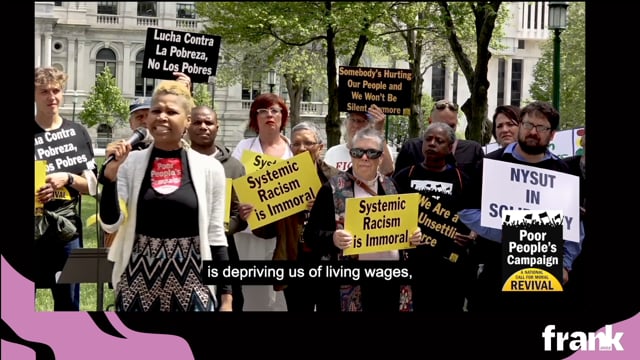 Moral Uprising with the Poor People’s Campaign
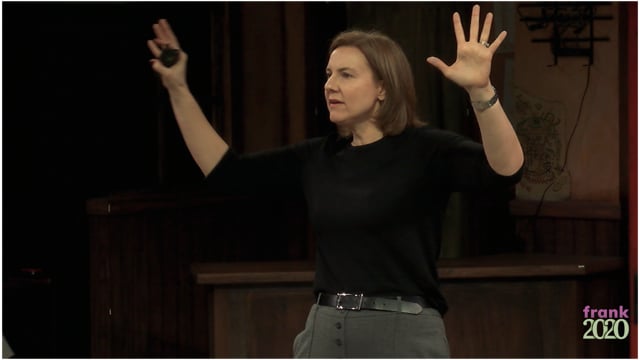 The Unintended Consequences of Emotional Appeal