

Fresh From the frank Stage
Standout talks from the most recent 2023 gathering, featuring bold voices, urgent truths and unforgettable moments.

Amahra Spence
Liberation Rehearsal Notes from a Time Traveler

Shanelle Matthews
Narrative Power Today for an Abolitionist Future
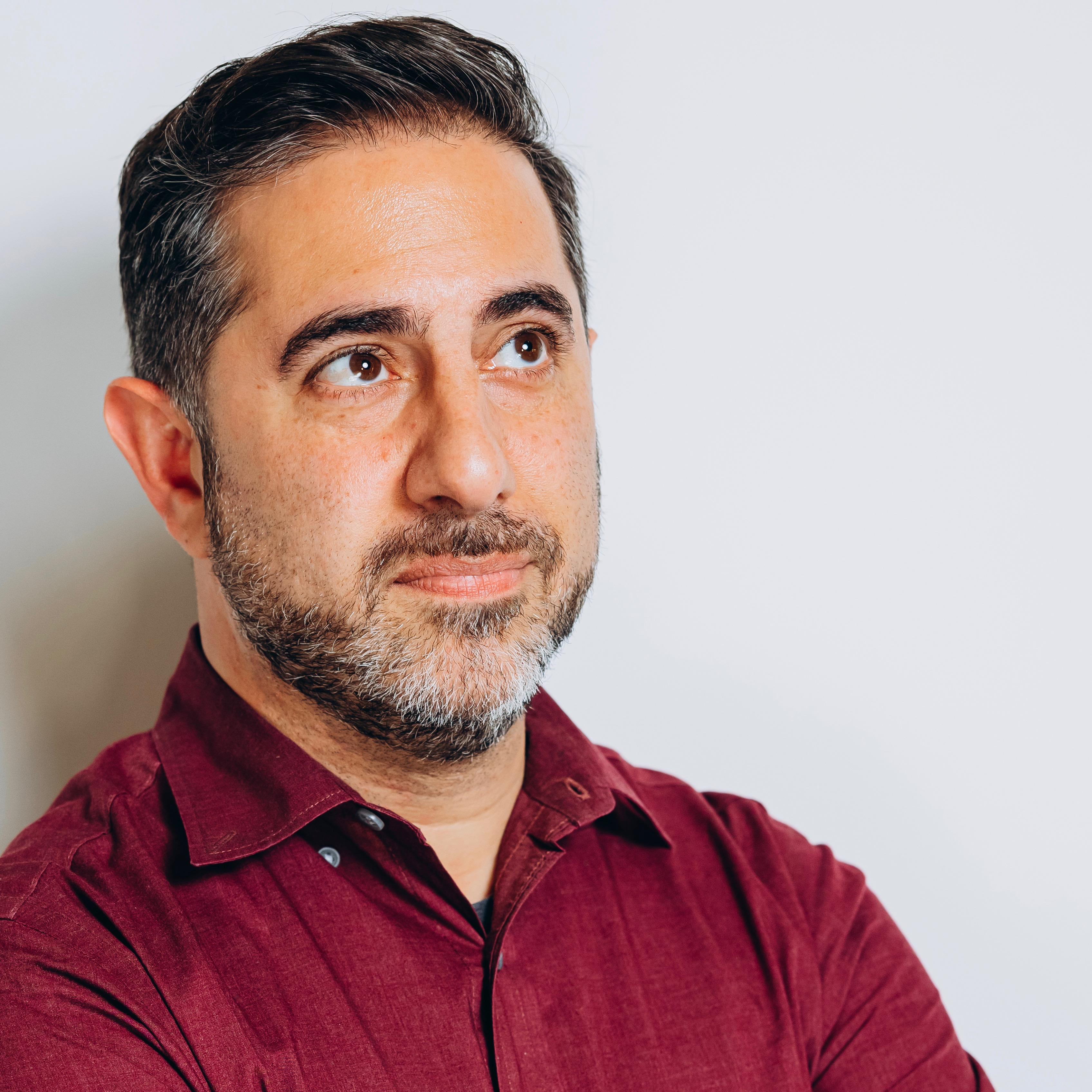
Nima Shirazi
Irresistible Forces, Immovable Objects
The Speaker
Watch Next
-
 The Ethics of Button Pushing: Using biometric and AI for Media Effects Research
 -
 It All Adds Up
 -
 The Play’s The Thing
Climate Change Communications Failure & What to do about it
BusinessCommunicationsProblem SolvingPublic RelationsPublic ServiceSustainability
Transcript
Hello, hello. Good to be in Florida. You know, 32 years ago when I started Fenton, a gathering of social change communicators would have been impossible because they were hardly any. People wouldn’t have known what that even meant. Progressive causes at the time didn’t employ any communications professionals. Few non-profits even had press secretaries. No foundations did. There were no CSR companies. There was no such thing as sustainability. I was foolish enough to think, oh, what’s happening here, that this was a gap that should be filled and could be filled. I had watched some brilliant activist communicators in the 1960s when I was a teenager and a photojournalist. They changed the world, partly with myths of their own creation. The cameras always showed up when a man named Abby Hoffman called them. If you don’t know who he is, you should definitely consult Dr. Google. He was a PR genius. You’ve heard of the yuppies? Abby started their precursor, the yippies. The Youth International Party was a myth. There was only Abby and two other people, and yet their pronouncements and actions were routinely on the Walter Cronkite CBS Evening News. They ran a real-life pig for president. They helped greatly expand the anti-war movement and mainstreamed what we used to call the counterculture, and all they used was imagery and language and theater. Now, none of that is countercultural anymore. At the time, we wanted gays to be free, women to be equal, blacks to vote and be president, and an antivicious and racist drug laws, and this has all happened more than we could have imagined. We also wanted more democracy and equality, but we’ve gotten far less of both of these, sadly. I watched their successes and I learned from their mistakes, and in 1982, I started Fenton in New York with one employee and five clients. They were the Sierra Club, Mother Jones, Rodale Press, Ralph Nader, and The Village Voice. It was branding. We opened in Washington six months later, at California years later, people thought it was crazy. They said, you’re going to get causes to pay? Impossible. But I had been far too damaged by the 60s to do anything, but cause and social progress worked, so I had to try. Decades later, social change communications is a whole field. Even the big PR firms tout their responsible divisions, and don’t ask about the rest of what they are doing. We have 50 staff, and there are amazing firms out there like Spitfire, Berlin-Rosen, Resource Media, Fitzgibbon, M&R, Tiger, just to name a few of the ones you should apply to. Some big foundations now actually invest in communications. This was unheard of back then, and frankly, it’s still not common enough. I was very lucky to be helped along the way by some outstanding progressives. A former New York Times reporter got Rockefeller family members to back our work. A really important woman named Cora Weiss introduced us to the African National Congress, and we went to work for Nelson Mandela. We got to do really amazing stuff back when no one did things like this. Now, another reason I started Fenton is that I had been fired by Rolling Stone Magazine, and when you’re fired, you get very creative. It’s like, what am I going to do next? I had first put on the No Nukes concerts with Bruce Springsteen at Madison Square Garden, and then I was doing this freelance work from my bedroom, and my lawyer kept saying, you have to rent an office. You have to hire people. And I said, no, no, no, this is too scary. I couldn’t possibly do that. I rented two rooms of an office building, and immediately I tried to sublet the second room. It turned out I didn’t need to. Now, back then things were very different. Journalists actually met with people and talked on the phone, can you imagine? How quaint. Offices were like noisy instead of there was no email, and people liked this and we flourished. We had a lot of very interesting experiences. I remember the first time I placed an article in the New York Times. It was for Rolling Stone, and Carl Bernstein had exposed that the CIA for years had been paying American journalists. And on the CIA payroll. So I walk into the office of the National Editor of the New York Times and say, you know what? You have had CIA agents on your payroll, posing those reporters. And one of them was a columnist, a famous New York Times columnist, who was a member of the Salzburger family, the owner of the family, you know this. And he had been one of them until just a few years earlier, and the CIA had even written some of his columns that were printed. So I was extremely nervous. Luckily they printed the story and they’ve let me come back in the building since. Now, I also got to work directly with Abby Hoffman, the activist that I mentioned again after I started the firm. And this was interesting because he was on the FBI’s 10 Most Wanted list at the time. He was a fugitive on the run from a cocaine charge. And Abby had had plastic surgery, so no one could recognize it. And under this new identity, he was living in far northern New York state and fighting as an activist, the Army Corps of Engineers, to stop them from ruining the environment of the St. Lawrence River. He had testified in the U.S. Congress under this assumed identity, posing with Senator Moynihan, printed in newspapers. He was on the FBI’s 10 Most Wanted list. So his publisher hired me because he had a book about to come out and he titled it, Soon to Be a Major Motion Picture. His most famous book was known, it’s called, you may have heard of it, Steel This Book. Like I said, he was a hell of a PR guy. So he also decided at that time he was tired of being a fugitive, he was going to turn himself in. And my job was to kind of soften up the public environment so he would get the best deal that he could. So I contacted Barbara Walters and I offered to take her to see Abby. She really had no idea who I was or if I was legit. And I couldn’t tell her where we were going. You know, if you turn yourself in, you get far less jail time than if you’re caught. So we couldn’t risk Barbara’s camera crew contacting the FBI saying, oh, by the way, we’re going to get Abby. So I picked her up, I took her to the airport, we’re on the tarmac, we’re about to board a private jet. And she says, young man, I am not getting on that plane. Until you tell me where we are going. I’m like 30 years old, I’m quaking, right? And I say, well, you know, I’m sorry, I can’t tell you where we’re going. You’ll have to wait till we’re in the air. And then I’ll tell you. So it was a very tense standoff. She got on the plane, she got a great story. She helped Abby reconnect with the public. And he got off with a very light sentence. That’s the power of communications. Now I watched the big PR firms at the time. And they would spread all these falsehoods. And a lot of them were defending dictators around the world. The Philippines, Ferdinand Marcos, they had a PR firm in Washington. The brutal dictator Mobutu in the Congo had one. And Angola is Jonas Sevimbi, whose terror campaign against the civilian population there was backed by the South African apartheid regime in a military alliance with the United States. This kind of PR representation of these thugs was considered routine. But when we got involved for the other side of these things, there was hell to pay. Because this had never been done before. A group of foundations concerned about human rights, for example, hired us to provide balance to coverage of El Salvador’s civil war. And there, the government of El Salvador backed by the Reagan administration literally was running death squads to kill the opposition. The opposition was based in Mexico City. And so we started introducing the rebel leaders to American reporters by having parties in Mexico City where they could meet each other. You always have to wind and dine reporters, right? This is with guerrilla leaders. And you couldn’t meet them in El Salvador because they’d be killed. So the Wall Street Journal really took a distaste to this. And they ran editorials attacking us just for putting out a press kit explaining the background of some of these rebel leaders, many of whom were Christian Democrats, social Democrats, some were communists. And then they really got upset because we started taking American journalists behind enemy lines in El Salvador to see what the other side was about. And I went with them and crossing bombed out bridges hiding from security forces. It was pretty intense. One of those reporters was a guy named David Gelbert of CBS. And he and I later worked together on a story you may have heard of, which was about a toxic chemical in apples called Allar. And this was a very interesting situation. It was a very toxic pesticide, very dangerous to kids. And people had been trying to ban it for years and nothing was happening. Industry had deadlocked it. And after the 60 minutes report came out, bang, the country literally stopped buying apples all at once. The bottom of the apple market fell out. And people would not buy it until the manufacturer, the chemical, withdrew it from the market within a week. No active government, no court case, no legislative action, no executive action. The people basically banned it. And so that’s communications. That’s what you can do. Now eventually the EPA did ban it based on the science, but we took action before that. So these days, while the big PR firms are often still spreading falsehood and there’s still not a level playing field in terms of resources, it’s a whole lot better because of people like you here today. The people that control the communications infrastructure of the country hear from people like us and that’s a big improvement. And of course now we can reach the audience directly online and that’s a true revolution and it’s just getting started really. However, on the issue I believe matters the most. We are still vastly outgunned and way, way behind. And on this issue, preserving a livable climate for the continuation of human civilization, scientists have shown that we have very little time left. And I would like to urge that the people in this room make this our common crusade and challenge because if we don’t act quickly on climate change we won’t get to solve the other issues that we care about. We won’t. At current usage rates we have to get off all fossil fuels in just 21 years in order to keep temperatures from getting out of control. 21 years. Now that’s not a bunch of radicals saying that, that’s the World Bank and Pricewaterhouse, the IPCC, the World Economic Forum, but the world isn’t doing much about it. Amazing. We’re not doing much about it. Even though the last time in Earth’s history that CO2 levels were as high as they are right now, sea level, the last time CO2 was this high, sea level was 30 feet higher. Goodbye Southern Florida. And the last time they were at 500 parts per million where we’re headed by mid to late century if we don’t change course. The sea was 150 feet higher above where we’re standing right now. Now scientists can’t tell you how long that will take to happen, but it will happen as we melt the ice. And remember, carbon stays in the atmosphere for thousands of years and we don’t know how to take it out. So let’s admit it, climate change communications has failed. Only a tiny percentage of Americans rate it as a high priority issue. 40% of the public thinks climate change is natural and not man-made. And that’s more than a few years ago. Only 15% of the public are truly worried about this issue. Our nation’s leading newspaper, the Wall Street Journal, Boo Hiss, still tells its 2 million daily readers that climate change is a hoax. Carbon dioxide is good for you. 2 million copies a day. Half the Congress doesn’t believe in it. The network Sunday shows just mentioned climate change for pretty much the first time in a decade last week. And even then Meet the Press put it on as a debate. As if physics is a debate. Very few people, even in the intelligency of this country, understand how urgent this situation nor how solvable it is if we act soon. And only then. And it is solvable. This is a failure we need not accept. And what should we do to turn this around? Well, you have to go back to basic principles. And what’s the first principle of communications? Keep it simple. We have allowed this discussion to get far too complicated. It really is simple. Gas from fossil fuels traps heat above us like a blanket. The more this gas, the warmer it gets. The warmer it gets, the more ice melts. The higher the seas rise, the stronger the storms, the fiercer the droughts. All are communications. They are spokespeople. All the groups need to keep repeating this until a mental frame is constructed in the minds of the majority that we are making the blanket or some similar metaphor that you might come up with. Far too thick. This works. Our cane policy and scientific details of exactly how hot or stormy or dry it will get by what day. That does not work. That’s confusing everybody. Even the CEO of ExxonMobil, Rex Tillerson, has acknowledged publicly that his products are warming the earth, raising sea levels and threatening the food supply. The fact that he has said this, you probably don’t even know. That’s our fault. He also called it, by the way, an engineering problem that we can adapt to. He did this in a conversation with me in front of about 200 people on television cameras. Good luck with solving it, adapting to it. Second, we need to sell a simple solution, simple, on the climate issue in particular, which can be so overwhelming. People have a very hard time getting their heads around the enormity of this problem because they don’t know what can be done about it. Now, here’s a solution people can intuitively understand. We put a charge on fossil fuel pollution. Carbon, my friends, is not a household word. We put a fee or a fine on the pollution and we give all the money back to the people. The government gets none. Every legal resident gets an equal share in their bank account every month. I submit this is probably the only way we will ever get a price on carbon in this country. Conservatives will not support a tax that goes to the government and we must have some of their support. And we have no project to get it, by the way. And the public will not support the higher fossil energy and food prices that we are going to have to have unless they get this rebated to them. It’s pretty logical. When the price gets of this fee to $100 a ton, it would rebate $2,200 to every citizen, $8,800 to a family of four. That’s real money. Without this rebate, a carbon price will be demagogue to death. Mitch McConnell calls tax and carbon the light switch tax. That’s very effective communications. But we get to say with him with the rebate, hey, what’s the fuss? It’s a rebate. Don’t you know the difference between a tax and a rebate? Don’t you watch late night TV? You’ve never heard of cash back? Without a market mechanism to truly charge the true price of fossil fuels, thereby leveling the playing field for noncarbon energy to flourish, we will not solve this problem in time. We won’t. Instead, we will end up not too long from now as the weather goes crazy, which it already is, with massive warlike Pearl Harbor style government rationing and intervention in our economy. We will end up with everything conservative as fear. Delay will make their worst nightmare come true. And by then, it really will be too late. Third, we need to make simple and well known that there’s a fast approaching limit we are rushing towards for how much fossil fuel we can burn. This is called the carbon budget. People don’t even know it exists. In our communications, we need much more visceral impact. I was working with the former NASA climate scientist, Dr. James Hansen, and he said, you know, we were writing his TED talk. He said, the earth is way out of energy balance. There’s far more heat coming into the system than is going back out to space. I said, how much? He said, it’s really a lot. How much? He said, oh, it’s a quarter watt per square meter. I said, that doesn’t sound like very much. He’s said, oh, it’s the same amount of energy as 400,000. Hiroshima sized bombs going off in the atmosphere every day. Bingo. Now, that’s communications. Now, that people can understand. It’s remarkable, but it’s true that despite some wonderful activity that’s taking place, there is no comprehensive communications campaign on climate change at the scale we need. It doesn’t exist. Not one that creates the amount of visibility and repetition needed to turn this around in time. As communications people and marketers, we need to let our friends in the public interest movement understand that people do not know what they do, and they assume it. It’s really remarkable. They work on all this supply of policy. Guess what? We don’t have a policy supply problem. We have a policy demand problem. We need to create the demand. Now, I’m running out of time. There are certainly bright spots. Tom Steyer is doing incredible things, but it’s not enough. Now, here’s an idea. We need to start your creative thinking going. Let’s say that tomorrow the world learns that the CAA has discovered that the North Korean government is pumping a gas into the atmosphere. It’s raising global temperatures and sea levels and threatening the food supply. What would everybody say? Those suckers take them out. A giant asteroid is headed for the earth. It’s bigger than the one that wiped out the dinosaurs, and it’s going to hit in 10 years. What would everybody say? Get those rockets up there. Well, that’s climate change, but we’re not doing anything. You may have studied Edward Bernays. He was Sigmund Freud’s nephew. He created public relations. He coined the term. You should look him up. He was quite brilliant. He did some good things and some very bad things. He created bacon and eggs. There was no such thing. Imagine. Went to work for the bacon board. We’re going to create bacon and eggs. Men wouldn’t wear wristwatches. It was considered effeminate. He made it macho by telling people that in World War I, if it wasn’t for the watches, men couldn’t have launch coordinated attacks. He made it popular for women to smoke. How did he do it? Women, that was not ladylike. He didn’t smoke. There are ways of creating public consent. We better do it on this issue. I hope everybody in this room will make it their priority. Thanks a lot. Thank you.
Watch Next
-
The Ethics of Button Pushing: Using biometric and AI for Media Effects Research
-
It All Adds Up
-
The Play’s The Thing