Good afternoon. This is my first Frank. I grew up in Florida, so I’m always happy to have an excuse to come back to Florida. A few years ago, my family and I drove from Philadelphia to Miami. I grew up in Miami. We typically go to Miami to visit my parents at Christmas. When we lived in Philadelphia, which we don’t anymore, we would trek down in the minivan over the objections of everybody but me. On this occasion, we pulled into our hotel. You could imagine the ride from Philadelphia to Miami is long and tiring. We checked into the hotel. In the hotel room was this beautiful, tall, gleaming bottle of Fiji water. Around the neck, I bought the bottle this morning, was this hang tag which says, This bottle of Fiji water is here for your drinking pleasure. If you drink it, $7 will be added to your hotel. My wife is a wonderful woman and a brilliant journalist, but she does in fact believe that the Fiji water is in the hotel room for her drinking pleasure, as opposed to saying the profit pleasure of a hotel. A single bottle of water that costs more than a good six pack of beer. I like being married to my wife, so I didn’t say anything about the $7. I learned that lesson. She had the bottle open and half consumed, half finished before the door, I think even swung a shot. So I didn’t say anything about the $7, but I did say, Honey, do you think the water in that bottle actually comes here from Fiji? And where exactly is Fiji anyway? Is there anybody in the room who hasn’t heard of Fiji water? Raise your hand. Remember, it’s a session about curiosity. It’s okay to admit that you have. Okay, here’s the question then. Show of hands. How many people think the water in the bottle is actually from Fiji? Okay, we’re about to learn something. I threw the empty Fiji water bottle in my suitcase because I didn’t want to forget about Fiji water, a little bit I know that I wouldn’t. And when I got home, I paid $7 for the bottle, I didn’t pay $7 for the water, I really didn’t pay $7 for the bottle. When I got home, I did a little reporting, and I discovered two really important things. The water in every Fiji water bottle comes to the United States of America from Fiji. This is water from the island nation of Fiji that has made its way 90,000 miles to Gainesville. I bought it at the fresh market in Gainesville this morning. And at the moment that I was starting my journey, 53% of the people in Fiji did not have access to clean-saved drinking water. So we in the United States of America had easier access to clean drinking water from Fiji than the people in Fiji did, than the majority of the people in Fiji did. The global economy had conspired to provide Americans with a product they absolutely did not need. My wife loves Fiji water, but she will concede that she never actually needs Fiji water. While denying that very same product to the people who provide it to us and who absolutely need it. Well, I’m a journalist, and that sounded like a story to me. So I did what any good self-sacrificing journalist is willing to do. You guys sound like you can guess. I went to Fiji. And I ended up writing a story about the American obsession with bottled water. I made the equally challenging sacrifice of going to San Pellegrino, Italy to see where it’s going. As a pure aside, if you buy a glass bottle of San Pellegrino water, the bottle weighs more than the water. Think about the carbon footprint involved in that. Anyway, I wrote a magazine story about the American obsession with bottled water, and that opened a lot of doors. And I went on to write a whole book about water. Asking that one question, that one afternoon in that hotel, is the water in the bottle really from Fiji changed the whole course of my career and in fact changed the course of my life? I’m a reporter. As Liz said, I get to ask questions for a living. I want to pick up on something that was a couple of things that were said in the opening just for a moment. Curiosity is as much a necessity. It is not a luxury. Curiosity is a luxury the way water itself is a luxury. Curiosity is a necessity to living a good and successful life. The NPR guide was talking about curiosity as a source of innovation. No, wrong. Curiosity is the source of innovation, the source of creativity in the world. I challenge anybody to come up with an innovation that isn’t the result of curiosity. And one more thing which we often overlook, curiosity is a great source of joy. I get to ask questions for a living. I think the thing I’ve mastered is the stupid question, the obvious question. The often overlooked question, is the water in the bottle really from Fiji? How can that possibly be? Because I’ve discovered that that’s a question we often skip past because we think the answer will be obvious. Or we are a little embarrassed because maybe we’re the only person who doesn’t know that the water in the bottle is actually from Fiji. The marketing obviously didn’t work since very few of you actually believe the water is from Fiji. And so that’s the kind of question I’ve learned to ask because the results are often so surprising and so wonderful. Curiosity is about more than asking questions. It’s about noticing the questions in the first place and having the courage to ask them. And of course it’s about listening to the answers. Let me tell you another story. I was six months into reporting the book and I was talking to a nephrologist from Johns Hopkins Medical School. I had somehow developed the idea that it would be useful to learn how human beings die of dehydration. What exactly is the miserable process that happens? Alone in your office as a reporter, sometimes you have really bad ideas that seem good at the moment. And in the course of chasing this question of what happens to you when you die of dehydration, everybody said, you gotta talk to this guy for long. He’s the expert. He really knows. And it took weeks and weeks to get on his calendar and there I was. I had him on the phone and he turned out to be terrible. He was just really, really, really dull. He was brilliant on the subject of ion channel, membrane, transport. As people get more and more he dehydrated, but he didn’t really seem to appreciate the kind of dark romance of dehydration that I was looking for. And so as he talked, and I was writing everything down that he was saying, but I kind of zoned out and I suddenly had an image in my mind as he was talking of Niagara Falls. And I thought to myself as he was talking, I have no idea where the water in Niagara Falls comes from. Now I actually do of course know where the water comes from. It comes from the Niagara River going over a 200 foot cliff. And the Niagara River comes from Lake Erie and flows to Lake Ontario. I know all that, but how did the water get into Lake Erie? Not rain fell, that’s what you see in those silly pictures of the water cycle and streams running to Lake Erie. Where did the water come in the first place? Where did the water in Niagara Falls come from? How did it get to earth? And I was so embarrassed on the phone with the nephrologist, him drawing about ion transport, meat typing. Alone in my office I actually blushed. I thought to myself, my gosh, I’ve been to Fiji, I’ve been to St. Pellegrino, I’ve written a magazine story about water, I’ve written a book proposal about water, I’m six months into reporting a book about water, and if someone were to walk in this room right now and say, hey Charles, where’s water come from? I would have no idea if it came to that. That was great motivation to graciously back out of my conversation with the nephrologist. Thank goodness we never went down the path of dehydration, there’s nothing about dehydration in my book about water. I’m worried about reading it and finding that macaroon black chapter. And I spent the next two weeks trying to understand how the water on earth had gotten here. I learned a lot that the people who know this knew already. All the water on earth was created in space. Every single drop, every single molecule of water on earth was created in space. There is no mechanism on earth for creating or destroying huge amounts of water. Water is created in space one molecule at a time by oxygen and hydrogen slamming into each other and grabbing onto each other. And it was delivered here shortly after the planet itself was formed. 4.3 billion years ago. Learning that changed the whole way I thought about water, literally a year into my journey into the world of water. Two things were clearly true. First of all, water is really kind of cosmic mist. It’s cosmic juice. It’s all from space. That’s kind of amazing. Everything in the world of course, in some form or fashion comes from space. But iPhones and Honda Accords do not rain down from the heavens fully formed. The water is here in exactly the condition that it arrived here in the beginning. So that gives water a kind of really amazing pedigree. And the second thing is that all the water we’ve got is all the water we’ve ever had. It’s been recycled millions and millions and millions of times. What that means is that while the people at Fiji Water World have you believe that this is the most beautiful protected cleanest stuff on earth, it’s really Tyrannosaurus Rex P. All of the water is Tyrannosaurus Rex P. I did the math. It’s all been through the kidneys of the Tyrannosaurus Rex. I want to pause and appreciate the fact that I found the Tyrannosaurus Rex drinking. Most of the Tyrannosaurus Rexes are them ripping things apart. This one has just finished that and is now having a little drink. I could not find a picture of a Tyrannosaurus Rex team. And so learning that completely changed the way I approached the book. I decided that it wasn’t a book about water. It was a book in which water was really the central character. I wanted to make sure I kept the personality and character and specialness of water in this book. I wrote about water from the center. I didn’t ever want to get too far from it because it’s all cosmic mist. It’s all comfortable space. It’s kind of amazing stuff. And so again, stumbling on the most obvious, the most basic, the most fundamental question of all, where did the water come from? And asking it and chasing the answer literally changed the course of my professional career. So I think every single question is an adventure. Or maybe as in the case of the nephrologist from Johns Hopkins, every single question is the opportunity for an adventure. Sometimes the adventure doesn’t plan out and that’s good. You never know how the dots are going to connect. As Liz said, I have a special passion and relationship with curiosity because I spent two years writing a book about water. I was writing a book about curiosity with the great movie producer, Brian Grazier. Brian Grazier is considered the second most powerful person in Hollywood in a rare moment of modesty on the part of everyone. Second only, Steven Spielberg. But he brought us the movie A Beautiful Mind, the movie Apollo 13, the Da Vinci Code, Splash, the TV shows Arrested Development, and 24, and Empire. And one of the things we realized, the moment we stepped into the world of curiosity, is that although we have a tendency to think of curiosity as a single thing, as a single impulse, there’s really a spectrum of curiosity. Curiosity comes in all kinds of qualities and wavelengths. It comes in all kinds of varieties and flavors. There are different kinds of curiosity because we use curiosity in different ways. Curiosity is the spark that starts a flotation in a bar or at a party or at a hip conference held in a hippodrome. The mischievous curiosity of boys and girls becomes the grown-up curiosity that creates engineers or investigative reporters. A brilliant homicide detective needs an urgent sense of curiosity to chase the clues and solve murders. And a brilliant pharmaceutical researcher needs a completely different kind of patient curiosity to spend a decade trying to find exactly the right molecules to cure what seems to be a curable disease. The homicide detective and the pharmaceutical scientists are using the same internal quality, but they’re using it in very, very different ways. Curiosity is a source of empathy. Asking questions of people is a way to begin to step into their experience, to begin to understand their point of view. And critically important, in this setting with you all, curiosity and storytelling are natural allies. They actually are essential to each other. Curiosity is the impulse that sends us out into the world to try and discover new things or new ways of thinking about the world. And storytelling is what we use to come back home and report the results of those discoveries. Storytelling, in fact, is the moment when curiosity becomes something that we can contribute back to the universe. Our favorite thing that we discovered that we stumbled on as a quality of curiosity is the value of curiosity to being a good boss, how asking questions can make you a better boss. Curiosity is really a tremendously underrated management tool. Asking questions is often much more powerful than giving instructions or even giving orders. Let me tell you a story from Brian’s life. I got to watch Brian work a lot while I was working on the book with him. And one afternoon I was, I just used to sit in the office off to the side and people had no trouble with how he was ignoring me. And Brian was talking to the senior executive in his company, in his movie production company, imagine, about the state of a couple of movies. One of those movies is an ensemble Christmas movie that, if you’re curious, you can track down, that starred Diane Keap. And when I was there, the movie was, the Christmas movie was already one full Christmas late, and it was going to be at least one more Christmas before it came out. And Brian was just sort of getting an update, where are we, what’s going on? He listened patiently as his vice president of production talked to him, she worked with him a long time, and he looked at her and he said, why are we doing this movie? And she got to him literally and she went through reminding him, you know, the moment when they wiped the movie and how they cast it and who wrote the script and all that. And Brian’s kind of listened with any kind of zone doubt. And when she was done, he kind of tilted his head to one side and looked at her and he said, do you love this movie? And she paused. And you could see, you know, from the expression on her face that she was thinking, do I love this stupid movie that’s a year and a half late, with stars who are pissed off and a script that sucks, and it’s $40 million over budget, do I love this movie? And she kind of sidestepped the question. She slipped it like a boxer, slipping a good punch. But that, for me, was the key moment. There’s a rule that Imagine Entertainment and Brian’s company that they only do movies they love now. They only do TV shows they love. They’re a grown up place, they all made lots of money. There’s no point in dealing with stuff that’s crap. He was saying to her, we only do movies we love, why are we doing this movie? But that’s not what he said. When your boss says to you, we only do movies we love, that’s just the boss issuing platitudes. We got to make the change, right? If the boss says, do you love this movie, that changes the conversation completely. That’s a question that’s packed with information. I certainly don’t love this movie, but it’s also packed with values we only do movies we love. Asking questions in all kinds of settings, but especially when you’re the boss, especially in a workplace, asking questions is a way of creating the space to learn something you weren’t expecting, especially really simple questions. I love simple, stupid, obvious questions so much that I have a standard one I always ask in every interview. Whether I’ve been talking to you for 30 minutes or file in your app for three days, in fact, I asked Andy this question when he called to talk to me about my speech. The question is, is there anything I haven’t been smart enough to ask you? Now you know what I’m interested in. Is there anything I haven’t asked that you think I should not? That question turns out to be so good a question that half the time I ask you, it produces the best thing in the whole conversation. It produces a nugget so good or a story so good that it’s either the lead, the start of the story, or the kicker, the end of the story. Here’s how that works. I went to Oak Ridge, Tennessee to write about a woman who is a scientist at Oak Ridge National Lab. She makes mice from scratch. She makes custom-designed mice. They’re called transgenic mice. Barbara, if you’re a scientist studying diabetes, Barbara can make you mice with diabetes or she can make you mice with a resistance diabetes. If you’re studying psoriasis, she can produce mice that have psoriasis. She can produce mice that are curable psoriasis and that resist being cured. She’s so good that the scientists at Oak Ridge stand in line to get her mice. So I went to write about Barbara and I spent three days as it happens following her around. Barbara works in a five-story brick building called the Mouse House. It contains 36,000 months. We were done. We were having a farewell thank you lunch at Ruby Tuesday in Oak Ridge. I had my notebook on the table, but I had filled five notebooks, so I wasn’t taking notes. I said to Barbara, is there anything I haven’t asked you that you want to tell me about this work you do in the mice and yourself? And she laughed and said Charles, you’ve been following me around like a shadow for three days. You could do my job now. No, I don’t think there’s any questions you haven’t asked. And then she paused a minute and she put her iced tea down and she looked off and she said, well, you know, there is something. And I just looked at her with my eyebrows raised and she said, you might be interested to know that I’m allergic to mice. In any other town in America, that might be a joke, right? But in Oak Ridge, there are gracious sub-inners and she was absolutely telling the truth. And the iced tea almost came out of my nose. It may have been the most surprising answer to any question I’ve ever had. I said, my goodness Barbara, we spent three days together and you never thought to mention that you’re allergic to mice, but more important than that, you work in a building called the Mouse House. You know, when you open the door of the Mouse House, you don’t even need to step inside to know that there’s 36,000 mice. You can smell. I said, you spend all day breathing essence of mouse. You handle mice all day long. You create mice from scratch. How can you possibly be allergic to mice? She said, well, you know, I take my shots. I love my work. Wow. I think if I had written a book chapter or a magazine story about Barbara and not know that she was allergic to mice, and imagine how that changes the story that you write about someone like that. So that’s why that question is really useful. And Goss started this afternoon talking about that sense of, huh, that happens when curiosity is starting to purpleate in every way. That’s the feeling you need to pay attention to. I would urge you to pay attention to what happens next to the obvious question, the simple question. The question you might overlook that you might think, wow, it would be embarrassing to ask this question. Is the water in the bottle? Most of you didn’t think the water in the bottle was from Fiji. Is the water in the bottle from Fiji? Where does the water from Fiji? I forgot my last slide. There’s a mouse. I’m not a sorry thing. Is the water in the bottle really from Fiji? Where does the water in Niagara Falls come from? Do you love this movie? If you’re the one interviewing somebody for a job at your company, if you’re about to have your first colonoscopy, don’t forget to ask, is there anything I haven’t asked you? I do. You think I ought to know. The answers to those questions may well change your life, or at least get you a trip to Fiji. Thank you all very much.





 Seven Minutes In Heaven… With A Scientist
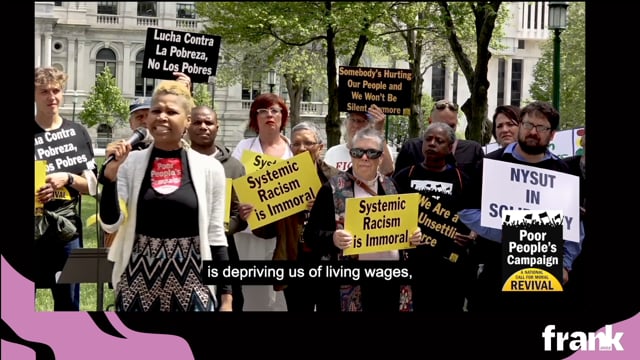 Moral Uprising with the Poor People’s Campaign
 The Unintended Consequences of Emotional Appeal