So excited to be here talking with you, Marika. So excited to be here. This is really fun. All of the room is extraordinary people. I’m so blown away by all the talks and talent and action. It’s a pretty amazing room. So I was pretty excited. Yeah, pretty amazing. You are doing amazing things too. So really excited to talk to you about that. And I’m really intrigued by your origin story as a violinist and violist for an amazing band. What moved you to decide to found plus one? What was your personal motivation for that? I mean, I was really raised by a strong woman. And she worked really at the forefront of a lot of social equity movements in Canada with indigenous people and our communities. And she said, no matter what you do, no matter what your passions are, no matter what your talents are, no matter where you go, there’s always the ability to do that through a lens of social equity. So I think that it was just my passion and a modicum of talent was in music. And I was so lucky and grateful to work with this extraordinary group of humans called Arcade Fire. And through that, I think that that was really the seed that planted it was my mom. I love that. I love that. And I mean, obviously it started with Arcade Fire. But tell me now how plus one has evolved in terms of the participation of other artists, the organizations that you support, and what you’ve achieved so far. So plus one was really started as a do it yourself experiment. Our band was really do it yourself. I think that it got really, it was important to us at a certain level, people are asking you, like, will you tweet this? Will you sign this poster for this thing? Will you play this benefit concert? Or you’re like, oh, like, is any of this anything? Does anything actually happen? And here we are. Like, we’re an hour and a half outside of Miami is Haiti, where our lead singer is from. It’s the poorest country in our hemisphere. And it’s like, we really want to focus on something and make some really tangible impact and use this platform for good. So we started adding a dollar to each one of our tickets. It’s like, we’re good at convening people. We’re good at bringing people together. A dollar, so it was like 500 people a night. And there was like 1,000 people a night. And there was like 5,000 people a night. And there was 10,000 people a night. And then we sold out Madison Square Garden, and we’re like, oh, and ultimately this grew into us being the largest kind of donor group for the biggest teaching hospital in the Caribbean right in the middle of Haiti. And so the question was, why isn’t this normal? Like, what are the barriers to this? Hello? Like, we’re just like one band and a really amazing fan group for sure. But like, there’s a lot of bands playing on a lot of venues every night. So plus one was really this conversation started at this evolution to plus one. We now have 140 bands as a part of plus one. We’ve been able to distribute over $8 million to 240 organizations. And so that’s pretty fun. Yeah. Yeah. That’s kind of. That’s really phenomenal. And it’s amazing. And I’d like to know a little bit. It’s still like, you know, only like 6% of the market share. So it’s like, imagine the potential. Right. And we’re going to get to that. We’re going to get to that in our conversations over here. But tell us a little bit more about how plus one works. How do you work with artists to determine what nonprofits you’re going to work with and where the money’s going to go? That’s the big part of our work. And so a lot of our work is in research. A lot of our work is in gathering thought leaders and issue expert areas and advisors and understanding, you know, based on. So we’ll collaborate with artists. They’ll come to us actually a couple months ago. Well, however many months ago. So it was like leading up to the midterms. It was going to be a tour that was going to be in September and October, the two months before the midterms. And a band came to us. And they’re like, OK, we’re going to do plus one. And there’s so many decisions to make in tour. So I don’t care. African animals. And we’re like, OK, OK. And we looked at the rooting of their tour. And they were going through Texas. They were going through Mississippi. They were going through Alabama. They were coming through Florida. And this is two months leading up to one of the most contentious elections dealing with the communities that you’re playing to are dealing with us in their faces every single day. And so that’s what really plus one brings to the table. It’s like, let’s talk about not this notion of charity and do good, but actually how can we contribute and be in partnership with the folks that are also coming to the show. And so that’s a really big part of what we’re doing. Absolutely. And this partnership extends to working, as we’ve discussed, working with foundations and NGOs and advisors to build a really systemized, standardized model that allows you to do the most good. Tell us a little bit more about that aspect of it. So it’s about getting the money as close to the work as possible. And it’s about collaborating with folks, much like a lot of folks that you’ve heard from today. It’s like, let’s uplift the work of Enrique. And let’s uplift this work of folks that is really, really important or are really in proximity to these things. I think that as artists, we are really good at being artists and we’re really good at bringing things. But let’s not pretend that we’re other things. So I think one of the things for us in that collaboration is really to seek out, and we need partnership for that, to seek out the educational experts. And for Changeville, for example, may I talk about, do I have time to talk about, there’s two extraordinary, so we’re talking to Changeville. And Changeville came to us and said, we want to be a plus one festival, which is incredible. And so we were thrilled to talk to them. And again, it starts from this broad. This is an education town. We’re talking about education. And what does that kind of whittle down to? And so we got to have this really exciting conversation that was looking at really vulnerable folks in our education system, in the juvenile justice system, which often you’re not in school before you get stuck into the juvenile justice system. And then once you get there, it’s the worst school possible. And then you’re almost guaranteed never to go back. And so we’re working with an organization with Changeville called CES Center for Educational Excellence in Alternative Settings. And it is setting up the most excellent schools in the country in juvenile justice centers so those folks can get the kind of education and finish their education and be brought back into the education system at their most vulnerable. So that’s one organization, DollarPerticket, one of them. And a DollarPerticket going, of course, to Girls Rock Camp, which is this extraordinary organization globally now. It’s this global movement. And when you look at the stats on women in music, 97% of the world’s producers are women or gender nonconform. Sorry, 97% are men. 3% are women or gender nonconforming folks. The top 600 songs right now, 98% of those were written by men. And so we’ve got to show girls and gender nonconforming folks not only to play, but to manage, to produce, to do monitors, to do this stuff, to be a part of this, because we can all be a part of it. So those are the two organizations. We’re really excited. Fantastic. That’s a pleasure. Really great. Yeah. Good. Totally great. And talking about being a musician, I mean, you have degrees in music and performance and education. And you’re obviously a very talented musician. But you had, obviously you are. I was OK. I was OK. I was like, no New York Phil for me. Seriously, she’s so modest, way too modest. But anyway, you, however, had no background in business when you decided to leave Arcade Fire to become the founder and CEO of Plus One. How has that beginner’s mind been an asset to the development of Plus One? And how do you use your creativity in this work? So so many people are like, what? How did you leave Arcade Fire to do this? What? And this work, for me, has just been such a profoundly creative experience. And I know that might sound weird to some. But I think it’s this like, there’s no rules. And we’re inventing a category. Plus One is not following a path of something else. It’s a new road into how we can drive millions of dollars from over here to over here without asking anybody for money. And it’s a really, really exciting prospect for me. And so I think we certainly make mistakes. But I think there’s this thing where, when you don’t know the rules, you don’t know when you’re breaking them. And so then you’re not really that worried about it. And you just kind of like keep going. As long as you have the feedback loop to be like, oh, that was a good mistake. And I was probably not a good mistake. So just try and be. I mean, that’s like when you’re writing a song. It’s like, can you have the objectivity to be like, that’s a great song. And like, that’s a terrible song. Exactly. That happens a lot. Yeah. And we talked about, you mentioned the fact that Plus One is more than Plus One Dollar. It’s Plus One Partner. It’s Plus One Band. It’s Plus One Person. And I want to make sure that we have time to share the story that we talked about about how Plus One inspired one person to do something remarkable. So I think this was really a pivoting point for me, actually, going back to your first question. It was, the dollars have been extremely powerful. There’s no question. Talking about these organizations from stage and letting people understand or hear about them for the first time is excellent. This is an excellent opportunity. There’s been this ripple effect that we haven’t even been able to measure correctly. And there’s this one thing that for me was just so focusing, which was a woman had come to an arcade fire show. And again, we’re really talking about arcade fire, but like 150 man’s do this. But I know it’s like a fire. I want to let them have it. So this woman had come to an arcade fire show. We talk a lot about partners in health, in Haiti, and globally now. But the first organization to treat aids and areas of poverty, the first organization to treat TB correctly and multi-drug resistant TB, anyways, we could get into global health any time you want. But this woman had come to our show. She was a fan of the band and came to whatever, hang out. We talked about it from stage. She went to our merch booth. And on our merch booth, we are nerdy, unsurprisingly. And we sell books called Mountains Beyond Mountains. I don’t know if anybody in here has read it, but it’s Tracy Ketter. And it’s the story of Paul Farman, the story of the emergence of partners in health and organization and global health equity. And she bought the book at our merch table. And then she went home and she read it. And she signed up for the mailing list. There’s all these tiny little touch points that just happened. And three weeks later, Ebola struck in West Africa. In Sierra Leone, in Liberia, and to a council. We all know what happened. And Partners in Health was the first people to be called by their governments. They went in. And then they called. They said, we need health care professionals to come out and help us. We need help. And she was the first person in America to put up her hand because it turns out that she was a nurse. And she’d never heard about Partners in Health before and had this random chance thing not happened in this moment of convening for joy and all these touch points along the way. She wouldn’t have had the opportunity, both for her and for the lives saved to make that happen. And that’s one tiny story of like 5,000 tours that we’ve worked on. And just the potential there, I think, is really important of the folks that kind of, if you open doors for folks to get involved in work to whatever their own personal capacity is. Absolutely. Absolutely. So for her to go and treat people. I mean, she could really do a lot. Some people can send 20 bucks. And some people can tell their neighbor about it. Whatever our own personal power allows us to do. And we are being asked to wrap this up. So no, it’s all good. We could talk for hours. But I’d like to know what’s next for Plus One. How are you going to continue to build on this system and this model that you have created to continue to do more good and to build on? What do you need from all of us from the world to build on what you’re doing? Well, I think pragmatically, we want to grow. So we want to get from like 5% and 6% of the market to like, we want this to be standard to music. We want it to be like a lead certification on a building or something like this, where you go to a thing. This is ethical. And we know that the money is going and it’s transparent. It’s going from here and it’s going to there. And it’s doing the right work. And the folks that are doing the work know what they’re doing. We want this to be normal. I think that’s number one what we really want to have happen. And sports teams are coming to us. That’s a convening that is extremely powerful. The potential here is, we’re in line, I think, to be able to grant 27 to 29 million per year in three years. And so I think us all coming together. And then beyond that is really this notion of like community building that I think might be able to go along with that. And you guys are all like communications experts. And so I know we have our website up there, and you’re going to go there, and you’re going to be like, oh, no. So when you have that moment, call me. Yeah. But seriously, go there and see what you could do to help. Go to Changeville. You’ll be helping that way. And go to all the shows at Changeville. It’s going to be such a great festival. Exactly. Thank you so much for coming. Thank you for having me. Thank you so much.





 Seven Minutes In Heaven… With A Scientist
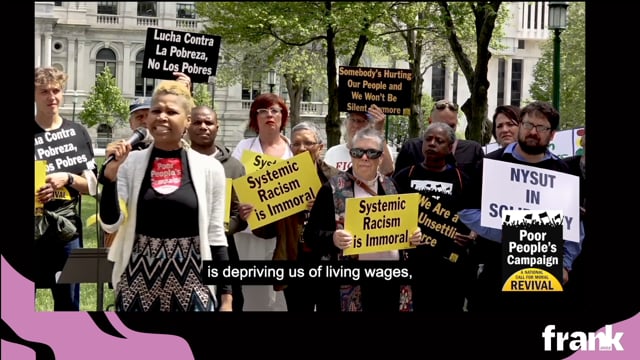 Moral Uprising with the Poor People’s Campaign
 The Unintended Consequences of Emotional Appeal