Speed 725. Speed 729. She looks at a stable descent. Speed 729. Speed 729. Hi everybody. This sort of demonstrates that there is synergy at Frank, but not necessarily unanimity. Because I’m here to say that was a slightly longer piece of really a very long story that Red Bull told in 2012. And they could have given you an ad message, right? They could have said buy a can or something simple like that. Or we give you a boost, but instead they chose to tell what was really a long form, daredevil, adrenaline fueled tale about Felix jumping 24 miles into nothingness and breaking the sound barrier. Now, it was the perfect story for Red Bull because it encapsulated how they think their customers want to feel. Pretty beautifully. It was sort of a dream of every Red Bull drinker to do that. And also the feeling that Red Bull allegedly gives you. And the screen behind me really illustrates, I think, how talking points and messages stack up against what Red Bull did with the audience. The question is at this moment when talking points and messages and traditional advertising is really failing us, really tanking. Why aren’t we telling more stories, more involving emotional stories? I asked myself often what are we putting out there? Is it mythic unifying tales? Or is it talking points that ask me to make a choice and really just help polarize the people in the audience? Our goal, theoretically, is to create a better world. And our constitution actually begins with the statement that we organize this country to create a more perfect union. But if we look around the world right now, especially our world in America, against that goal, what we see is that we seem to have fucked it up completely. So I would say if that’s the goal we want, then there’s about five things we need to change about how we all, me too, approach the world. And that begins with this. We have to move from those kind of soul destroying talking points to real stories. This is exhibit A behind me. It’s Hillary Clinton’s website, her current website, and it says it’s her vision for America. And I went there because I ran across something that said, see her exciting vision. I can see you’re all just as excited as I was. This turns out to be 41 talking points. I couldn’t read them all, but I counted them. So let’s kill this stuff off, and if we’re going to have a vision, let’s have a real vision. And the way we do that, I think, number two, is first we’ve got to be audience centric, right? We really aren’t thinking about the audience enough. We come out of a tradition of advertising, most of the formal communications, that was about jamming messages, our messages down people’s throats. It’s good for them, eat this. It doesn’t work well, it especially doesn’t work well in a digital world, where everybody is equipped with this amazing array of tools that can block anything, avoid anything. And banish anything forever, if it’s not what they want to hear. So we really need to quit looking at our consumers as consumers, at our people as voters. They’re not one dimensional. We can’t just look at that singular behavior. We really need to hear their personal narratives and put the audience first. One big step, and this is point number three, is listening before talking. And you’ve heard this before today, but again, all of those web-based tools that allow our audiences now to ignore us completely, empower us not to ignore them. And we really ought to use those tools, not just to see what people are saying on social media, but all the tools that are available to track their buying habits, to look at what’s important to them, to see what their relationships are like, what they care about, to understand their everyday narrative. So that we can tell stories that are really relevant to them and seem to come out of their reality, not just our own. Number four. A key to that is to skip these rational top-down pronouncements and understand and embrace the primacy of emotion in everything that we do. I used to tell my clients, some of them very big clients, God bless their souls, nobody ever bought anything for a rational reason. It’s simply true. It’s true of corn flakes, for damn sure. It’s really, really true of things like justice and a candidate or a cause. If it doesn’t move you, it ain’t going to happen. So let’s tell the emotional stories. And then really, this is so critical to me. And it touches the work that Chelsea Shine was talking about earlier. One of our three scientists in competition. Our pollsters are so adept at finding the tiniest differences that separate us. And yet if you ask them, but what holds us together, what makes us the human race, what do we have in common, there are no answers. They’re not even looking for that information on the whole. So my question is, how does that build the 60 to 70% majorities that really change nations, looking at how we’re polarized from one another? How does it inspire those who seek to belong? How does it do anything to create a more perfect union? It just pulls us apart. So we’ve got to, please, everyone who pays a pollster, tell them first thing in the morning. You want data on what makes us a community. You want data on how all of this fits together. Stories have always been the content of our culture. And we have some incredible stories like the Odyssey from oral tradition and the Exodus story from the Bible that have lasted literally for millennia. That have served multiple purposes, that have formed and reformed people into powerful groups, changed nations, shifted the culture. It is amazing to me that we don’t tap into these sources of power. Look for them actively when we tell our stories, that we don’t use them to summon community from all the divergence groups that we are. Frankly, I think that if we’re going to make America a better place, and God knows America needs to become a better place quickly, we have to understand that only people make change. That stories are the very best tools available to us to make those changes, to activate those people. And we’ve got to invest more in stories and in storytellers. This is a map to story Indiana. It’s been doctored a little to become a metaphor. There’s no doubt that stories work. The real question, I think, is how do we find a methodology that allows us to use stories reliably, to find the stories that can knit together disparate groups, the most powerful stories to build relationships. And somebody had to do that, and that’s what my partner is in a more perfect story, and I have been working on separately for roughly 15 years each. We’re not precious about it. We want to share it. We’re happy to workshop on it right after this, and I invite everybody to come, because I think if we do these five things, right, if we tell the right stories, number one, if we put the audience first every single time, if we listen always before opening our mouths and shouting our own messages or telling people what’s important, if we listen to what’s critical to them, if we embrace emotion and are openly emotional with people about the things we care about. And finally, if we look for these common elements, if we look to build the biggest, most inclusive community we can, we’ll get to that more perfect union. So thank you.



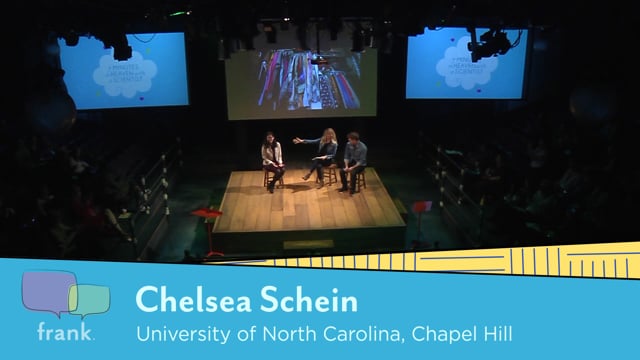 Seven Minutes In Heaven… With A Scientist
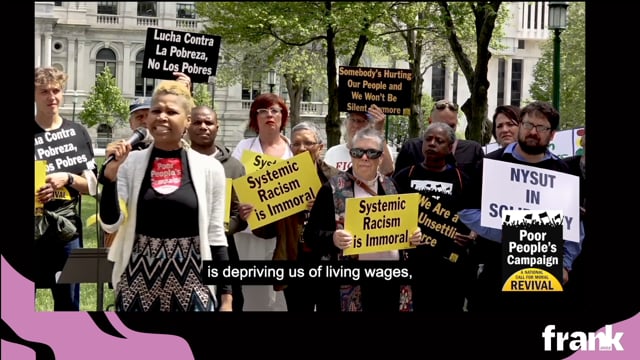 Moral Uprising with the Poor People’s Campaign
 The Unintended Consequences of Emotional Appeal