Frank Research Prize Finalist
Behavioral ScienceEducationEmotional IntelligenceStorytellingThe Event
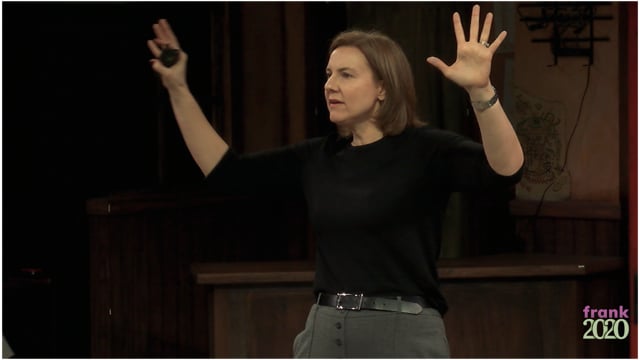
All right well thank you very much I’m delighted to be here my research explores the emotional and behavioral consequences of conflict and let me start by telling you a brief story that illustrates how aggressive communication can have different emotional effects on out group members and group members and the audience to celebrate the new millennium the City of London constructed the London Eye a giant Ferris wheel that sits on the shore of the River Thames and while this site may be familiar to many of you what you might not know is that British Airways sponsored the construction of the London Eye in the final stages of construction as workers attempted to erect the London Eye into place they encountered some technical difficulties Richard Branson the founder of Virgin Atlantic Airways decided to capitalize on the misfortune of one of its key competitors and broadcasted a message intended to humiliate British Airways or be a hiad Virgin Atlantic arranged a blimp to fly over the construction site of the London Eye with the giant banner that read be a can’t get it up this public insult certainly elicited anger in the out-group members British Airways it elicited pride among the in-group in-group which were the Virgin Atlantic employees and it irritated the British audience but it entertained a global audience so this form of aggressive communication in competition is called trash-talking which is competitive in civility and today I’m going to share with you some research that shows or explores the emotional consequences of incivility we see many many leaders publicly engage in uncivil communication in a number of different fields so we see it in the workplace we see incivility in entertainment in sports and yes of course in politics much more now in fact the New York Times cataloged all 551 different people places and things that President Trump has insulted but what happens when uncivil discourse elicits anger my recent research was Mary Schweitzer explores this question and we find that anger and pairs perspective-taking we ran six experiments but let me just describe one in detail to you so we invited participants to the behavioural lab and we randomly assign them to one of two conditions a neutral condition and an incidental anger condition in the neutral condition participants were asked to just describe how they spend a typical evening in the angry condition they were asked to describe a situation that made the most angry they then moved on to a separate unrelated task the scheduling task to assess perspective-taking we basically asked them to write an email to Avera to set up a meeting for a teleconference call with a very employment client who was BAE in California which was three hours behind the current time zone Eastern Time if they referred to their meeting times in Eastern Time that reflected egocentrism if they refer to those times in Pacific time that that reflected perspective-taking so here’s what we found 72% of the participants in the neutral condition exhibited perspective-taking whereas only 52 of the participant percent of the participants in the anger condition exhibited perspective-taking so anger harms perspective-taking angry individuals struggle to take on other viewpoints be because they experience higher levels of arousal which interferes with their cognitive functioning this these findings offer an important insight into how angry individuals become entrenched in their egocentric views and how small disagreements may spiral into conflict so what does this mean for you leaders change makers and Public Interest communicators need to be strategic and deliberate about the emotions that they elicit if using incivility and divisive language can build cohesion and mobilize action among in-group members but it can also elicit anger in our members and possibly the third party audience angry individuals tend to struggle to maintain a broad perspective and they fail to be receptive to new ideas so if their goal is to reach a new audience rather than strengthen the base politeness and civility are the key tools to engaging others broadening perspectives and creating large-scale social change thank you [Applause] [Music]




 Seven Minutes In Heaven… With A Scientist
 Moral Uprising with the Poor People’s Campaign
 The Unintended Consequences of Emotional Appeal