Growing up in a poor Chicago neighborhood, my father would wait before the son to go to work. He worked as a laborer on the railroad. Every day before he would get to work, he would pick up the Chicago Tribune newspaper. And for some unbeknownst reason, he’d hold onto that paper until he got home at 3 p.m. And then he’d swing it on our rickety small kitchen table and yell, even though our house was so tiny. He didn’t need to yell for me to read it. From the moment I could sound words, I read to my father because he couldn’t read for himself. He was illiterate. This is one part of my story told in one way. My question to you, is it inclusive? Let’s come back to that. It has been famously said that those who tell stories rule the world. If Plato is right, it’s time for a new guard, one where we were going to overthrow the throne, by centering humanity, by getting in the way for a greater purpose that’s bigger than us, by being intentional with our why. This is the real gift of inclusive story. With such power comes great responsibility. And we got to do better. We must do better. Because this is not simply about representing diverse voices or telling the truth in disregard. Inclusive story is centering humanity, free from biases, stereotypes, and that notion that your way is the only right way. We got to get rid of all that. Inclusive story is power with, not power over. Power with to be seen, to be heard, inspired, and yes, even protected. So let’s get to doing better. By first interrogating what else? Our words, our language. Language is defining. Language has the potential to enact and maintain social justice and social change. That is dang quite powerful. So first things first, you are not the storyteller. You are a story-sharer. What do I mean by that? The storyteller is the one who is telling their story. In my case, the story of me reading to my father, it’s my story to tell that I choose to share with you, to then write or share more widely with an audience who hopefully can create impact for good because of it. You get the privilege, you get the privilege of listening to someone else’s story, their journey, and you get to share it. Hence, you are a story-sharer. Story-sharers are the architects of culture, and the stories they share are the building blocks of our world. Setting this posture, your position is necessary for inclusive story to prevail and change the world because we all know we need some change in this world that we are living in. So what is your why for story? Do you want to empower a conversation? Then you must make room for conversation to even occur. You must take the time for conversation to occur. Do you want others to share their stories, to give and support of life stories, then you must provide the authentic mechanism for them to do so. How are your institution stories honoring the communities you serve in connecting others? These first steps of posture and questioning to get to the goal are necessary to interrogate and they must not be skipped over. After all, we’re trying to change the world here. Only then from there, we can take hold of the second point. That is connecting our words, our language with the human-centered experience. One that is authentic and vulnerable. So just how do we share one’s experience, their journey, while creating equitable outcomes for all members of our community? Well, first of all, we can start by defining people by their aspirations. Not what we deem as their challenges. This is harnessing asset framing. Pioneered by trade-bond-shorters, asset framing sees the hopes and aspirations of humanity. Not an at-risk this, a poor that, or low-income this. You must see the hope before what I like to call the opportunity, what the rest of the world calls the problem. See the dream, not the circumstance. See the human instead of making them into an object that needs to be dealt with and defined by their challenge. Whatever the aspiration is, I aspire to be a scientist. I aspire to be a leader. I aspire to be an activist. I aspire to graduate high school or college. Whatever the aspirational goal is, acknowledge that first before you go into one’s various opportunities. You see humanity first, not the homeless. Instead it’s people without housing. Not unemployed people. Instead it’s working parents who lost their jobs. You see the person first always. See their hope before the problem or the circumstance. And this leads to the third and last point, crafting legacy, not just a memory or a moment. Stories of legacy change generations and break curses. I know this to be true as a first and only to graduate from college three times over. And they speak from a place of proof and authenticity. Such nurturing automatically pushes progress and profit. So are you curating legacy? Are you stepping into the space between no longer and not yet? Let me tell you, it’s a hard no if you are still sitting in this conversation comfortable. Comfort is the very definition of privilege. And that’s not where inclusive story lives. How might your story be a wall keeping out someone else’s truth? Where do you hold power that can make others feel powerless? What might you not be seeing from your own vantage point? Who is not present in your story? Those voices are still missing. Are you extracting or exploiting the story of a student for your own university’s game? Holding space, making space is at the intersection of legacy. What does it look like? Better yet, what does it feel like? And what does it sound like? What is the impact of that? There’s no greater agony, says Maya Angelou, than bearing an untold story inside of you. You must, you must, you must, you must live life like a good bonfire. Burning yourself completely, leaving no trace of yourself. Living, leading, and pouring in truth, cleanliness, not causing harm or being chained in any way, leaving no residue, only legacy. So let’s pinky square to go beyond calling ourselves story sharers, but to live out being a story sharer who calls out the lie and goes beyond the how to act who and what is missing to uplift shared experiences, shape identity, create communities, promote culture and the values, provide instructions, and reveal the past with the intention of shaping the future. As story sharers, we inspire action and craft legacies. The stories we get to share become the stories we live and the language we use directly reveals how our world, our circumstances are occurring as truth to us. So now let’s rewind from the beginning. My father planted a dream, a seed within me. He fertilized that seed and watched it grow by pouring into me what he didn’t have, by requiring me to read the newspaper to him daily after school. He could not read, but he didn’t have to because I was his vessel, his access to the world around him. And he gave me the greatest gift of seeking out words as a way of being, that I became a sharer and lifter of stories and words that I once read to him. Do you see, feel, hear the difference? It’s the same story, but different from how I first told it. Now wave your pinkies in the air and swear that you are going to share story and be a story sharer. Thank you.




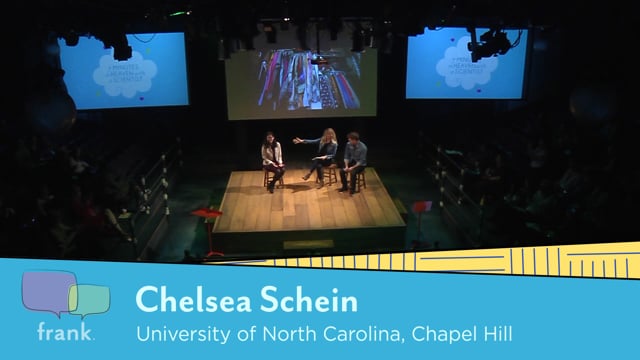 Seven Minutes In Heaven… With A Scientist
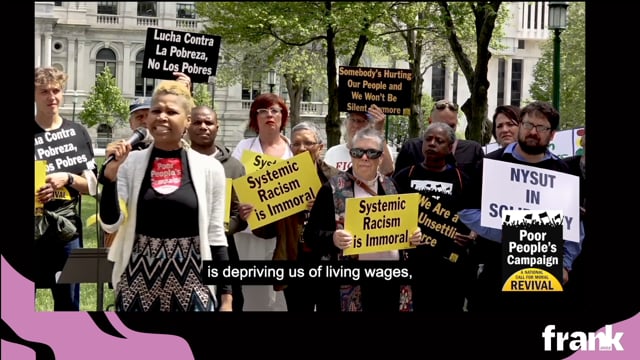 Moral Uprising with the Poor People’s Campaign
 The Unintended Consequences of Emotional Appeal