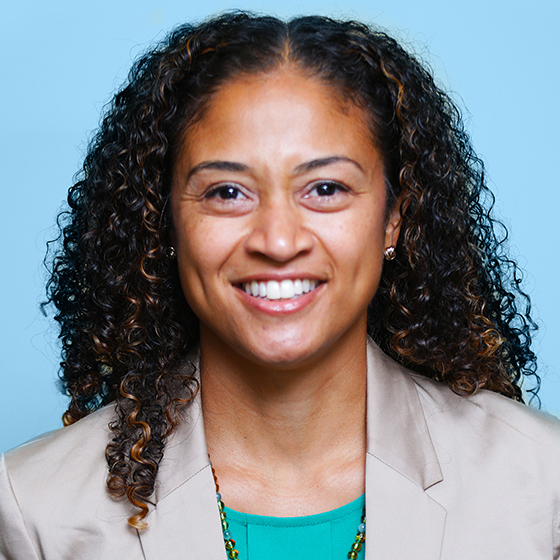
I’m going to be talking about the lived experiences from the inside out. And to do that, I wanted to speak to you about a few of my experiences as a black senior leader at the San Francisco Foundation, navigating in this time of uncertainty and making changes that we’re not yet talking about. To ground this talk, I wanted to start at the beginning and take you on a little bit of a journey through my formative experiences. These are foundational to my visceral understanding of race, culture, and belonging. As you can see, my mother is white, my father is black. I was raised in rural community in Maine from the time I was born through leaving for college at age 18. Maine is 94% white presently. It was 99% when I was born in the 70s. Let that sink in. No matter where I went, the doctor’s office, school, sporting events, the DMVs, summer camp, restaurants, grocery stores, I could count on being the only black person. I come from a big family. I’m one of six. Number five. All girls, one boy. We are a blended family, all sharing the same dad. And each of us dealt with our realities of growing up in Maine differently. This year, we lost my brother to a long struggle for the dictionary. And like many families, we’ve had each other to lean on in good and bad times. Growing up in Maine meant for me that I became adept at understanding how to read the room, make people laugh, manage hostile environments, people please, and shove my anger so deep into my being that it took years for me, and I’m still trying to sort through it. Generally making other people feel comfortable with my presence has been something that has been ingrained in me since I was a small child. In this environment, it has been made clear to me that a drop of black made you black. To give you an idea of what this means, I was not permitted to go to the prom with my good friend because his mom thought that I would ruin the pictures. Colorism and the complexity of my lighter skin were something I learned about when I went away for college. Something that no one in my else, no one else in my family had done before me. And here’s another note about college. It took me 10 years to graduate. Yes, she persisted. The final identity I’m sharing is of me as a professional. I am a proud communications practitioner who pulls up her sleeves and gets in the trenches with community and her team. And while I do have a degree in journalism, I would not call myself a writer. I write, I create, I learn, and I fight to inform through easy to understand plain language and relationship building. And now that I’ve entered the level of my career where I get to be part of management, I take it seriously and I use that power afforded me to help shape culture and internal systems, especially within organizations charged with advancing racial equity. At SFF, that means I can directly impact the lives of our predominantly BIPOC staff. More than ever, I think we need people dedicated to changing the inside of social justice organizations, especially historically white institutions, so that our external aspirations match our internal environments. We need increased and better support for multicultural staff who we are sending out into the field. My colleagues want to impact change and for some they hold deep responsibility that binds them to their culture and purpose. We must listen to what they need in order to do their jobs with integrity. I entered SFF. Oops. Okay, there we go. So that’s my technical glitch for today. I entered SFF in April 2020, a very emotional time. It was a time of uncertainty and a time when race took center stage. When SFF began its racial equity journey back in 2016, it was challenging to convince people that our work should be centered on race. Now everyone is talking about race and racism, yet the underlying causes remain obstinate and resistant to change. The events of the last few years have changed me and continue to change me. My feeling is that it’s changed many of us. I don’t think it was until I set up shop in my bedroom and managed crisis plans and announced emergency remote working conditions, drafted blog posts, supported staff and held virtual space with other leaders to help staff express their feelings and emotions that I got a real sense of how unbalanced my life was and how ill-equipped I was to emotionally halt all that was happening before our eyes. Somehow even with the violence I covered as a journalist or informed parents about when I worked in school districts, I had not taken an intentional moment or moments to sit with my own blackness to allow myself the space to understand all the ways that I had been repressing my anger. I kept it moving and stayed numb. I largely accepted the permanency of white supremacy culture. So with exhaustion and a desire to refresh my soul, I began to have more intentional practices of remembering, releasing and restoring. I found that meditation, walking, drinking water, sleeping and laughing are my favorite self-care prescriptions. So the events of the pandemic hung heavy on all of us at the foundation. We were seeing unprecedented numbers of people in need of necessities like food and shelter and the racial lines on who was impacted the most were clear. It was during this time that we renewed our vows to our North Star and doubled down on our commitment to advancing racial equity and having a point of view on race. So what we did was to create a set of guiding principles. They were both in response to the moment we were in, but also to sharpen our approach to impacting changing the community. The five principles were invest in inclusive, restorative economy. Create an equity-centered organizational culture rooted in bridging and belonging. Drive maximum resources to support our equity agenda. Practice transformative solidarity and center black and indigenous communities. I want to call particular to the last two principles which embody our foundation’s belief that our country’s original sins, the genocide of Native Americans and the enslavement of black people, set the conditions for the dehumanization of people of color that is still very much with us today. This work was the result of a cross-collaborative team that met and toiled over strategic planning tools, research and historical documents within the organization. It was honestly some of the best group thinking and work I’ve seen happening inside an organization. And as all communications or many of us do, the first thing I wanted to do was to announce this and create a messaging campaign. I was having fantastic daydreams of how we would tell the world and anyone who would listen that we are centering black and indigenous people. This is a big deal and you know we got to do this, right? Wrong. What happened was because we called out centering the lived experiences of black and indigenous people and our desire to practice transformative solidarity, many of our staff didn’t understand what that meant. Over and over again it caused people to pause. Our board members, staff who didn’t work directly on the principles, they asked what does this mean? Do we only fund black and indigenous community members and organizations? Does this mean that we will center black and indigenous people inside the organization? Many of our Asian staff members pointed to the increased incidence of Asian violence and asked what about us? It became difficult to create buy-in for a compelling messaging campaign, especially from our BIPOC staff whose lived experiences bring purpose to the work in a similar way that mine do. I believe we realized that creating a campaign to announce what we were going to do wasn’t aligned with our values anymore. Until we knew how to bring these guiding principles to life and to make progress doing so, there was nothing to announce externally except a promise. And for us, after the last two years’ events, promises are just not enough. To this day, those guiding principles are still functioning as the internal guidance for staff. We continue to delay announcements until we’ve made progress rather than share new ideas as promises of work to come. And more importantly, we are taking this time to focus inward and to ask ourselves if we are advancing racial equity within the organization. We have engaged in deep and messy conversations that have led to actions I’ve shared on this slide. We are working on identifying shared organizational values and learning about trauma-informed leadership practices. We’ve invited all women who identify as black to convene and provide us with insights on issues that have led this group to feel unseen and undervalued for years. We’ve set up spaces for affinity groups and are conducting a PACE study. I’d like to think that all of this isn’t just because of the events of late and that it only recently became necessary. But the truth is, we needed to begin this to actively push internal systems that are biased and inequitable. It seems to me, inside organizations is where real change can happen. Because no one was watching, it takes a deeper commitment and accountability. Our external brands are shining and politically correct. Our internal practices are messy and complicated. Will you join me in bringing your skills to change behavior and inspire change on the inside? I promise to return next year to share with you the progress we’re making at SFF. Thank you for listening.



 Seven Minutes In Heaven… With A Scientist
 Moral Uprising with the Poor People’s Campaign
 The Unintended Consequences of Emotional Appeal