I’ve had this vision of going to work one day. I’ve said this before where you’re sitting at your computer and you’re typing something and your email goes to somebody and it arrives and people give you a standing ovation because you’ve completed something. Because I’m not an athlete, I’m not a performer, so that’s the best we can do. So my task today is to try to build on what Liz said and a little bit to channel Frank as best one can do. It’s a little bit preposterous. So what Frank would have said is that in those of you who know knew him would say this, I’m speechless. You’ve humbled me so much, I have nothing to say. And then he would have had a lot to say. And he would have said, you know, how much this mattered and this community and I can’t believe it’s all here while telling you that he has nothing to say. So I’m going to try to build on what I really think we’re all feeling but that I think you would have heard from Frank. I also want to give a shout out to Jennifer Willig, wherever you are, where are you? You here? She had to go. For her list at the end, I thought that was a really helpful synopsis in a way of this conference. So I’m not going to do better than that, but I’m going to build on it with a couple of thoughts of what I think you would have heard from Frank. So without getting in the way, let’s try this. Not working. Maybe I should turn it upside down. That’s Frank. And here I think is what he would have told. So we’ll start with that. One is, I intend this as what you would have heard 10 and 20 years ago from him and what applies today, because it’s what’s happening in this room that really matters, not what happened 20 years ago. What Frank brought to the field was defining for the field, but we move on. And this conference is about moving on. The first thing that came to mind for me is keep learning. Just keep learning. And here we are, and this has been a learning conference. So you don’t know this or most of you don’t know this. Frank was a homeless person by day, I’ll tell you why, who liked to learn. And he was a networker by night. What he did is he got on the train in Trenton, New Jersey or Princeton, New Jersey, went to the Rockefeller Foundation when he was there for a while. And he dressed like somebody you didn’t want to be near. And he sat in the corner of the train, and he put a blanket over himself. And he had ratty pants. And he just made a point of sending a signal, you don’t want to be near me. This was at six in the morning. And he read, he read and he read, he was about gathering as much as he could learn and then doing more of that. And it was sort of an article was written in a local paper about this executive who posed as a homeless person, went into New York, and he came back and I’m overstating, I mean, there are a lot of days in the world. And at night, and I’ll get to this in a minute, he was involved in what we would call networking. I want to talk about that. But he was a voracious reader and learner. And this conference has been about learning. And I don’t want us to lose that thought. It isn’t like we know everything. I think we’ve all learned a lot. And I think every one of us, it’s hard press to think that we didn’t all come away with something from this conference that we didn’t know before. So I want to make a point of that. Whoop, that worked. Frank was a networker, but my term, a substantive networker. He wasn’t about handing out business cards and glad handing and nice to meet you and whatever. It was about meeting the most interesting people and people who were not necessarily naturally in his life. And finding ways to bring them into his own life and into the larger world. So you’d see him after at some point you’d say, what happened this week or something. I met the most interesting writer who was writing on Ethiopian women’s rights. It’s like, what’s this have to do with the Robert R. Johnson Foundation? He met these most interesting people. He had a nose for interesting people. These were writers, these were artists, these were scientists. They were change makers. And he grabbed onto these people and he made connections, but they were meaningful connections. And I want to underline the point of meaningful. They weren’t these sort of casual fly by sorts of things where your Rolodex was added. So this sort of networking that we’re doing here, this sort of real conversations, the huddles and the natural getting together and the being together and people really connecting about, hey, I want to talk to you, you know something I don’t know. That was the hallmark of how he would have defined networking. I’m slow at this, but I’m learning. Frank was about, and this is what’s happening here, what I would call the almost famous. He worried less, and I think we’re doing that, about the famous people, the people who are on page one of the New York Times or whatever we’re talking about, or NPR, or Shankar, whoever. Don’t mean games, Bill. He worried, worried isn’t the word. His world and our world is about people who are under the radar. People who are very, very, very well known in their tiny, tiny universes and are changing the world. People who are not famous, they have no name recognition, but they are giants in what they’re doing. They are activists. They are change agents. They’re big deals in their communities, their states. They’re, they’re pieces of the world. They are not the head of the UN, but they might be somebody working in a particular country, in a particular district, who’s actually made great change. I met recently some person who is the only dermatologist in Nigeria or something, who flies around the country, has taught herself, had a fly an airplane, and goes all over the country to prevent cancer. Like this person isn’t well known, but this person is for, I’m going to call it almost famous. We work with those people. We, some of you are these people. We heard some of you. I think our friend from South Sudan is one of these people who’s changing the world in a big way. He may not, you know, win name recognition in a poll. And we work with these people. We should honor these people. We should recognize that these are the people who we should be spending most of our time with, as opposed necessarily to the people who are grabbing the headlines. For Frank, it was about scale. Think big and think bigger. For him, scale was it wasn’t okay to provide healthcare for homeless people. At the end of the day, we had the Stuart McKinney Act. It wasn’t okay to provide aid services to people with AIDS. We had the Ryan White Act. It’s not okay to know a couple of agricultural researchers in the developing world. He created a field of communications around agricultural research. Bigger is better. We should think scale. He would always say, take it bigger. What more can we do? And that is what we do. We are people who have ideas, who work with big thinkers and have an opportunity to make big change. And that’s what he did. And that’s what we’re doing here. He would, he was big on this notion that is getting more and more salience these days, more and more traction of measure, evaluate, and evolve, which is, is what we’re doing working. Is it making any difference at all? How would we know? How can we prove it? And once we know what’s working and learnings, I had a brief conversation with Kristen a couple minutes ago about maybe we want to be hearing from people who have really tried ideas and tried to push social change in a particular area and failed. What did we learn from them? What can we say about that? And conversely, what can we say about why something in particular succeeded? It’s not okay, and I’m guilty of this, to spend too much time on intuition. We need the sort of research that Linda Hahn spoke about, the Annie Neiman spoke about. We need that, and then we need to evolve and get better for it. It’s, it’s, we have to do better than our own instincts. And then two other things that I’m just going to be quick on. With Frank, it was always about humor and good cheer. There was always a joke. There was always a smile. The issue might have been serious, but the interpersonal relationship was built on nothing but goodwill and being positive. This room is nothing but that. And I get the feeling that you all are that in your workaday worlds. Last thing is, for Frank, it was onward always. We go forward. We don’t worry about what happened before. We don’t, we just don’t do that. We go forward to the next sort of thing. I want to end this part of what I want to say with a quote that is meant to be provocative from your favorite place, the Heritage Foundation. But we’re taught that being counterintuitive is a good idea. So that’s why I do it. If you haven’t read this article, it goes way back. It’s really worth reading because if you’ll remember in the 80s when Ronald Reagan was the president and the agenda of the conservatives was in practice and really working, Edwin Fulner was a key part of what they were thinking as the brains behind this. And he gave this, did this paper and said, waging and winning involves commitment, talent, creativity and patience because there’s a battle every day and we’re here for the long haul. And I want to underline that. It’s not did we succeed today, did we succeed next week, did we succeed whatever, because the walls will come tumbling down. And we’re seeing that around gay rights right now. It’s not done, but we’re seeing it happen. I’ll take the whoops. That’s a good thing. So hang in there and don’t demand victory immediately. A couple of things I want to do because I’m here and I can, so I will, is I want to thank and encourage you to thank the big world of the University of Florida for making this possible and for being what this institution has become writ large and all the help we got here. They’ve been fantastic. So I urge you to do it. And I want to do, if I can find her, where’s Betsy Correll? There’s Betsy Correll. I know that she got shouted out. I’m going to do it again. Betsy’s philanthropy has made the chair possible, has made this possible, has made the Correll Fellows possible. And everything we’re talking about, it just wouldn’t be happening. So let’s acknowledge Betsy. And last but not least, at the risk of great embarrassment and being yanked from this stage, I’m on minus one second. I want to acknowledge Ann Cristiano. So Mark Dessauer had a great line today at lunch. She’s gone from being a guinea pig. She took over this chair that didn’t exist. She’s gone from being a guise’s Mark’s line, a guinea pig to an orangutan in a really well-dressed orangutan. You can hang on to that. But my colleague, Ellen Wilson, who I think will be here next year and wasn’t here this year, created a word for a colleague who’s done extraordinary work. And it’s a word she’s got hanging somewhere called a possibility. Anything’s possible. Anything is possible. And Ann has made all things possible. So she came here to teach. She’s taught. She came here, I think if she had come and she had taught and she had 25 students in a class and they left, that was fine. But that was never fine. And without going into great details, any of you who know her have been touched by her. I almost came with one of 10 testimonials I’ve seen from students. Any of this, she has been the change maker at this institution that is providing the seed for the change across the country. So that’s all I’ll say Ann, but thank you a lot.




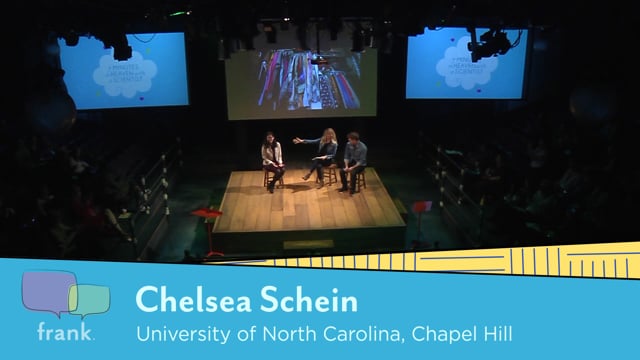 Seven Minutes In Heaven… With A Scientist
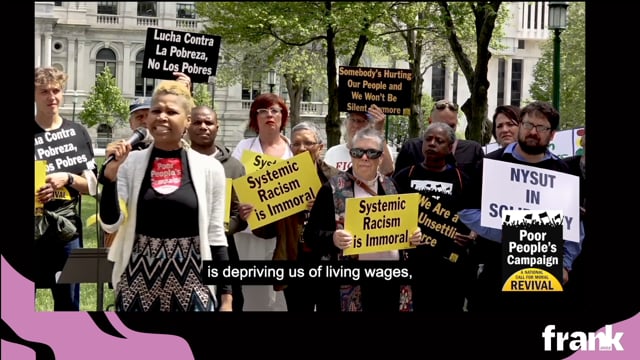 Moral Uprising with the Poor People’s Campaign
 The Unintended Consequences of Emotional Appeal