Hi everybody! I’m Liz Wynstead. No I’m not! Bad things happen in a dark basement. I’m so thrilled and excited you are here. I want to hear from Roland again. Thank you Roland so much. Thank you! We’re going to hear so much about stories, I think in this conference, because the thing that separates social activism from the other crazies who try to control the narrative is that we believe firmly that our facts are going to get us through. We make that mistake a ton. We’re like, look at facts on our side! It’s like, so… So while the facts are important, the stories that go with the facts are what get people in the gut. I started out just being a regular old stand up. I liked it, it was fine. But I had this weird aha moment in 1991. When I moved to New York and a friend set me up on a blind date. And remember those, you have to say? It used to be that there was no e-harmonie. You would actually have a friend set you up with a total loser. And so the friend called me, I just moved to New York, and said, this guy’s great, you gotta meet him. And I was like, okay. And not like, what’s he like? Okay. So he calls me and I said, I’ve never seen Ladolce Vita on the big screen. I really want to see it’s great black and white old movie. Do you want to go? And then he goes, it’s black and white. And at that point I should have said, okay, no. But I’m from Minnesota, so I was like, well, I already gotta go through with this. So, alright. It’s nice, you know. So I met him in front of the theater, and he shows up and he’s wearing a Yankees hat and a Yankees jacket. And I have a theory about men wearing more than two pieces of sports clothing. And that’s okay, but yes, I just said it. So he instantly sits down and he falls asleep. And I’m completely engaged with the movie and I’m so annoyed and he’s sleeping and I’m annoyed. And I’m eating my popcorn and I take my greasy popcorn hat and I just push it up against his jacket. To wake him up, but really because I was just being passive aggressive. And then I go awful. And so afterwards I was like, do you want to go for a drink? So we go for a drink at his favorite sports bar. It’s January 1991 and there’s not a sporting game on. It’s the night of the first golf war. And the entire bar is watching a war. It happened for the first time in the bar and then living rooms around the country. We’ve never seen a war actually happen. And I was a political person, I was a feminist, my acting wasn’t really big. I wasn’t looking for a media agenda, but as I watched, what kept watching over me was, are they reporting on a war or trying to sell me a war? And the moment I had that thought, my dopey date goes, this is awesome! And I was like, how many people in America are saying war is awesome without even knowing it? From that point forward, literally, I was like, I’m funny. I’m going to start reading more. I’m going to start incorporating this comedy thing I do with what I’m paying attention to. And then I did a woman show, my stand up became more political, and then I launched the Daily Show. And as you know, I’m a woman. And as you know, it’s this odd thing that many look to as a news source because the storytelling and the humor and the laying out of information really matters. When someone makes you laugh, you have a connection. You can’t deny it because you can’t force whether you think something is funny. Like, it comes out of you viscerally or it doesn’t. And so then you can’t deny it, you kind of like the person that made you laugh. And then if you kind of like the person that made you laugh, maybe you’ll listen to that person a little bit more. Right? And so when you can combine these things together, and then you can start telling a narrative, it becomes, as my muscle grew and I left the Daily Show and I moved on, and I sort of do this transition where I felt like all of what I do now has to matter. Because there is something intrinsically political, just being a woman, having an opinion, and helping. And for those of you who are people of color or women, you might notice that when you try to assert your power on the internet, it’s incredibly frightening. And we live in a media landscape. Now where so much of our journalism and our work and our activism happens online. There are people there who are just creepy. Horrible trolls. Horrible, horrible, horrible trolls. And you’ve all had this experience. I had this experience recently. It’s unbelievable. So somebody tweeted after the Bill Nye debate at the Creation Museum, glad to know there was proof that the earth is 6,000 years old. I tweeted, that’s awkward because fire was invented 10,000 years ago. Well, they did, but you know what I’m saying? They tweeted back at me, whore. Then I could have powered. At that point you’re like, ouch. But instead I tweeted back, I might be a whore but you’re still wrong. Because that stuff is going to come at you and as you’re writing and developing and as you are being an activist and as you’re getting your 40 plus and your truth, that ad hominem stuff is the first place to go, what you look like. Trying to just tear you down instead of your message and just remember, every time they do that, what they’re telling you is, I got nothing. They’re telling you I got nothing. They’re also telling you that what you’re saying matters and it terrifies them. So do not let these people, they’re in a vacuum and they’re a troll. It’s been happening constantly and I really want to bring it up, but I wasn’t going to bring it up in my presentation, but I decided to because it is permeating. And because it is where all of us do a lot of our lives in our outreach, that these people come in. So just ignore them or laugh at them, but always tell your story with the facts and the more you do, the more they come at you, the more you’re doing something right. And they’re not coming at you, combating what you’re saying, they’re combating you. And you know that whatever they’re saying isn’t true. And you know what? If you’re right, I don’t care if you’re a whore. Let’s get this off. So as many of you guys are here, this is such an amazing conference because it’s bringing together so much stuff and so many amazing speakers who are going to help you rethink the way that you are doing activism, you’re doing your life. People have incredibly amazing skills. People have done this for a really long time. People who want to help you. So if it’s your first time speaking, who cares? Don’t worry, I said whore. It’s the clock, if you see it’s going long, you’ll be like, oh, oh God, just get to the good stuff. These are the good stuff in the end. Just do not panic, have a good time. And I’m not the person that actually is going to walk you through. We have really, really, really good people who are going to walk you through. Kristin Grim and Aaron Hart are here. If you don’t believe us, Kristin and Dennis from Spitfire are the ones that have rolled me into this because I believe their work is so important, their messaging is so important, they actually understand so profoundly how to be incredibly interesting and incredibly engaging in social activism. And Aaron is from Fenton Communications and I work with Fenton and I love Fenton. And Fenton is like to me this little jewel that I’ve experienced in my life. And so they’re going to come up here and they’re going to talk to you about sort of how to work Frank the best way you can, how to get the most out of it. So without any further ado, I’m going to bring up Aaron and Kristin.





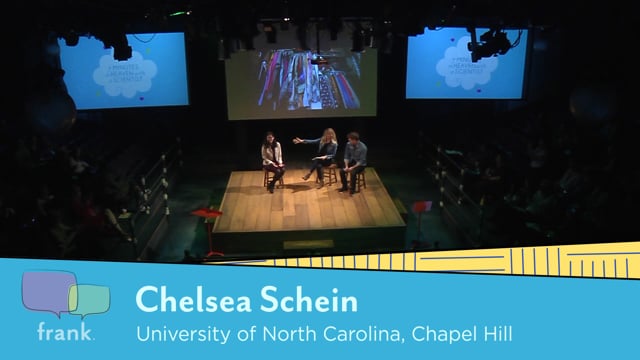 Seven Minutes In Heaven… With A Scientist
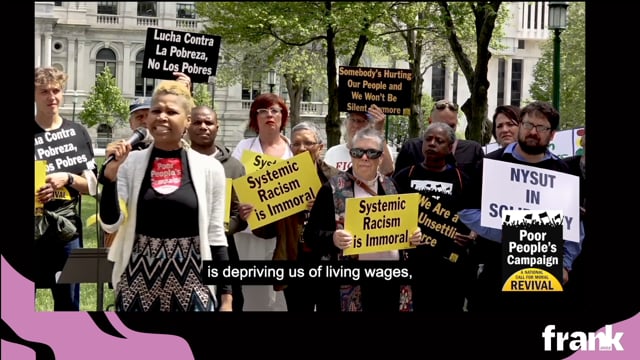 Moral Uprising with the Poor People’s Campaign
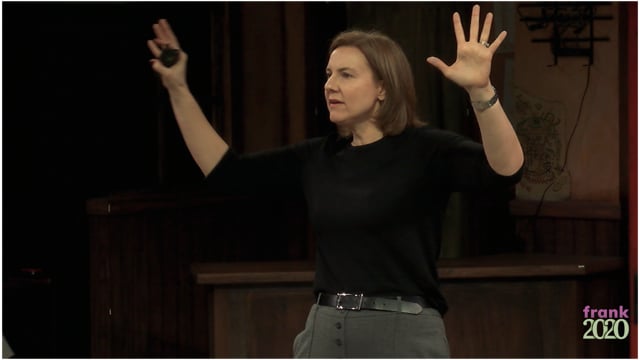 The Unintended Consequences of Emotional Appeal