Hi everyone. Hello. I said to Lena, I’m so sorry, I’m pretty sure the poop thing is going to make it in. But I like poop, it’s good. Yeah, I really like it. So, good morning everyone. Hello. I wanted to start off by asking you all a question. How many of you, show of hands, how many of you would rather die than get blood from someone like me? Really not, there’s nobody here? It’s hard to believe that not so long ago, this actually happened in our country. That some white people would choose to die than get blood from somebody of a different skin color than them. And in the US, we actually made it easier for them. We did things like blood labeling and we had laws on the books. So 2017 is actually a landmark milestone year in civil rights for those of you that don’t know. So 50 years ago this June, it’s the anniversary of the Supreme Court case, Loving v. Virginia, which finally disallowed the last of the anti-missegination laws in this country, which made it illegal for people of different races to marry and to procreate. But here’s why that’s important. Those laws were not just about romance and sex. They actually became the foundation of our segregationist Jim Crow system. And so if you want to guess who else had laws like that on the books, Nazi Germany and apartheid South Africa, just for a little context. But it still took another 33 years before mixed-race people could have a box to check off in the US census. Mixed-race population is growing three times the rate as the general population. Okay, so here are all these beautiful biracial people. So biracial people are now legal. They have street cred. So what is the issue? Is there even a story here? So on the one hand, we really fetishize biracial people by calling them beautiful and exotic. Or we ask them continually what they are, which is a form of othering. But on the other hand, we actually erase half of their identities when we decide people of one race that declaring them one thing over another is more convenient and more understandable for us. But it occurred to Lena and I that what we don’t try to do, perhaps, is to try to understand their unique identities and experiences. So that’s where our story begins. And so for Katie and I, this is actually very deeply personal. Even though we don’t share the same race, we bonded over the fact a few years ago that we’re actually both moms of biracial children. And through our conversations, we started talking about what kinds of questions our kids might have. So we wanted to know how their identity might be formed. We wanted to know if they would choose one or the other. And we also ultimately wanted to know what the world thought of our kids. Yeah, so Lena and I obviously bring our own racial backstory to this scenario, which we feel like is always important to explain when you’re working on a story about race and we are not the same. So obviously I’m white. I have never been a victim of racial discrimination. I don’t know what that feels like. My family ancestry is actually from the deep south with all of the complications that can come with that kind of history. There’s a lot of inherited feeling about that. And I have to say, I didn’t even see it coming how much my lens would change so profoundly having biracial kids. Because I know at the heart of all of this identity question and tolerance and all of that, I know that my children have a burden that I will never understand. But I want to understand it as much as possible. So I’ve been a mom for about ten decades and the moments of discovery. Oh, ten decades? What just happened? Holy shit! You’re old! Oh my god! I’m going to tell Poochup. I’m going to tell Poochup right now. You look really good for your age. Ten decades. I am the greatest mother of all. I’m so glad you guys caught that because I would have kept going. Why are they laughing that I have a ten-year-old? That’s so weird. So anyway, ten years. I have had a kid. No, two kids. And the moments of racial identity and discovery and discrimination have been near constant. So now I do understand race differently. I will never understand what it’s like to have brown skin in America, but I do have a different lens. So there are many, many stories that I could tell you all, but just to break down a few. There are the stories with my son. Every year we get a call home from school and I can always predict exactly how it’s going to go. They use language that is never applied to my son. He’s like kind of a quiet, nerdy kid. I’m so sorry he’s going to watch this later and feel bad about that. He’s fine. So a really sweet, lovely kid and we get these calls home that say things like defiant and hostility. And so the first time it happened I thought how’s that possible? Have you met my kid? And then I started to recognize every time it was always when he was playing with other boys of color. And the fourth time it happened I finally said, oh, they’re going to get a book. Now they’re going to get a book and I’m plus her bias. So there are moments like that where you have to, even as a white parent, you recognize those moments of subconscious bias even if you can’t feel them, but you do feel them for your kid. And then there are the moments of levity. There’s a lot of humor and biracial families. I don’t know if anybody is a member of a biracial family and knows what I’m talking about, but my daughter is a comedian. She’s super funny. She’s eight. And she’s not 80. In my eighth decade, my daughter. So we have all these moments where people are constantly asking her what she is and they do it right in front of her, which I think is kind of odd. But she’s had, just over the last couple of weeks, someone asked, someone said, oh, your daughter is so exotic. And Simone said, oh my God, am I endangered? Like, white tiger. I mean, you’d be so impressed. She has like such good comic timing. She goes, oh, like the white tiger at the zoo. Like, why would you use the word exotic? I was like, some people think you’re beautiful. Anyway. And then just two weeks ago, we got a county publication home and her photo was in the Spanish language section for Spanish language services. She’s the only one on there. I said, oh, Simone, I think they think that you’re Hispanic. That’s so interesting. We haven’t gotten that one in a while. And she, without missing a beat, said, hola, como estas? And now she’s the best. But I’ve been asked, what are your kids? Are you the cool babysitter? Are they adopted? Where do they come from? It’s pretty constant. So I’ve never been accused of being the cool babysitter. The nanny? Yes. All right. So my story is a little different. We were the first immigrant family to move into a small town in Ohio. And it was such a big deal. The local newspaper did an article on our family. And while this is very exciting for a seven-year-old to have your picture on the newspaper, it did come with a backlash. So I remember one story when I was walking home from school. A kid yelled out the bus window, where’s your green card? And I yelled, at home with my mom, where’s yours? Not realizing that this was meant to be an insult. As things, you know, for us, growing up brown, we didn’t have, it was inherent. Like in everyday situations, we didn’t have to sit down and have talks about race because it was just part of our everyday, right? Which is a little bit different than Katie’s situation. When I got married, so much so, my husband and I went to India for his first time to India. When he came back, members of his family said, well, if you got stuck in India, you could always use the Bindi, or the red dot that Bindi or Tikka that some Indian women wear as target practice. Yeah. Pretty heavy stuff. And so when we started to have kids, like at that point, we sort of let things roll off of us. But when we had kids, things changed. And I remember taking my son to the park one day, and somebody coming up to me and saying, you’re so good with him. Who do you work for? And I was like, him? He’s my son? Right? And then other people have said to me, he’s so gorgeous. Is he yours? Because of course I couldn’t have a gorgeous son. So never the cool babysitter, but always the nanny. Okay, so here’s what we decided to do with all of these questions. So Lena and I knew that we had all of these questions actually about parenting our kids, because there was a part of it that we just didn’t understand, even though Lena and I come from different directions. So because we are documentary filmmakers, in addition to a lot of other identities that we have, we figured we cannot possibly be the only people that have these questions. So maybe we should take our questions on the road for the ultimate journey of curiosity. So our documentary, still in production, we feel like it’ll never be done, but we say that with love, is called Mixed, and it is a journey throughout the country to ask and answer and listen to what it’s like to be a bi-racial person in today’s America. And as it turns out, in a moment that is not at all post-racial, so we’re going to show you a very quick assembly that is not color corrected for people. Yes. Yes. Can I ask you a question? Describe, Manny, what color is Manny? Light brown. Light brown? Okay, what color is Daddy? Skin color. If somebody said to you, are you black? Are you white? What would you say? Beige. I like that answer. You constantly have people not understanding where to put you, not understanding when you don’t fit into any of the buckets that they already know to exist for a certain ethnic group. So it’s like either box didn’t work. I feel like nobody can just be put in a box. What I put down is hybrid. Hybrid? Yeah. Keen. My kids call themselves swirls. I have no idea whether that offends people. They like it. So Lena and I are both in mixed marriages. Lena’s husband is white. My husband is Caribbean, Trinidadian. My kids definitely look biracial. They don’t look white. Oh, is that my breakfast? For me, this defining moment when my son was three, we live in an area where the president’s helicopter and plane fly over a lot. Are you a dancing child? And he just said out of the blue, he said, oh, mommy, I love President Barack Obama. Is it because he has a great helicopter? Is that why you love him? I just remember he looked right at me and he said, no, mommy. It’s because he has brown skin, like me. I realize I’m so clueless in what I should be learning. You like your children. I do like my children. Your friends? Go upstairs and show them your toys. They can all play. Whatever you want, buddy. As long as your parents say it’s okay. So in kindergarten, this was his self-portrait. And then in first grade, this became his self-portrait. When we talk about race in America, it’s the strong binaries of black and white. It leaves people like me really lost when you have a brown kid. I started writing down questions. Like, here’s all the things I want to know. How does racial identity happen? How does it happen when you’re mixed race? Here’s a picture of her. I’m the Irish mom and the black dad. Although Lena and I might be very conscious of race, we obviously don’t know what it’s like to be a mixed race person. What kind of products do you have? This is when I have braids. This is actually shine. Why do you put all that stuff in your hair? Well, it’s because my hair is really curly. We’ve got some awesome dolls that say mixed chicks rock. They come in a variety of shades and tones. What are our kids experiencing? What is that like for them? What does that word race me to you? What do you think about when you think about that word? I think it means that word different. And when I was growing up, I thought race was a bad word. I’ve never seen it like this before. It’s the first time I’ve seen it. We have all these edits now. I know. I shouldn’t drag Lena down with me. So what have we learned on this journey? We are still in progress, of course, but we really have learned a lot along the way, which is exactly what we wanted to do. So we thought, for this audience, we thought we would boil it down to four things that we think are important for all of us to think about. This is not just about what’s important for biracial people and families, but we’ve actually discovered that this is kind of an unexpected lens into race relations that we didn’t understand. It opens the door in a way that we hadn’t quite expected. So here are four discoveries among a thousand. So disgust. Disgust is a big word. It’s a word that we reserve for things like rotting garbage or lice. And unfortunately, we found out disgust is also linked to mixed race identities. In 2013, Cheerios put out an ad featuring an interracial family, and the comments on the YouTube section were so terrible that General Mills actually had to shut it down. They were so racist that General Mills had to shut that down. A few years later, Houstonia Magazine featured a real family in a luxurious ad. One of the responses sent to the editor was from a doctor from that community, and he said, this was so awful that I took the magazine out of my waiting room and threw it away so my patients wouldn’t see it. So we wanted to follow this notion of disgust, and we went and spoke to a psychologist, Allison Skinner. And what we found out from her through her research was that there’s a part of your brain that gets triggered with disgust. And she said that some white people, that same part gets triggered when they see specifically black and white couples. As you can imagine, this kind of hit us very hard. It was a big punch. Going back to the Houstonia story, so the editor, Scott Vogel, wanted to respond, and he wrote this letter that was titled, racist readers need not subscribe. That article went viral. The community around Houstonia came together, and they were so positive that they squashed out that disgust. So when we think about cultural mirrors, so for those of you who look like me, it’s hard to appreciate how much a portrayal of yourself, not even just a positive one, any portrayal at all actually really matters to our development and our self-esteem and the normalization of how people see and treat us. So more than 40 years ago, the first interracial family was on TV in the Jefferson’s, and since then there are actually very few portrayals of biracial families and children just living their everyday existence. And again, we’re not talking about fetishizing romance and sex. We’re talking about children doing their thing and families, particularly on shows where kids are exposed to these kinds of portrayals at an early age. So we really wanted to follow up on this idea because we know for sure that our kids don’t see themselves in the kind of TV that they watch. And so we tracked down the creator and showrunner of a PBS award-winning show called Odd Squad, and the showrunner, Tim McCown, has made it a real point, it is absolutely part of his mandate to cast biracial people and multiracial cast. But we talked about the process of doing that, and in Hollywood it’s very difficult to do, it’s very expensive. Casting takes much longer. So in his case for the PBS show, he took three extra months to cast the show, and the only reason it worked out is because PBS joined him in that feeling of importance. So here’s why that matters, just to state the obvious. So when we interviewed a lot of kids for this movie, they really don’t see themselves reflected. And actually the ironic thing is that when we talk to them about where do you see, where have you seen a family like yours, or someone, they talk about the Cheerios commercial, and they’re like, oh my gosh, people hated it. So it’s important because we know that the long-term cultivation of portrayals of different kinds of people matters not only in how biracial people see themselves, but how the rest of us see and normalize their experiences. And we actually think, given the work of Alison Skinner, that is the anti-discuss, because with connection comes empathy and ability to understand. Oh, sorry. We also realized that language became very important. Mixed, biracial, swirl, mulatto, all sort of terms used for people to how they identify themselves. And mulatto was actually the first term used in America to identify mixed-race people. That term clearly comes with a little bit of controversy, and actually so does the term mixed. When we were making this film, people came up to us saying, mixed? What does that mean? It’s not 100% pure? Going back to mulatto, author Matt Johnson wants to actually reclaim that term. He wants to use that term because he feels that when he says it, people are reminded of the oppression, but also the triumphs that come surrounding that. We’ve discovered through this process that we as parents and we as a culture don’t actually get to decide how our children choose to identify and what words and language they use. We met NPR correspondent Leah Dinella, and she told us that in her family, each of her siblings all use a different word to describe themselves. Okay, so here is the… oh, I’ve done that twice, sorry. Okay, so here’s the really great news. This is not all a giant bummer. So we’ve learned that biracial people have racial superpowers. So even if we mess this up as parents in the culture and forcing them into one box, which actually causes self-esteem issues of biracial people when you force them to choose a side, so we thought that was a really important idea to explore. And so along the way, we met a psychologist and scholar. She’s actually one of the only people that… one of only maybe about five people that studies biracial identity in the country. Her name is Sarah Gaither, and what we learned from her was pretty amazing, which is that biracial people, among all of us, actually are the least racist. So we actually… biracial people have the least racially specific response to other people. They have identities that are fluid. They have to code switch between worlds. And so although this is not a scientific extrapolation of the idea, meaning this did not come from Sarah, this comes from Lena and I, we wonder over time through simple evolution as we become more mixed, maybe that really is a pathway for hope that with the more biracial superpowered people, that’s pretty heavy, that we will eliminate this kind of inability to discuss race and to understand one another. So one of the other things that we learned, I mean some of the stuff was great and some of it was actually pretty bad. I teach… as an academic, I teach about unconscious bias, subconscious bias, and imagine how hard it hit me when we realized we were actually doing that. So in the film, while we were producing the film, I discovered that I was calling all the people of color, and Katie was calling all the white people. And in some ways maybe that was strategic because I could say, look, I can vouch for her, she’s cool, it’s all good. But for her also to talk to, hey, you’re going to be on camera as a white person talking about race in America right now? It’s okay, I am too. So I think there might have been some sort of strategy involved in doing that. So much so, though this unconscious bias is so deep that you’ll see in the film, when we meet people, Katie sits next to the white people, I sit next to the people of color. It’s awkward. It is. And it’s so awkward that when you watch the film, you’ll see an Easter egg, we have a dinner scene with our families, I sit next to Katie’s husband, and she sits next to mine. I always want to make a joke there, but I’m not going to. But I think it. So the other thing that we really learned, and we feel like this, we really want this to be the takeaway, which is the through line of our project is vulnerability. So vulnerability, as we know, is the language of social change. Vulnerability is the language of emotion and the spirit. And that’s where social change happens even after infrastructure or policy change has happened decades before. So when Lena and I started making this movie, we were pretty clinical about it. We actually had these very carefully scripted. We had sets of questions. It’s very 60 minutes interview style. And it was boring. And so there were a number of instances where people that we care about started to tell us, you know, we don’t understand why you’re not honest about why you’re telling this story. You’re having other people on camera tell the story that you want to tell. And there was one moment in particular, I think it solidified it for us. We have a really trusted documentary cinematographer named Christy, and she was shooting one of those very clinical interviews where we’re not on camera. You don’t see us. It’s no voices. And she, as the conversation turned into a real one, not an interview, she stopped. She left the camera running here and I saw her the corner of my eye go around and she pulled out her iPhone and she found the scene. And later on driving back, she said, you know, that’s the movie. And I, it’s funny that you don’t see it. But if you don’t tell it that way, your audience will feel like you’re lying to them about why you’re doing it. So the point of that is that Lena and I became what I affectionately call the most reluctant on-screen camera characters ever. But we feel like vulnerability was really the key to embracing and making the story work. And so, is that my phone? Oh, we’re done. That’s telling us to wrap. We’re done! Thank you. You


 Seven Minutes In Heaven… With A Scientist
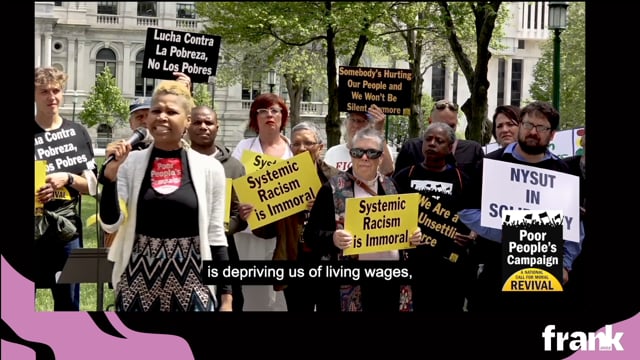 Moral Uprising with the Poor People’s Campaign
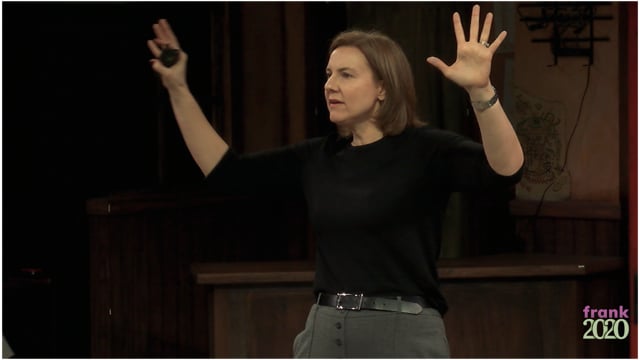 The Unintended Consequences of Emotional Appeal