
Fresh From the frank Stage
Standout talks from the most recent 2023 gathering, featuring bold voices, urgent truths and unforgettable moments.

Amahra Spence
Liberation Rehearsal Notes from a Time Traveler

Shanelle Matthews
Narrative Power Today for an Abolitionist Future
Nima Shirazi
Irresistible Forces, Immovable Objects
The Speaker
Watch Next
-
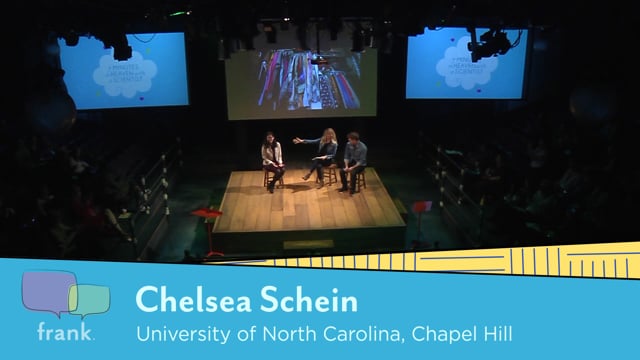 Seven Minutes In Heaven… With A Scientist
 -
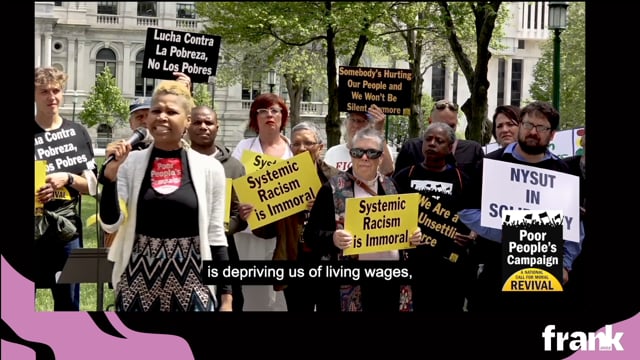 Moral Uprising with the Poor People’s Campaign
 -
 The Unintended Consequences of Emotional Appeal
The Speaker
Untitled
Power Without Numbers
BusinessEducationGlobal StoriesPublic ServiceStorytelling
Transcript
My name is Alvin Kim and I work at this past summer as a Frank Carrell fellow at the YWCA of the National Capital Area. Today I want to talk to you all about numbers. See in the summer organizations and individuals always want to know what our numbers were. How many women do we serve? How many of them are people of color? What’s our success rate with obtaining GEDs? Does that figure hold its own in the District of Columbia? Numbers, numbers, numbers. All summer long I was inundated with these facts and figures. But numbers for me have always been more confusing than helpful. In the end this fellowship showed me what I had always known instinctively. Numbers can’t tell the whole story. So let’s try this. If you go by the numbers in my hometown of Nashville, Tennessee, I can tell you that my mother was a part of the 91,000 total Asians living in the state. Put another way, that’s 1.6% of the state population with even less to speak her first language. 100 is the number of calories she consumed each day for three months when all she could afford was an apple and the free cups of coffee she could get at work each day. 29 cents. 29 cents is the amount burgers cost us on McDonald’s on Monday nights when my mom, brother and I used spare change to pay for dinner. Two is the number of physically and emotionally abusive men that have posed as my mother’s husband in the last 20 years. And 81%, 81% is the estimated percentage of Asian women in this country who experience some form of intimate partner violence every year. But if you go by my account, I can tell you a story. A story about a mother so dedicated to her children that she literally starved herself to get them weekly music lessons in high school. I can tell you a story about a woman who went from food stamps and no health insurance to one of the most successful Nashville business women today. I can tell you a story about a young kid who grew up thinking that the biggest hero in the universe was his mom, a woman who showed more strength and perseverance than he ever thought possible for a single person. Look, numbers make sense. I get it. They’re efficient. They can be powerful. But when we tell a person that they’re 80% likely to be incarcerated or imprisoned before the age of 24, or when we tell a person that only one of every three people that look like that person is likely to graduate from high school, what do we expect? How do we expect them to react and what are they supposed to do with those numbers and move forward? I find myself explaining to my mom how I wish we had known about a place like the YWCA because in an organization that focuses on people, we refuse to end the story with a number. Making life changes is never as simple as obtaining a GVD or changing the percentages of abuse for women of color. It’s more than that. And it takes time. I worked for the YWCA because I believe in the power of stories. I know firsthand what it means to have someone overcome all obstacles no matter how dire the figures or the statistics. I loved my work this summer because moms like mine are all over the place. You just have to look past the data. Over the summer, donors and grand-making foundations always asked me how their money was being spent. They wanted to know whether they were actually making a difference in women’s lives or if the changes we were implementing were translating into real results. I was lucky. The numbers I had to work with at the YWCA were powerful. But in the end, it was stories about women like my mom that inspired not only foundations to support us, but individuals to get involved with our causes. Stories about young mothers finding new jobs and supporting their children. Stories about women who overcame abuse, depression, or obesity. Stories about women in construction, art, and business all pushing hard to help themselves, their families, and the communities of DC. These were the stories that convinced donors to get involved and inspired me to pursue a career in service and advocacy nonprofits. In reality, it’s not that I hate numbers, so everyone calm down. I don’t hate all numbers. I worked at the YWCA because I want to fight the complacency that comes with trying to find an easy answer. Throughout my work this summer and in the past four years, I’ve found that the biggest part of my job is trying to find a way to let people speak for themselves. When you find a way to present specific stories, it’s impossible to see my mom or any of the women of the YWCA as a mere statistic in the system. From here, I’ll always be looking beyond the numbers and asking my own set of questions. Because when you look closely, it’s not just a story about poor women of color in this country. Sometimes it’s really about a young kid and a superhero of a mom. Thank you.
Watch Next
-
Seven Minutes In Heaven… With A Scientist
-
Moral Uprising with the Poor People’s Campaign
-
The Unintended Consequences of Emotional Appeal