
Fresh From the frank Stage
Standout talks from the most recent 2023 gathering, featuring bold voices, urgent truths and unforgettable moments.

Amahra Spence
Liberation Rehearsal Notes from a Time Traveler

Shanelle Matthews
Narrative Power Today for an Abolitionist Future
Nima Shirazi
Irresistible Forces, Immovable Objects
The Speaker
Watch Next
-
 Seven Minutes In Heaven… With A Scientist
 -
 Moral Uprising with the Poor People’s Campaign
 -
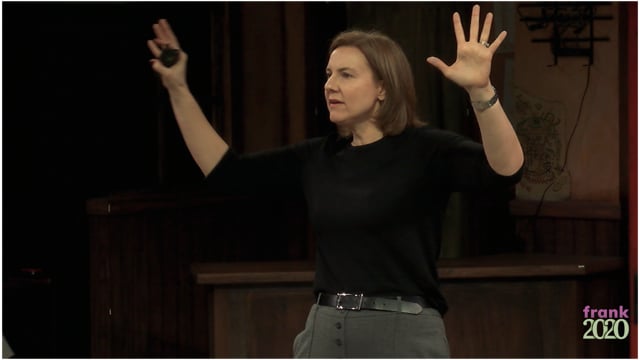 The Unintended Consequences of Emotional Appeal
The Speaker
Untitled
Promises of Love: Emotional Mobilization
Behavioral ScienceEmotional IntelligenceFamilyProblem SolvingSociology
Transcript
So, hi, I’m Kendall Broad. I’m a sociologist of social movements. And my research focuses primarily on lesbian, gay, bisexual, transgender and queer movements. And today I’m going to talk to you about research I did some time ago that really sort of brought home the emotion of love essential to movement work for me. To clarifications before I move forward, I’m going to use the terms gay and lesbian because they reflect the movement at that time period. And I’m also coming from this as a researcher of social movements where we have sort of a complicated understanding of emotion in social movements. When researchers first started studying social movements, they thought it was only emotion, just passionate outbursts. But then quickly realized there was a little more than that involved. And so, started studying social movements as more rational, needing resources, etc. And so on, that became the primary focus for so long that we forgot about emotions. And it’s only in the last 25 years that we’ve returned to the study of emotions. And these days, we understand social movements, all aspects and phases of social movements to be really characterized by emotion. Especially for some movements, it’s the goal of movements. For other movements, it’s the way in which organizers and activists try to bring people in and mobilize them to be involved. And that’s the focus of my work today and what I’m talking about. So, I did a study of the organization, PFLAG, Parents and Friends of Lesbians and Gays. And I’m talking about it. It’s a still present organization, so know that this is not a characterization of who they are today. But at the time period, they were really trying to confront the idea that there was only one story of how to be a parent with a gay or lesbian child. And that story was a story of a motion of moving. Once you find out your child was gay or lesbian, moving into a period of angst and depression and sadness and sort of an inward focusing, secretive experience. And PFLAG was really trying to move people beyond this and give them a sense that they could tell their story of being a parent with a gay or lesbian child in a different way in terms of being loving of that child, that gay or lesbian child and expressing that openly and publicly. And so, the research I did was in the late 1990s and early 2000s. I did interviews. I hung out with them at their conventions. I reviewed a number of their documents to try to understand really how they tried to bring parents into being involved in the organization. Just another quick point of clarification. Remember that gayness at that time period was a different kind of gayness, right? Sodomy laws were still on the books. It was before a marriage equality campaign. And so the kind of gayness and lesbianness they were talking about was of a particular time period. It was also a time period where when we thought about emotion in relationship to gay activism, we most often thought about AIDS activism because that had been most present up until that point and was still something that most people still thought about. And the primary sort of motivating emotion in AIDS activism, especially with ACT UP, was the emotion of anger. But when I went to PFLAG and when I talked to activists there, what I came to understand is that anger wasn’t the motivating emotion they kept talking about. Over and over, they talked about love. And they hugged me over and over as a way to sort of bring that home. And so I came to understand them as really offering to potential participants in the organization, to parents they wanted to draw into the organization, two different kinds of promises of love. Come to our organization and you can move to a place of love, was in some sense the messaging they were providing. They provided this in one sense with coming out messaging. And so they told parents, when your child comes out as gay, you enter the closet and you start your coming out process. And so they mirrored the coming out process, understood at that time as one that most gay and lesbian people go through. And they told parents, you’ll go through a similar process, but with kind of different emotions. You will likely experience grief. You will grieve the heterosexual child that you thought you had, but you don’t have to stay there, right? You don’t have to be story number one. You can move to story number two, was in essence the messages that they provided. But this wasn’t quite enough to encourage parents to move to advocacy, which was another part of what PFLAG wanted to do. So they added another layer of messaging to their work. They oftentimes talked to parents about, come to PFLAG, come and join us, and you will not only be able to go through your coming out process, you will go on a journey with us. And so they talked about what that journey is, and they characterized it to the parents. As a journey of moving from grief to love, yes. But very carefully, a process that involved being involved in the organization. So they talked about having to do your grief work. When you’re a parent that finds out your child is gay or lesbian, you’re going to need to have a space to do your grief work. And so we’re the place for that. You can come to us for support. We’re here for support, education, and advocacy. This was said over and over again. And the idea was you come here for support, we’ll help you grieve, and then we’ll help you move towards love. We’ll help you. We are giving you the emotional promise that will restore your love for your gay and lesbian child. But it was more than that, because they were saying, we’re not only going to help you restore your love for your gay or lesbian child, we’re going to help you restore a broader love, a love of the entire gay and lesbian community. So much so that you might want to be involved in advocacy. And so they would talk about the kind of advocacy that a parent could do who had moved to this place. And it was an advocacy of offering love to the larger gay and lesbian community. An example being parents from PFLAG who march in Pride parades and offer free hugs. And who are they hugging? Gay and lesbian people. And so it’s an expression of doing love as advocacy in some sense. So in a nutshell, am I saying what we now know as a familiar phrase from the marriage equality campaigns and the LGBTQ mainstream movement, am I saying that if this works, that love wins in some sense? And these are just a few portraits of how much we oftentimes hear that. Not necessarily in this case. So one of the other stories that I heard often from these activists was their frustration in getting parents to move from a place of coming to the group for support into advocacy, but even further, and these were terms they differentiated into activism. And they said we can get parents to come to us and be with us for support, but we can’t get them to move towards activism, to call their legislators, to come to a protest, to help organize. And this is where we feel like as an organization we’re failing. Some of them talked about this as a problem of using love. Other gay and lesbian activists similarly suggested that this was where it fell short because loved masked power. If you hug a gay person it might make them feel better, but it doesn’t address the discrimination they face, an institutionalized discrimination they face on an everyday basis was in a nutshell part of the problem. What did work? Love is a promise of emotional transformation. P-Flight is a tremendous place. Parents have really gained a lot from it, and they talk about it a lot as a successful organization, an long-standing organization that has made profound change not only for these parents but for their families and for the broader gay, lesbian, bisexual, transgender, and queer community. Why? My argument is that at the time period when I did this study the movement was characterized by two different goals. One was an identity goal still. Where identity transformation was important. Identity affirmation was important. It’s okay to be gay. It’s okay to be a parent of a gay and lesbian child. It worked in that sense. But the movement was at another point in time where they were solidifying as a civil rights organization. And to use love and promises of love for that, it didn’t work as well. They couldn’t move people into activism in that sense. Thank you. Thank you. Thank you. Thank you. Thank you. Thank you. Thank you. Thank you. Thank you. Thank you. Thank you. Thank you. Thank you.
Watch Next
-
Seven Minutes In Heaven… With A Scientist
-
Moral Uprising with the Poor People’s Campaign
-
The Unintended Consequences of Emotional Appeal