I I So about 10 years ago I began to shift away from my Star-T Journalism career covering public policy and business to specialize in one big story and given how given the urgency of fresh water relative to anything else I had covered and given how poorly understood I knew this story to be it was weird to see how my audience narrowed Yes, small armies came to my lectures and grabbed up my books, but they were often the graying armies of old environmental wars who during the Q&A would remind me and any young people in the audience of their water mantras from the 1970s If it’s yellow, let it mellow. So I love this choir who already understands how crazy it is that we use our most pristine waters to flush toilets and send our dirtiest waters to rivers, but I needed to reach beyond them. If you already care so much that your yellow hangs around to mellow, there’s not a lot more I can tell you. So I wanted to reach what I’ve come to call the caring middle, large numbers of Americans in both parties or neither who are sick of extremes and division. They’re suspicious of the partisan voices that yell too loudly, they’re weary of all the smarty pants on TV. My journalistic background helps me with the caring middle because my writer’s voice is conversational rather than clanging. My reporting is not partisan. No one political party is any more responsible for the water mistakes of American history than any other, and no one party has any less responsibility to fix them. So the much bigger point, the more important point is that our most pressing water problems, like every cause that’s dear to you in this room, will not be solved by traditional politics that protects special interests, right? Water now needs the rest of us. It needs the caring middle. So this morning I’m going to tell you about how I reached the caring middle with the framework of a water ethic. This is a way of elevating the conversation above politics and beyond our generation. The caring middle really responds to this elevation. So the question is how to keep the conversation up there. As we heard from Liz and our filmmakers and other wonderful speakers yesterday and from Anne this morning, it always begins with storytelling. So the story in my books is that a country blessed with some of the most abundant water resources in the world managed to make fresh water the most degraded of all America’s ecosystems in just half a century. No matter where you live, I can tell you a version of this story and make it personal for you, even here in the relatively wet east. So since you’re visiting North Florida, I’ll give you the local version. This region is home to the largest concentration of freshwater springs in the world. These clear pools are windows into the health of our freshwater and this and the other spring photos I’m about to show you are by our talented nature photographer, John Moran, also a graduate of the UF College of Journalism. History is one of the best ways to elevate the conversation with the caring middle. These springs have always been subject to Florida’s natural cycle of flood and drought. But beginning in the 1950s, human withdrawals meant that some began to dry up and never come back. This is a former spot and resort called White Springs. It was one of Florida’s largest springs known as a first magnitude. It dried up in the early 70s due to groundwater pumping and flowed for the last time in the 90s. John’s shot of Peacock Springs perfectly captured where Peacock got its name. You can see here what led William Bartram in the 18th century to describe the spring waters as blue ether of another world. Today Peacock blue is an algal brown zoo. In the same way that history is elevating, an intergenerational framework really lifts the cause. I try to connect past and future generations whenever I can. I often tell the story of this depressing assignment I had not long ago to give the dedication speech for a historic marker to a dead spring called Kissingen. And I actually hiked through the dead spring bed with elderly Floridians who had done cannonballs into the chilly water in their youth. And that was so poignant to hear their stories. So the last time America’s carrying middle stood up to get really involved in water. It was the early 1970s when obvious pollution mired major rivers. And we were on a dam building spree including a proposal to dam the Grand Canyon. Public outcry and pressure far beyond that environmental choir really ended the age of big dams and led to EPA, the Clean Water Act and other environmental safeguards. As David Fenton said yesterday when he told the story about that apple growth chemical, the regulatory action to take it off the market happened only after the public deemed that chemical unacceptable. But none of the environmental safeguards of the 1970s could fix our underlying problem which I think is both hidden and institutionalized. And this is our illusion of water abundance. Despite evidence to the contrary from our epic drought in California to the shrinking Colorado River, Americans really can’t seem to shake this notion of water as an endless resource. The best example of this great illusion is Hoover Dam. One million tourists visit the dam each year. A great opportunity to explain what over allocation and drought have done to the Colorado River, right? It’s already lacking water for fish, wildlife and the states that share the river by this arcane legal agreement. So scientists tell us if the trends don’t change the dam could lose its ability to produce hydroelectric power in just five years. But guess what? When those million members of the caring middle go on the Hoover Dam tour, the guides describe the Colorado as a water supply that is, and I quote, assured and reliable. When it comes to agriculture, we carry the illusion that our nation’s bread basket in the heartland and fruit bowl in California are abundant. In reality, both of those regions are pumping their aquifers to depletion. In our own backyards, we’ve managed to make the lawn America’s largest crop even in deserts. NASA scientists using satellite imagery have found the nation covered with 63,240 square miles of turf grass, which is larger than any one individual state. So in my book Blue Revolution, I call this our 51st state. When you look at this billboard, you really see how well-meaning communications are instead just bolstering the illusion, right? Rather than glorifying the lawn and showing people how they can waste a little less. The better trick is to show them how easily and how beautiful it can be to live differently. Energy is another type of mirage. Every energy source except wind has significant consequences for water. This is the millstone plant in Connecticut, one of a handful of nuclear plants that have had to shut down due to drought, and this is in the east. So it’s important to get across, I think, with the caring middle. There’s no one bad actor. We’re all in this together, and that is really another elevating construct. The state of our fresh water is tied to our collective use of water, whether for flood control, power production, agricultural irrigation, or water for our homes and businesses. So the solution is also collective. It’s an entirely new way of living with water and valuing water in every sector of the economy. So to get the caring middle there takes first the honest storytelling that Liz talked about yesterday. Sharing the stories of what we’re doing to our aquifers and rivers leaves people with a feeling of, hey, we’re better than this. Then storytelling on how easy it would be to change our water fortunes gives people the optimism that, yes, we can do this. So in my second book, Blue Revolution, I go around the world and around the United States telling stories of communities and entire countries that have come to live differently with water. I visit factories that have slashed their water use by hundreds of millions of gallons and their water bills by hundreds of thousands of dollars. I take readers to places that use half the water they did a decade ago, even as their population has grown. Like major metro areas like Perth, Australia are finding new water with revolutions of little tiny small technologies rather than the biggest technologies that again harm aquifers or rivers. So small as in micro irrigation for all agriculture and waterless everything, waterless urinals, waterless car washes, even waterless walks in the Chinese restaurants across Australia. So what these places have in common is a different water ethic and it’s really widespread among government major water users and citizens. But it can start with citizens. So the simplest way to communicate this, I think, to the caring middle is that we live with water today in a way that doesn’t jeopardize fresh clean water for our children, ecosystems, and economy tomorrow. So this is a shared ethic to use less and pollute less in every sector and it really speaks to the caring middle in a way that politics, policy, and lawn watering billboards just cannot do. So it appeals to their sense of community and it appeals to their sense of obligation for the next generation. The water ethic also appeals to the caring middle as an article of faith. So the first time I was asked to speak from a pulpit at an enormous Catholic church in southwest Florida, I was absolutely terrified. I was sure I would be struck by lightning for using the Bible to hawk my books. But this audience turned out to be one of the most receptive I had ever addressed. They didn’t expect me to interpret the Bible. They just wanted the story. And later they figured out on their own how they would spread the water ethic in their region. So where before I regretted that so many of my readers already agreed with me, today I am happy to preach to a more literal choir. The National Council of Churches created a biblical study guide to Blue Revolution for Christian book clubs and adult Sunday schools. In 2012 the Unitarian Universalists chose the book as its national read for Justice Sunday. So congregations all over the country read the book and brainstormed how they could promote a water ethic in their own communities. I also made an interfaith one pager called Bringing the Water Ethic to Your Place of Worship. So if anyone doubts that this ethical shift in the caring middle can bring about tangible changes in not only behavior but policy and law, I want to take you back to the madmen era, a time not so very long ago. Look at handsome Don Draper chucking his beer can. So the students here won’t remember when people regularly left their picnic trash at parks and flung fast food bags out our windows. But this in the mid-century this is how many American families lived, even those as picture perfect as the Draper family. So research on American littering behavior shows we’re absolutely capable of significant ethical change in just one generation. In 1969 half of all Americans littered by 2009 it was 15 percent and littering studies show that what changed the culture more than any other factor was a community-wide judgment about cleanliness, in other words that ethic. And the really important thing was that once citizens had embraced this ethic it was they who pressured industry. So for example it was citizens who put pressure on the beverage makers to get rid of those pop-up can tops that were such a problem. So we’re just beginning to see this type of pressure in agricultural water use as people begin to understand things like how subsidies flow to some of the crops doing the most damage to our water. So sharing water using less and polluting less are all really difficult legally and politically, but we know from civil rights history that politics and archaic law finally change, but they tend to follow a change in the mindset of the caring middle just like the public ended the age of dams and kicked the apple pesticide off the market. So the illusion of water abundance makes this a really difficult story to tell, but the ethical framework lifts the illusion as it lifts the conversation. This is my daughter on the left, she’s contemplating that dry spring bed that I told you about where we hiked with the elderly people. On the right is her normal spring’s pose which is flight. And I think once the caring middle understands this intergenerational ethic they care and they do pressure the larger society. So I want to end with climate change and David Fenton’s charge to us yesterday that this is the issue of our time and the one that ties every cause in this room together. That is my belief as well. So as I’ve gone around the country talking about Blue Revolution, I’ve found that people love to talk about the weather, record rainfall, historic drought, hurricane sandies, snowmageddon winters. They’ll talk about weather all day even if they refuse to talk about climate change and even if they can’t conceive of or accept how it will affect the future. This is the insight that has led me to my new book in the works, A Human and Natural History of Rain. So Rain ultimately is about climate change, but by design this book is less prescriptive and more lyrical than my first two books. I’ve returned to pure storytelling. I’m getting readers to climate, but I’m getting there by writing about the reign of Sessions of Thomas Jefferson, Morrissey and Toni Morrison. I take readers to Kanaj, India, where villagers extract the scent of rain from the earth and turn it into a heavenly perfume, to the whole rainforest in Washington State, the rainiest place in the continental U.S., to the Glasgow, Scotland raincoat factory where guys still cut and blew macintoshes by hand, to the Texas Hill Country where some Americans live entirely off their scant rainfall, and perhaps my favorite place I’ve traveled, Cherrapunji, India, one of the rainiest places on earth where it failed to rain on me, which became a story in itself about our changing climate. So I have come to believe that water will be the issue around which the shouting match over climate change finally becomes a conversation. Just as water, literally a chemical bond, is one of the deepest bonds among people, rain and weather, create this kinship of all who experience them. Tapping into that kinship is my latest way of reaching the caring middle and keeping the water conversation up there now all the way up in the atmosphere. Thank you.




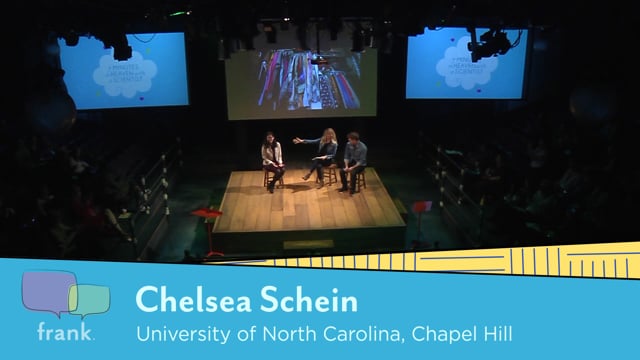 Seven Minutes In Heaven… With A Scientist
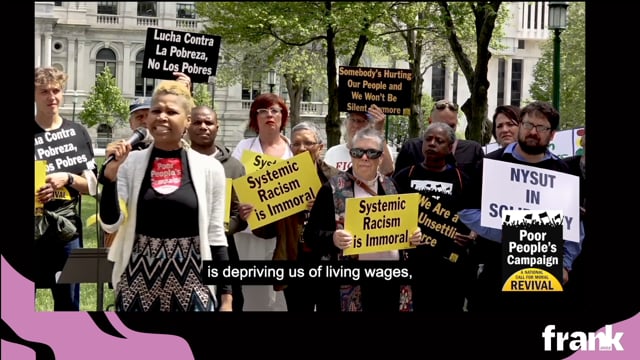 Moral Uprising with the Poor People’s Campaign
 The Unintended Consequences of Emotional Appeal