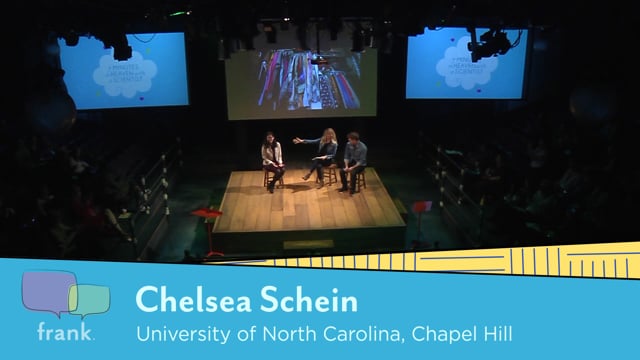
Thank you for that great introduction. It’s a real honor to be here sharing the stage with the fellow presenters. So, as you heard in the introduction, we study online activism. We particularly are interested in the networks of activists and regular people that get stitched together around hashtags in order to create meaningful social change. From the Umbrella Revolution in Hong Kong to the Arab Spring, the Black Lives Matter and Me Too movements that started in the US and rocketed around the world, it’s hard to imagine a country or community that hasn’t been touched in some way by social media activism. We’re particularly interested in the network processes that transform these individual hashtags into impactful movements for social change. Today I’m going to focus on one example of those movements, specifically the network processes that catalyzed the Me Too movement. So, as we know, social movements are really powered by stories. People are natural storytellers and we build our relationships by telling stories to one another. If I were to meet a new friend, I might tell them something about myself and then they’d probably feel compelled to tell me something about themselves in return. And we go back and forth to sharing our stories and building our relationship. Abstracted, we can think about this as a process where a network grows between two nodes, the people, and forms as they share stories in a process called reciprocal self-disclosure. When we move that kind of disclosure into a network and particularly an online network, something really interesting happens. So instead of sharing your story with just one other person, you end up sharing your story with all the people that you’re connected to in your online network. And then instead of this reciprocal self-disclosure, we get this kind of generalized network disclosure where each person shares their story with you and also with everyone else that they’re connected to. And then those people share with the people they’re connected to and they share with the people they’re connected to and so on and so on, creating these cascades of disclosures that ultimately allow a message to spread through a whole network. And so we were really interested in whether or not this sort of networked storytelling could explain the sudden and dramatic shift in public discussions about sexual assault and harassment that are associated with the MeToo hashtag. We all know that MeToo was started by Tarana Burke to support sexual assault survivors and then received widespread and mainstream media and popular attention in October of 2017 when millions of people just suddenly started sharing their own stories about sexual assault and harassment in response to this tweet by Alyssa Milano inviting people to use the hashtag MeToo to disclose their experiences. To study how these stories spread, we collected one and a half million tweets containing the hashtag MeToo and these tweets contained a mix of stories about sexual assault as well as other sorts of messages including support for survivors, commentary about the prevalence of sexual violence and occasionally, although not as often as you would expect, pushback against calls for social change. We organized these tweets into a network and we paid special attention into the patterns of story sharing inside that network. So for each person in the network who shared a story, we built a network of everyone that they follow. So we knew exactly who they were following. And then we looked back in time at what those people were saying before someone shared their own MeToo story. So those are the messages that they could potentially have seen before they decided to share their own story. And we naturally found variation in those following networks. So some people saw a lot of MeToo stories, some people didn’t see very many at all. So if the stories were really influencing people to share their own story, we would expect that folks who saw a lot of stories on the networks would have a higher chance of sharing their own story than people who didn’t see very many stories at all. And that’s exactly what we found. So unpacking this chart, we see that the more stories that people saw, the more likely they were to share their own story. And very importantly, that effect was the strongest as we went from zero stories to about 20 stories. And we imagine that this is the window where people who have a MeToo story to share might feel especially motivated by this disclosure process to reciprocate the stories that were coming through their networks. And here’s the really powerful thing about stories. We can see that in combination, they really changed public discourse. So starting in October 2017 with all these stories, MeToo went from a relatively rare term on Twitter to one of the most popular terms on Twitter. And it stayed very popular since then. So this collective shift increased our awareness of the pervasiveness of sexual assault and harassment. It also got picked up by the mainstream media who covered the trending hashtag as a story on its own and ultimately led to some pretty incredible social, cultural, and policy changes, often aimed at stopping something called MeToo disclosures. So we know that sharing stories matters. We already knew that. But what we learned today is that when we put those stories into networks, we can create these cascades that feel social movements. And these networks become the infrastructure that sustains that social change advocacy and organizing over time. That’s it. Thank you and shout out to my co-authors who are in the audience today. Wonderful. Thanks so much for sharing that really illuminating paper with us. So what inspired you guys to start this project and to write this paper? Yeah. So my team, I have been studying online activism for about 10 years. We particularly focus on race and gender justice activism. So we were kind of in this space when the MeToo hashtags started to trend. But typically when we study this kind of activism, the hashtags center on particular events. So think about hashtag Ferguson, which emerged after the murder of Mike Brown and subsequent protests in Ferguson, Missouri. MeToo, of course, has some similar fields to that, but it’s really quite different in terms of what was happening. So people weren’t suddenly having the same experience. They were holding these experiences and suddenly sharing them. And they were specifically sharing things that people usually keep secret. So we know that women don’t tend to disclose sexual assault and harassment. So suddenly folks were reclaiming their space and demanding this kind of attention, and it worked. So that’s really exciting. So that was really our motivation. We wanted to kind of dig into the origin story there, figure out what happened and figure out whether or how it could be replicated in order to create similar kinds of cascades around other issues. So you saw that these stories got shared through these social media networks. How does that end up translating to kind of big social change in the broader world? Yeah, I love this question because it gets at this kind of hidden tension in all of our research. So we really focused on Twitter for a number of reasons, but we know that Twitter only has about 20% of U.S. Americans use Twitter, right? So it doesn’t have the biggest audience in the United States or anywhere else in the world for that matter. And yet we kind of intuitively understand that stuff that happens on Twitter has this impact on social change. And there are a few reasons why I think that’s true. So first, the news media are on Twitter. They, you know, even though it’s only moderately popular with general American population, journalists see Twitter as a valuable place to kind of track social trends, to find sources, and to promote their own work. So they hang out there more so than on other platforms. So that makes Twitter uniquely positioned to kind of harness the attention of the mainstream media. And we know that if something trends on Twitter, it often gets covered on the news, and particularly on television news and cable television news, where the vast, vast majority of Americans still get their information. So we get this kind of proxy effect. So another reason we think this works is that politicians are on Twitter. So for similar kinds of reasons, politicians need to engage with constituents. And it’s kind of a low cost, low friction way to do that. And last, and sort of a combination related to those ideas, there’s this norm to follow and interact with people you don’t know on Twitter. So that’s not true on all social media platforms. But as a result, we get to engage in these relatively more diverse networks on Twitter, and we can be exposed to ideas that might not come to us through other kinds of media. So in terms of the ability to change people’s opinion, they were more likely to find new audiences on Twitter than on some other platforms, or the tendency is to just to hang out with our friends. It’s really interesting and leads nicely into the next question, which is, what are some things that we, the audience should watch out for as we try and build social media strategies for the types of campaigns we’re working on? Yeah, it’s a good question. You know, so first and most obvious, I think is to have a presence in these places and to have an interesting presence. So for a network to grow in these places, you need to be putting out material and engaging with people that might be interested in your material. But I think one of the less obvious things here is that you can be realistic and sort of small in scale on these things. So I think there’s this idea that you have to harness the attention of influencers. And actually, you know, here we see the power of a celebrity. So I don’t want to discount celebrity power. But in a lot of the networks we study, there are no mainstream celebrities. There are no, you know, million follower accounts that are engaging. The people who really help these things get attention are local politicians, kind of local and regional celebrities. So in that Ferguson case, we saw Tef Po playing a really important role as a kind of regional, Midwestern hip hop artist. And so focusing on these little corners of your networks where you might make connections with locally influential people who understand your issues and connect with other people who might be affected, turns out to be a much more strategic use of your time rather than trying to harness the attention of, you know, Beyonce or Oprah. So in your research, how do you find that these counter-native spaces emerge? And how do they replace the more dominant narratives? The short answer to your question is that it’s almost always networks of regular people sharing their experiences. So we almost never have, you know, big mainstream celebrities catalyzing these networks. You know, but the truth is that a lot of the social justice issues, they’re not new, right? So people have been working with stuff for decades or even centuries. And so people kind of have stored up these stories that they want to share, but they never get this mainstream audience or attention for those stories. So unfortunately, it’s very easy for the news media and even regular folks to just dismiss any individual story. We hear that happening all the time, right? So people are told they misunderstood what really happened or they brought it on themselves, somehow they deserved it. And actually fear of being dismissed is one of the primary reasons that so few people speak up about sexual assault and harassment. So they’re afraid that people all believe them or that they’ll be blamed. But when you have all these stories kind of coming out at once, it’s really hard, especially when they’re stitched together in this network, to discount all of them collectively. Right? So I think that’s where the counter narrative comes in, that there’s a lot of potency into stitching together a bunch of related but previously unconnected stories and teaching people how to talk about an issue. Right? So we even see people using that term, like a me too situation, I want to avoid a me too situation, or this has kind of got me too vibes to it, right? So you’ve given people this new vocabulary in order to talk about what’s happening and what we’re referring to as this preponderance of evidence in the network that people brought to light around the hashtag. That’s great. So how else can our Frank community bring the insight of your work into our own work? Yeah, so I mean, if I could make one kind of tactical suggestion, so what are you going to do after this meeting? I would say focus small and focus on connecting your work to a new community and an adjacent community. So a lot of times we think we’re trying to stitch together everyone in the whole wide world and that can feel overwhelming, but really jumping from people that are talking to you right now to people who may be interested in your calls but aren’t currently talking to you has these really profound impacts. And a really good case study of this is Colin Kaepernick, when he started kneeling during the national anthem, we started to get football fans paying attention. And now to be fair, he got a lot of pushback and in some cases violent pushback. So I don’t want to discount that, but that was a risky thing for him to do. And at the same time, he also got attention. So we saw on Twitter a lot of people saying like, wait, what’s happening here? I thought this was a football game, like what’s going on? And some of those people were persuaded. So some of those people started talking about Black Lives Matter issues. Some of those people adopted a new set of vocabulary and started to make new online network connections so that they were able to follow this movement as it developed over time. So of course, I don’t think that’s the only thing that accounted for the Black Lives Matter change. And yet sort of linking these communities together had real impact, right? And I think it is why we started to see this widespread and massive growth of supporters and allies around the Black Lives Matter movement. So we’re going to end with what has become my favorite question. What are you working on next? What should the Frank audience keep an eye out for? Yeah, two things. So we are really interested in this community to community connection. So how do you get messages to hop from your kind of local community into another community? What happens when that works? And what happens when you get some tension when those communities like clash with each other? So we’re really looking at that. And then of course, we’re still living in a pandemic. And we know that this particular pandemic has especially affected marginalized folks. So we’re using some of the same kinds of tools and resources that we had to work with data in order to identify locally influential folks in communities that are especially affected. So Black and Indigenous Latinx communities to find influential people to spread good quality messages to try to counteract some of the misinformation and manipulation that’s happening there in order to get vital health information out to populations who really need support. Wonderful. I’m excited to see what you guys find. So thank you for all the work that you do. And everyone, let’s give Dr. Foucault-Wall’s snaps and virtual zoom claps for-



 Seven Minutes In Heaven… With A Scientist
 Moral Uprising with the Poor People’s Campaign
 The Unintended Consequences of Emotional Appeal