
Fresh From the frank Stage
Standout talks from the most recent 2023 gathering, featuring bold voices, urgent truths and unforgettable moments.

Amahra Spence
Liberation Rehearsal Notes from a Time Traveler

Shanelle Matthews
Narrative Power Today for an Abolitionist Future
Nima Shirazi
Irresistible Forces, Immovable Objects
The Speaker
Neil Coleman Founder and Principal, Mission Magnified
Neill Coleman is a philanthropic strategist and consultant who founded Mission Magnified Consulting, an advisory firm helping foundations and nonprofits mobilize philanthropy, partnerships and storytelling for social change.
Go To Bio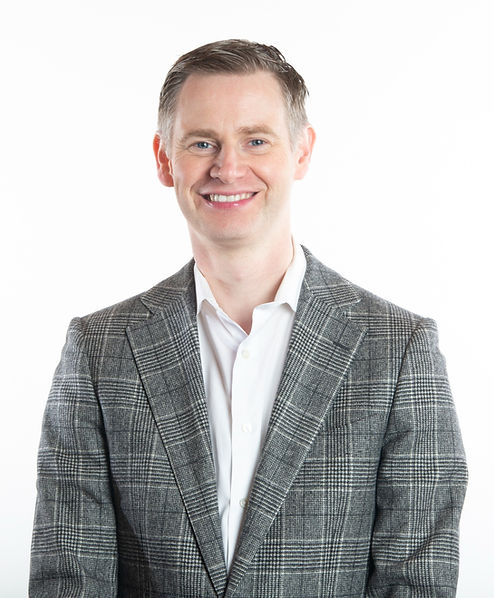
Watch Next
-
 Seven Minutes In Heaven… With A Scientist
 -
 Moral Uprising with the Poor People’s Campaign
 -
 The Unintended Consequences of Emotional Appeal
Resilience Rising
EducationFarmingProblem SolvingPublic ServiceSustainability
Transcript
So yes, the weather getting down here was a little bit of drama when the pilot took what seemed to be perverse delight in pointing out that there were thunderstorms if we looked at the left side of the window and if we looked at the right side of the window. But I want to take you back to another weather event, perhaps a larger one, Superstorm Sandy October 2012. The largest Atlantic hurricane on record, damage of over $75 billion, 233 people killed. I was lucky. I was in New York City living in the appropriately named Morningside Heights neighborhood, far above the waters, busying myself working on op-eds. But the Rockefeller Foundation offices were closed for a week. Colleagues were scattered. I had a teammate who was dealing with a flooded basement in Hoboken. Rockefeller had been working on resilience for about eight years in New Orleans after Katrina in cities in Asia. But it really was Sandy that was a pivotal moment and that opened our eyes and mobilized our staff around this issue. And it also answered for us the centennial question. We were approaching 2013 and our 100-year anniversary and we’re asking ourselves, how could we use this milestone not just to look back but also to launch work going forward? And resilience really resonated as the answer to that. We thought that we needed to galvanize and help communities prepare for the reality that crisis is the new normal. We saw in resilience the potential to be the 21st century equivalent of our 20th century work to build the Green Revolution, a new field that could positively impact millions, maybe even billions of lives. So four years later, we are on our way. The historic climate talks in Paris featured a resilience day. Mayors there pledged 10% of their city budgets to resilience and dozens of cities globally now have a chief resilience officer. So what I want to do today is to tell you a little bit about how that came to be through four major communications interventions that worked together to raise up resilience. So the first is 100 Resilience Cities and this is a global network funded by the Rockefeller Foundation. The cities in the network receive four supports from us. So the first is a chief resilience officer who works with the mayor and across sectors and really leads the city’s resilience efforts. The second is support for the development of a resilience strategy. The third is access to partners both for-profit and NGOs who provide pro bono services to help the cities implement their resilience strategy. And then fourth is membership of a global network of member cities that can learn from each other. So one example of where we’re seeing impact with this is Norfolk, Virginia. Late last year the ratings giant Moody’s credited Rockefeller’s work in Norfolk in helping the region to maintain its credit rating in the face of increasing floods and storms. So 100 Resilience Cities was really designed through a communications lens. We wanted to use the launch to drive attention to resilience and encourage cities to apply to the network. So we launched it on our actual 100th birthday. We put up $100 million and we said that we would work with 100 cities. It was a centennial announcement. But we actually didn’t have the four supports that I described for the cities in place yet. So we were taking a risk. But I think it was worth it. We really wanted to be able to leverage this moment of our centennial. It became a powerful driver that built excitement and raised our ambition. And I believe that if we had tried to build in a more traditional programmatic way, we would probably have ended up with the five Resilience Cities pilot program rather than 100 Resilience Cities. So as we then put together the structure, we realized that there was no one entity that really could provide these four supports that I described for the cities. So we created a new nonprofit to do it, 100 Resilience Cities. And this has been great from a communications perspective because they are not distracted by other programs or other priorities. And communications has been key to the ongoing success of the program. So there are multiple touch points for each city that provide media moments. Let me take New Orleans as an example. So there was press coverage when they were selected as a city, coverage for their workshop, when they announced their chief resilience officer, and when they announced their strategy. Now not every city is going to have the president of the United States at the strategy launch. We leveraged the 10th anniversary of Hurricane Katrina and Obama’s visit. But every city does have these media milestone points throughout their journey. On the cities, the chief resilience officer has generated a lot of interest as a new role. And the private sector platform partners have an interest in promoting 100 Resilience Cities, not just the corporate social responsibility departments, but the business units who see the value in partnerships with dozens of cities and informing new business relationships with each other. For example, Swiss Re and Viola, Inc. to deal at Davos this year. And our digital work has been important in taking the message beyond the 100 cities. And we’ve seen that particularly in the context of cities that are hiring their own chief resilience officer, paying for it themselves, even though they’re not in the network. So the second intervention was a book, The Resilience Dividend by Rockefeller Foundation President Judith Rodin. So it may seem like books are a little old school, but yet they still have the power to frame a debate, influence behavior, even drive policy change. We use this book as a communications tool to advance our resilience work in three ways. So the first was as a lever to really open up invitations to events, press coverage, drawing panels, and other media interests. Second, it was really a platform to collect internal knowledge from within the organization. We drew on nearly a decade of work on resilience from us and from our grantees and used that as case studies in the book. And third, it was a driver to distill our argument. The book writing really framed the concept of a dividend, the idea that resilience investments don’t just pay off when a community is hit by a disaster, they also bring everyday benefits like jobs and social cohesion. That new framing ensured that the book was seen as an original contribution to the resilience debate. The third intervention is our media partnerships. So we’ve used grant dollars to partner with organizations to advance the conversation on resilience and hopefully influence key decision makers that this is a pressing 21st century priority. We’ve worked with the New York Times on their Cities for Tomorrow conference with WNYC Radio, PBS NewsHour, and The Guardian. Three takeaways here. First, we’ve had to navigate the church-state relationship, but disclosure works well for everyone. Editors are being honest with their audience about the source of funding and for us it raises awareness that we’re working on this issue. The result metrics that everyone’s happy with. The Guardian Cities site had over 15 million unique visitors in 2015. Second, we feel valued for our ideas, not just for our money. With The Guardian we’ve been able to suggest cities and themes that they’ve then taken and run with with their reporters. And third, it’s provided great content for us. Being a program officer to write a blog post can be a bit of a trial sometimes. But here we have some of the best journalists in the world putting together great content that we can then feed back through our channels to our audiences. The fourth intervention is Rebuild by Design. This is probably the most directly connected to Sandy. The story here is about leverage. So we partnered with HUD to ensure that a billion dollars in Sandy recovery money was spent to better protect communities rather than just building back the way things were before. Rockefeller made a $4 million investment in a competition, Rebuild by Design, with the goal of advancing these types of proposals. We had teams of architects and engineers working with communities to create some great ideas. The dry line or the big U which will protect lower Manhattan but in a way that is integrated with the community. Ten teams were named winners and funded by HUD. Smart use of both philanthropic and government money. Our $4 million ensured the smarter and more resilient deployment of a billion dollars in government money. I think that’s pretty good leverage. And CNN named RBD one of its big 10 ideas of the year in 2013. So Sandy did enormous damage but out of it came a mindset change that was a genesis for a much more ambitious reframing of our resilience work. Let me leave you with five lessons from the four case studies. First, don’t be scared of government engagement. Governments deal in billions, not millions after all. They’re powerful partners. Secondly, focus on executive rather than the legislative branch. We had most impact with a federal agency HUD and with city mayors. Third, for private sector engagement, remember to focus on business units, not just CSR. That’s what worked with 100 resilient cities. Fourth, create what you need. We built a new nonprofit, 100 resilient cities and a new role, the chief resilience officer, to really engage. And fifth, use old tools and new. We had great success with the book but also with our digital strategy. So after Sandy, I felt lucky. I working from home for a week was no real hardship. But now I feel much more confident. New York City having a chief resilience officer is not going to save the city from future disasters. But for Rockefeller, and we have by no means declared victory either, shocks and stresses keep coming and our field building efforts we see playing out over a decade. But with the rise of resilience, we have a mindset now to be able to not just bounce back but also to bounce forward. Thank you. Thank you.
Watch Next
-
Seven Minutes In Heaven… With A Scientist
-
Moral Uprising with the Poor People’s Campaign
-
The Unintended Consequences of Emotional Appeal