

Fresh From the frank Stage
Standout talks from the most recent 2023 gathering, featuring bold voices, urgent truths and unforgettable moments.

Amahra Spence
Liberation Rehearsal Notes from a Time Traveler

Shanelle Matthews
Narrative Power Today for an Abolitionist Future
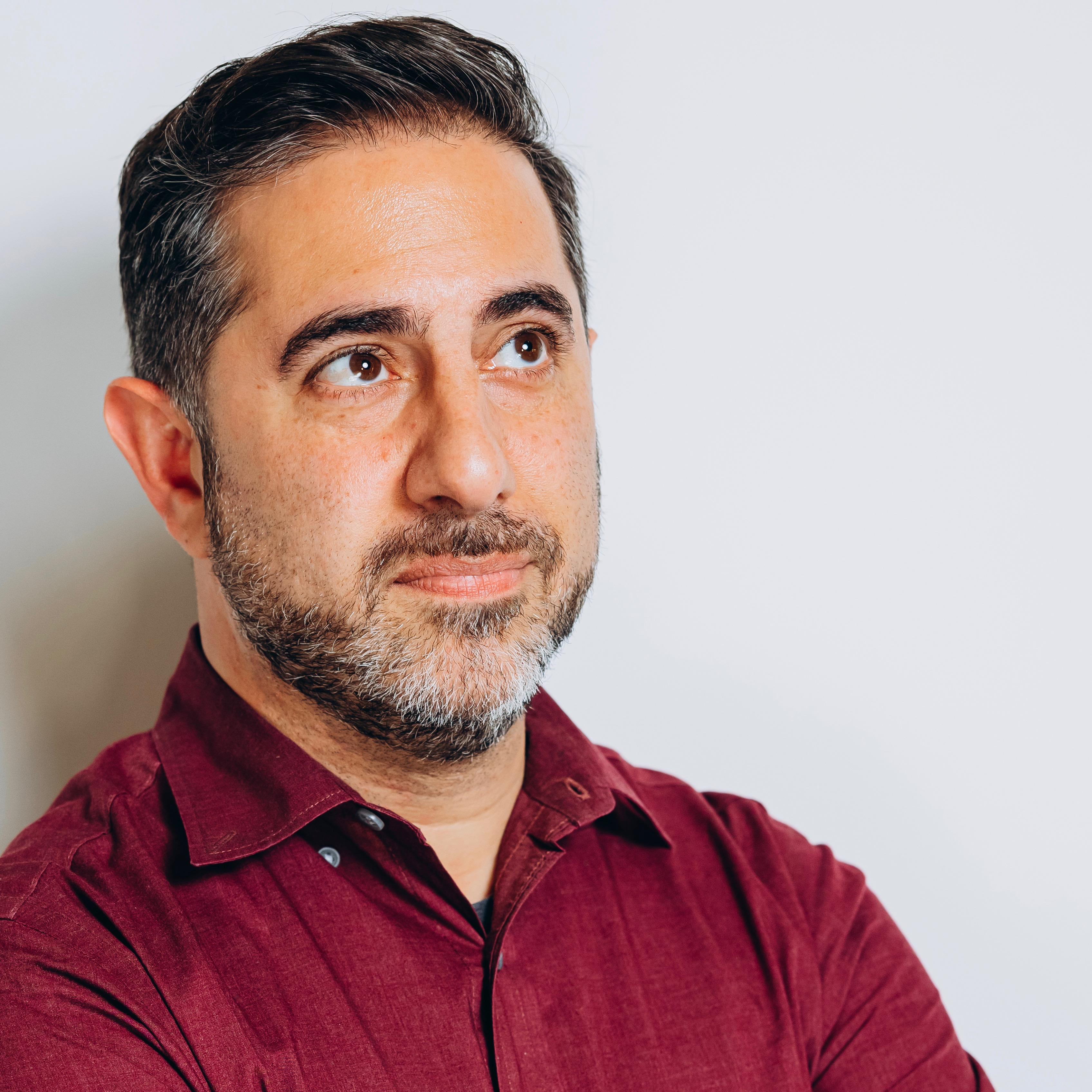
Nima Shirazi
Irresistible Forces, Immovable Objects
Safety First: How To Do Great Journalism While Covering What Works
CommunicationsJournalismPublic InterestPublic RelationsPublic ServiceStorytellingSustainability
Transcript
Hi everybody. It’s a pleasure and an honor to be here. Three years ago, the Cleveland Plain dealer, the main paper in Cleveland, started work on a series on lead paint, race, and poverty. This was not the first time the Plain dealer had done such a series. It was the third in ten years. Those first two had shown that Cleveland had one of the worst lead problems of any city in the country and documented in detail how the city was failing its children. What was the effect of those series? Unfortunately, not very much. A lot of talk from politicians and a few minor reforms. This time, the paper decided to do something a little bit different. It did the traditional investigation, this time through the lens of race, but it also asked a question that it had not asked before, which was this. Who is doing it better? And that allowed them to go to, for example, Rochester and look at what Rochester was doing that was working against lead. They went to Grand Rapids, Akron, other cities to make it painfully obvious how badly Cleveland was failing its people. They published a chart in the paper that said, here’s what successful cities do and here’s what Cleveland does. So this, as you can imagine, had some impact. There was almost a complete turnover in the people running the lead program. Both the state and the city increased the budget and the staff for dealing with lead and the city adopted many of the best practices that they had found elsewhere. The paper brought the problem from something that was unavoidable to something that was unacceptable. And this happened because journalism covered who was doing it better and what better looks like. So we’re all here because we care about social change. And I think that probably many of us are frustrated that the news doesn’t cover what works very often. Innovation is everywhere. It’s a big country. It’s a big world. Journalism should be like, we should be like bees cross pollinating, finding ideas in one place and bringing them somewhere else. But we don’t do that very much and that matters. Of all the different biases that journalism is accused of, the most toxic is the bias towards the negative. Now it hasn’t always been this way. We can date this to the mid-70s with Watergate and the Vietnam War. Now up till that time, journalism had given way too many people in power a free pass. So the switch to uncovering what was wrong was welcome in many ways. But what we have now is a situation where it’s practically the only thing in our job description. Now, yes, that pressure to change is absolutely crucial. We need watchdog journalism more than ever. But the definition needs to be expanded to include rigorous reporting on possible solutions to problems. The effects of this bias towards the negative have been evident over the last few decades and the big one is complete decline in trust in American institutions. Worse, we are losing the civic fabric that comes from our trust in each other. In 1972, 46% of Americans said, I think that most people can be trusted. By the year 2012, that number was down to 32%. And our trust is even lower in people who don’t look like us. So during the election campaign, we were told that crime is at near record highs. When in fact it was at near record lows. We were told to quake in fear of immigrants, even though immigrants are more law abiding than others. So why would people believe that? They believe it because that is what the media tells them all the time. It is no wonder that many people feel like the only thing we can do is burn down all our institutions and start all over again. Another effect of this bias towards the negative has been to greatly reduce trust in journalism. A couple of months ago, I was in Alabama and I asked some people there who read the mainstream media, what do you think of mainstream media coverage of your state? And they said, you always make us look like ignorant yahoo’s. If you go to inner city Chicago and ask people what they think of coverage of their neighborhoods, they’re going to say, whenever anybody comes here, all they report on is crime and poverty. Now are those stories inaccurate? Maybe not, but that’s not really the issue. The issue is they’re not the whole story. People who are marginalized or who consider themselves to be marginalized do not see themselves reflected or respected in the news media. And that’s really important. Yes, people will say, we do have these problems, but there’s also a lot of good going on in our communities and you’re never interested in that, you journalists. People are more than the sum of their pathologies. Covering them purely through the lens of stereotype, robs them of their agency, and blinds us to the many things that are going on that communities are doing to solve their own problems. Well, audiences crave stories on what works. Surveys of audiences and what they want always show that solutions journalism is the top or one of the top content requests. The Reuters Institute just published a survey in Europe and in North America that found something we probably already know that the main reason people tuned out of the news was the constant negativity. It’s produce a product that is painful to consume and then we wonder why no one will pay for it. So, civilians get this. The people who have more trouble with this concept are journalists. I’m co-founder of an organization that’s five years old now called the Solutions Journalism Network. Our mission is to legitimize and promote the idea that journalists should cover what’s working, with rigor equal to that of covering the problems themselves. We work with about 170 news organizations around the country and we’re growing. And one of the things we’ve learned along the way are what are some of the barriers to this kind of coverage and how do we overcome them? So the big barrier is lack of time and lack of resources. 40-person newsrooms are now seven-person newsrooms. Seven-person newsrooms have disappeared. This is a barrier to every kind of good journalism. But there’s another one that’s a barrier very specifically to doing solution stories and that is fear. Journalists don’t like writing negative story after negative story any more than we like reading them. But they’re afraid to do these stories. The most fearless investigative reporter, someone who will hold the most powerful people to account is terrified to try to do a story about what works. So why is that? This is the reason. Inside our profession, if you say that something is a problem and it turns out that you’ve gotten that wrong, you’ve committed a journalistic misdemeanor. If you say that something is working and it turns out you’ve gotten it wrong, that’s a felony. There is no greater sin in our profession than being seen as doing advocacy or PR or good news or fluff, in other words, being soft. Our job at Solutions Journalism Network is to teach journalists how to do these stories with professional safety, with high standards and with rigor. Here’s the train of thought that a journalist goes through. I’ve been told that this project is something that’s working. Well, how can I be sure of that? Negative data, yes, I can always trust negative data. Positive data I can never trust. What happens if it’s working now, but three months from now it stops working? What happens if the leader of the organization is arrested as a child molester? What happens if the program has a lot of flaws and I report on them? Won’t that undercut the value of my story? Even if I can report on this project, why am I choosing this project and not this project over here? Don’t I look like an advocate because I’m choosing this one and not that one? What if the story is just really boring and obvious? Here’s this lovely NGO doing a lot of lovely things. I don’t do favors for NGOs. My job isn’t to celebrate stuff. My job is to report critically. I mean, I see people smiling, but any one of these thoughts can derail the story. What we do is we teach them how to do them with rigor. Here are some of the points we make. First of all, cover the limitations. There is no such thing as a perfect program. If you claim there is, nobody will believe you anyway. Your story has much more credibility than authority. In addition to covering what works about it, you also cover what isn’t working. Don’t overclaim. Watch your language. Just stick to what the evidence says you can say. Tell a larger story through the small story. That is why you’re doing it. That gives justification to your story. Why did you choose to report on this? What does it mean? Paint the whole landscape. Situate what you’re reporting on in the larger context. And remember that the hero of the story isn’t the particular program. It’s the work they’re doing. The program is just the way you’re giving it a narrative focus. Now, I’m co-writer of the Fixes column at the Times. And we get pitched a lot on story ideas. Cover my NGO. We help people. And our response is, we will consider that if you have these four qualities. We’re looking for something that is innovative, replicable, has evidence of success, and offers us a way to tell that big story through a small story. Now, other news organizations have also found many ways to do these kinds of stories with professional safety. Cleveland is a great example. This story showed that how using solutions as a contrast helped to strengthen the investigation by taking away the excuses for bad behavior. Here’s another example from the New York Times. This is a story about a major problem in rural areas, which is a shortage of doctors. So Sabrina Taverniz wrote about a potential solution, which is clinics that are led by nurses alone. And she had to go somewhere to set her story. So she chose to go to Nebraska, to Woodlake, Nebraska. But the story isn’t about the practice in Woodlake. The story is about the practice nationwide. And as part of that, she talked about what’s controversial about it, what we know about what’s working, what we know about what’s not working. Noam Lavey from the Los Angeles Times did a series called Unequal Treatment, which is about disparities in healthcare. And he looked at what makes Northern Maine different. Northern Maine is a positive deviant. Noam looked at the numbers and found that he wanted a place that was poor, had low levels of education, high levels of obesity and cigarette smoking, and yet was still pretty healthy. And he found Northern Maine. That positive deviance, the numbers, gave him professional safety to do the story. WAMU in Washington did a different kind of positive deviant, a place that had changed drastically over time. Washington, DC used to be one of the worst cities in the world to be someone with a severe developmental disability. Now it’s pretty good. So how did it make that change? And finally, another way is if a program is coming to our city, then we can go look at how it’s working elsewhere. Boston was about to start a new registry for school children that integrated public and private schools. So they looked at what was working and not working about it in Denver. So it’s been said that we journalists are a bunch of cynical curmudgeans. That’s true. But these are all stories that cynical curmudgeans can get behind and do proudly. They provide important information that society needs to know. They’re energizing. They are audience friendly and fresh. And most important, they’re good journalism. Even our cynical curmudgeans, even we can be taught to do great journalism that shows that better is possible. And here’s how. Thank you. Thank you.