
Fresh From the frank Stage
Standout talks from the most recent 2023 gathering, featuring bold voices, urgent truths and unforgettable moments.

Amahra Spence
Liberation Rehearsal Notes from a Time Traveler

Shanelle Matthews
Narrative Power Today for an Abolitionist Future
Nima Shirazi
Irresistible Forces, Immovable Objects
The Speaker
Annie Neimand Ph.D..
Annie Neimand, Ph.D.., is a social change strategist and researcher specializing in systems thinking, human-centered design and frameworks for justice. Formerly Director of Research at UF’s Center for Public Interest Communications, she’s collaborated with the UN, Gates Foundation and National Geographic.
Go To Bio
Watch Next
-
 Welcome (2015)
 -
 Frank 2019 Recap – Closing Video
 -
 Visions, Values & Voice
The Goblet of Fire
Behavioral ScienceCommunicationsEducationPublic InterestThe Event
Transcript
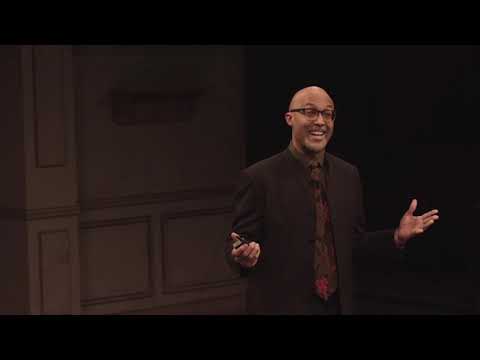
How’s your Frank 2018 going? No, we’re going to do that again. How’s your Frank 2018 going? Yes! I’m Annie Neiman, research director for Frank, and I have the best job in the whole world. I get to dig through the science on how people think, how they form beliefs, how they act, and I get to take all of that and share it with you and apply it to the issues that you are working so tirelessly to solve. So if you’ve been here before, I’m usually on stage with a doctor, Dr. Lauren Griffin, but you guys, she’s left. She’s now a postdoc in the UF STEM Translational Communication Center, getting it for sure. But, you know, I just, I don’t think I could do the show without her. No, that sucks, Annie. She doesn’t like you doing the show. No, thank you. But guys, I just don’t know if I can. No, you can’t! But you guys, it’s a two-person job. What am I going to do? Get another person? What a great idea! I will be that other person! Thank you for that intro. Dr. Troy Campbell, assistant professor at the University of Oregon and 2016 Frank Prize winner, are you saying you’ll come down to the stage and without planning or scripting or rehearsing or anything, host the Frank Prize program with me? Yeah, in this very spontaneous moment where I just happen to have a microphone, I’m welcome to do that. I’ve got to go do science. Science! Hi, everybody. Thank you so much. You’re welcome. Glad to be here. So, Troy, things are a little bit different than when you were the Frank Prize finalist and winner, than then. It’s different now. That’s what I’m saying, right? How is it better? Okay, so this is what’s going to happen over the next few days. In just a few moments, we are going to bring out our Frank Prize finalists and they are going to introduce themselves to you all. Oh, an intro on the first day. Amazing! Yes, tomorrow we will sit down and do one-on-one intimate conversation with them for a live recording of our podcast, Seven Minutes in Heaven with a Scientist. That’s a good podcast. Amazing. And then on the last day, we are going to have the first ever Frank Show. Awesome. What’s that like? Okay, so this is when they come out and they are faced with the toughest, hardest questions from a super secret guest and they have to answer them. That sounds like a panel. I thought Frank is like madly anti-panel. No, it’s a Frank Show. It’s not a panel. Frank Show, that totally makes sense. Yeah, it’s like so different. So this is where the audience is going to come in. Oh, I like them. On Friday, we in the morning, we are going to hand out to you a ballot with each of their names on it and you are going to spend the next few days hearing from them, hearing about their ideas, talking with them and on Friday, you are going to pick your top paper or the top researcher who you want to give the Frank Research Prize to and you will put your ballot in a glittery, sparkly box during the break and Liz will yell at you if you do not. She will. Yes. So first of all, has anybody checked out your top, the insane bejeweling that’s going on here? What? This? Yes. This whole thing? Yeah, yeah. Whoa. Frank has a bejeweling budget this year. So okay, so if the person gets the most names in the box, what happens? They win $10,000. I’m familiar. I’m familiar. And music, please. Thanks, babe. They get this trophy of a dude on a motorcycle that we got from a thrift store a couple years ago. That is very dusty. All right, I’m so in, but I have one question. You have a good jacket. The man you married has a good jacket. Could I get a jacket? Duh. Captain. Here it is. How does it feel? I think it feels pretty good. I think it feels pretty good. Great. So before we bring them out, Troy, you’ve been now a prize finalist. You have been a speaker. This is the first year that you are a host. So what, how should the audience think about the science they’re going to be hearing over the next few days? I didn’t know it was going to be the host. I don’t have anything prepared. I don’t have like a great metaphor or anything like that. Okay, so when we are trying to solve a problem, what we often do is we come out and we’re going to be like, what we often do is we come at it just with a hammer. But we know what the answer is, is it really what we want is a tool belt of a lot of different tools? So we’re going to bring out a lot of prize finalists here and today they are going to be helping us build our tool belt. We’re going to get a little psychology, a little sociology, a little communications, and then we have people in policy and breakouts. We have people from those same disciplines there. We have government. We have local. We have everything. But the cool thing about Frank is we aren’t just building a tool belt. What we’re going to do is we’re going to put all these pieces together. So government’s going to come out with their level, that’s the term that carpenters use, right? And they’re going to be like, here is the policy that we need. And the psychologist is going to be like, I have the perfect nail, the perfect mechanism that’s going to happen. And then the communication person is going to be like, oh, it’s time for the hammer. I got this. So that’s what we’re going to do here. We are going to hammer ideas home and we’re going to fix shit together and we’re going to build shit together. So let’s do that. So are you guys ready to meet the Frank Prize finalists? Woo! Yes? All right, Troy, why don’t you take it away? All right. Oh, I’m going to hand you this first? All right. Thank you. So here’s our first one from the University of Houston, an assistant professor. What’s my script? In the integrated communications, we have Dr. Erica Seizig. Woo! Good afternoon, Frank folks. My name is Dr. Erica Seizig. I am an assistant professor at the University of Houston’s Jack J. Valenti School of Communication. Let’s see. I am a mom. I’m a spouse. I am a first generation American. I am white. I’m an able-bodied individual and I’m queer. Woo! What else can I tell you about myself? So my journey started out in public relations and advertising, working with Fortune 500 companies and nonprofit organizations. I’m originally from New England. I traveled 3,000 miles to Oregon to do my PhD. Woo! And then I traveled 2,000 miles south to Houston to the most diverse city in the United States. In Houston, I’m a researcher. I’m a scholar. I’m an activist and I’m a professor. Over the next several days, I’m going to be talking to you about my research that looks at the intersections of activism and strategic communication for social change. I’ll be walking you through some examples of activism and action looking at different social movements. The Black Lives Matter movement, the LGBTQ movement, women’s movement and how those social movements utilize strategic communication for social change and how corporations and organizations can become activists for social change. So please approach me if I’m in my jammies in the Hampton and having my coffee. Come up to me, chat with me and let’s try to build things together and solve problems together. Thank you. Woo! Are you ready for the second finalist? Yes. Okay, our next finalist is a PhD candidate at the University of North Carolina Chapel Hill where she is in the social psychology department and she is 95 days away from being a doctor, which is so exciting. Let’s welcome soon to be Chelsea Shine. Woo! Thank you for that. Hi everyone. As Annie just said, I am Chelsea Shine and I’m exactly 95 days and I’m counting every one of those days until I graduate from UNC Chapel Hill. In my research, I examine how people make moral and political judgments and how these judgments both divide us and unite us. Like many of us in this room, over the past year I have become addicted to monitoring the news. Much to the noise of my girlfriend, I can barely be disconnected from my iPhone because I’m constantly on Twitter. Fortunately for me, I’d be watching the news as part of research. One thing I do when watching the news and one thing I hope you guys will do too is that I notice how people are talking about political issues. And one thing I notice is even though liberals and conservatives are divided on their political and moral issues, they both appeal to harm when making their moral judgments. Take immigration as just one example. While liberals feel that we have a moral obligation to protect our empowered immigrants, conservatives have a slightly different narrative. I don’t want you to go further. But one thing I want to point out in the next few days is that if we want to change hearts and minds, what’s important isn’t to treat the opponents as evil, but to start stop and to start listening to where they are perceiving harm and how they are seeing the world. Thank you. Alright, we got one more. You guys excited for these scientists? Alright. Alright. Alright. From New Jersey, from Rutgers in New Jersey, an assistant professor of sociology, Hannah Shepard. Hi, I’m Hannah Shepard. I am very happy that I work at Rutgers, not just because of New Jersey, but also because my colleagues are really deeply grappling right now with what the role of research in the current political climate is and also how to really support our students, many of whom are really deeply impacted by what’s going on right now. So at Rutgers, I teach undergrads about the social science underpinnings or lack thereof of social change interventions. And I also teach them about organizations and about culture. I grew up in Colorado and Northern California and generally people there address each other in rather gentle tones of voice. And what I learned when I moved east is people yell at each other in public all the time. Most of my examples involve swearing. But this is a social norm. So this is an informal rule that governs sort of what beliefs or behaviors people think are acceptable among some group of people. Our social lives are totally organized by the groups and the individuals that we interact with every day. And one of the bedrock principles of social science is that our behaviors are fundamentally influenced by the behaviors of the people around us, whether we recognize that or not. In particular, what we believe other people accept and believe is a really important influence on our own behavior. So how we address people in public is governed by social norms, but so are a lot of other really important behaviors we might care about, things like sexual harassment or anti-immigrant bias or violence also standing up for people or joining an organization. So what I care most about and what I’ll be talking with you about in the next couple days is how do we change these perceptions of what people around us think and accept, because these perceptions can really provide a key to unlocking behavior and group change. Thanks. Alright, can the other two finalists come out from the shadows? Yeah. Alright, let’s give them all a big round of applause as a unit. Sharing our tools. So are you ready to pull from the goblet of fire your destiny or at least the numbered order that you’re going to go tomorrow? I think this is going to be one of those things where something comes out really efficiently, so get ready for that. Yeah. Okay. Okay. Ooh. Look at this thing, guys. Ooh. Ooh. It’s powered by a magical cord. Ooh. Alright. Erica, can you begin? I’m nervous about this. Ooh. Oh, it’s just all the bejeweling we’re doing. Oh, what number is it? Three. Three. That’s the best number. That’s the best number. Who will be next? Who will be next? Suspense. Suspense? He’s who you are right now. It’s a 50% error. Here. She’s diligent. I had a lot of time to put these together, so it’s great. I really sealed them. Yeah, that would be closed. Oh, number one. That’s the best number you’re giving me. Number one. What do you think the last one is, Annie? What’s your destiny? I’m getting confused. You need glitter on your hands. Real slow, because it builds the suspense. Again. Sorry. It is. Oh, two. Two. That’s the best number. Wonderful. Thank you. We will hear from our three scientists all week long. We want you to pick their brains, talk to them about your project, about their work, get to know it. You can also access the research papers that they’re here with on the Frank website. And on the last day, a reminder, you’re going to vote for the top paper and submit a paper ballot into a sparkly box that looks a lot like our denim jackets. And on just the last serious note is that as scientists, we spend 90% of our lives deep, dark in the lab. And we live for these 10% of the moments where we get to come out and talk to people who are action-ready to use the science. You’re the people who make what we do matter. And we also know that you’re interested in talking to us. So when we asked people from last Frank, what did you want more of in Frank 2018, it was more scientists. So we’re here. We’re here to interact with you, talk to us when we’re all around. We’ll be back on the stage on Thursday and we’ll be back on the stage on Friday. Go scientists and go to the people that make science matter. Thank you very much. Thank you. Thank you. Great.
Watch Next
-
Welcome (2015)
-
Frank 2019 Recap – Closing VideoNo author
-
Visions, Values & Voice