My name is Jennifer Hudson. I am Professor of Political Behavior at University College London. And today I’m really thrilled and thank you for the invite to come and talk about the unintended consequences of emotional appeals. And this really relates to development charities in the UK, but also development charities that operate in donor countries. Now, development organizations use highly emotive appeals. And they do this on purpose because what they want to do is they want to engage their potential donor. They want to capture your attention because they know they’re competing in a space that’s difficult for your time and attention. So they need to connect emotionally with you. However, the vast majority of the images that they use rely on what we might call a traditional pity-based image. This image uses often a poor, malnourished, starving, and typically African child. Now, these images are not chosen randomly. They’re chosen with lots of science behind them. And they’re chosen because they elicit the emotions of pity and guilt to attract their potential donors. And they do this very, very successfully. So if you look at NGO or charity fundraising over the last decade, you’ll see that they’ve become more and more successful with their fundraising. However, it poses something of a dilemma. And that dilemma is we’re very good at getting money in the door. We’re very good at raising money that allows us to do the fantastic work that these organizations do. But there’s real fear from within the sector that these appeals hurt other forms of engagement. Now, that might be willingness to volunteer. That might be willingness to buy free trade. But it might just be people’s general sense of whether they can do something to make a difference to fight poverty in poor countries. So even the sector has reflected on this image saying, just for five pounds, for five dollars a month, you can continue photographing this child. And we’re probably all guilty of responding to that kind of imagery. Now, what I want to talk about today is some research that my colleagues and I have been doing that’s trying to understand two things. The first is which emotions are elicited by different types of appeals. And second, how do those emotions mediate or translate different types of actions? So we wanted to look at two, whether you give money, whether you make that donation, or whether you feel yourself that you can make a difference. So kind of an attitudinal change. Now, the way we did this was with an embedded survey experiment. So we gathered a group of respondents who were taking the survey. We had three groups and we randomized, we randomly allocated respondents into any one of three groups. So a control, what we term our traditional pity-based appeal, the one that you’re familiar with, and an alternative appeal, one that is based on empathy and shared experience. Now, important to this experience was that we gave respondents 10 pounds. And we said, here’s your 10 pounds for participating in this survey, and it’s yours to keep. And then after we treated them with the appeals, we showed them the appeals, we asked them two questions. Do you want to give any, none, or some of that 10 pounds to our charity? And how does this make you feel about your ability to make a difference to the lives of people in poor countries? So we’re measuring behavioral responses, things that people actually do and their attitudes. And that’s really important because we know some of the limits of surveys that just use self-reported behavior. Now, why emotions? This is a group of communicators, and you know the importance of emotions or affective responses when presented with some new information. Now, people can go cognitive reasoning. They can think, they can rationalize, they can weigh up the cost and benefits of a donation. But what people more than likely do is they use their emotions and their emotional responses to determine how they’re going to engage. And so emotions for us, we wanted to test the hypothesis that emotions really mediate or they transmit the appeal that people see and the eventual action that they will take. So we wanted to look at not just the emotions that the sector knows works, pity and anger and guilt, but we asked what other emotions do people have when they get these types of appeals? So we look at six, pity, guilt, anger and repulsion, which we might think of as negative emotions and hope and solidarity, which we might think of as more positive emotions. Now, let me share briefly with you the appeals. So the first appeal, which is this traditional appeal, this is one you’ve seen, yes. This is one you’ve probably given $5 to. It is an appeal that shows and emphasizes difference and inequality between the donor and the recipient. It is based on hierarchy and power. It is devoid of context. And it is devoid of agency. And the language we used here was about you saving a child’s life, about you being able to make a difference. Notice the child here who’s unnamed, who’s not within context, has no agency for themselves. Now, we tried to contrast this with a different way of communicating with a potential audience. And here we tried to emphasize empathy or shared experience. Now, empathy is about common experience. It’s about context and giving voice. And you can see the boy here, we named Amadi. We said, Amadi wants to be a future doctor. Amadi and Amadi’s parents want the same thing that you want for your children. You want them to be well fed and schooled and clothed. You want them to have a future. And we use language that talks about shared experience, okay, that this is something that we can do together. So what happens when we gave these treatments to our respondents? So just thinking about giving money. Well, first, if you got the pity, the traditional appeal, you were more likely to say you felt guilt and anger. And that made you more likely to give money. It made you more likely to donate. This is the sector experience. This is what the sector knows. However, it also made you feel repulsed and less hopeful, which made you less likely to donate. So there’s a tension there. You might activate emotions that help drive donations, but you can also activate emotions that suppress the willingness to give. Now, if you got the other treatment, if you got the empathy based treatment, you were less likely to feel repulsed and more likely to feel hopeful and more likely to donate. So there are two different mechanisms to getting people to give money. Now, what about making a difference? Now, this is really important because remember, this is the trade off. Do organizations raise money successfully using these images? But are they undermining people’s sense of being able to make a difference more generally? And what we found is that when you showed the traditional appeal, it made people feel less hopeful and therefore less like they could make a difference. And when you showed them the empathy based appeal, it made them feel more hopeful and more like they could make a difference. There are two unintended consequences to using this type of imagery, to using this type of appeal. And the first is that the emotions that you elicit in your respondents aren’t you equal and aren’t uniform. Yes, you can get people to donate through negative donations, but you can also elicit emotions that drive people away from making a donation. Second, you’re driving down hope and hopefulness is fundamentally important, not only for people who do want to donate, but for that bigger project of feeling like you can make a difference to people living in poor countries. Very finally, you might be asking which appeal mattered, which appeal brought in more by way of donations? And you know what? It didn’t matter. If you got the empathy based one, it gave on average £2.25. If you got the pity based one, on average £1.97. They weren’t statistically different, but you can get people with hope. Thank you very much.






 Seven Minutes In Heaven… With A Scientist
 Moral Uprising with the Poor People’s Campaign
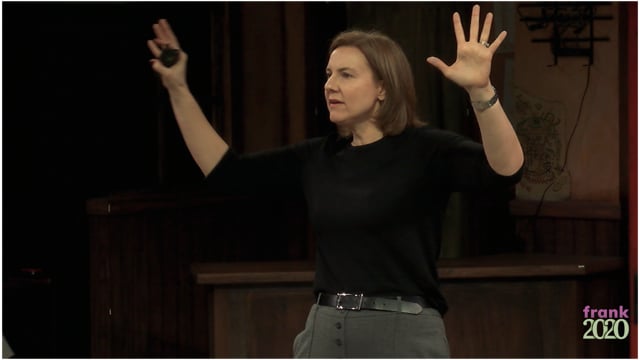 The Unintended Consequences of Emotional Appeal