So, before I start off my talk, I want to start off with a little disclaimer. Speaking of bladder problems, yesterday I was talking to one of my mentors, Andy Bernes, and I was talking to him about my talk and I was like, Andy, I’m so nervous. And he looks at me and he says, Luisa, you’re going to be okay. Even if you get on the stage and pee yourself, people will be proud of you. Just the same. So, if that happens, you guys know who to blame. Andy. Anyways, now that I got that over with, let’s get into it. So today, I’m here to talk to you about how you can use communications to dissolve partisanship. Before I get into that, let’s rewind to last summer. In June of 2016, I had the opportunity to intern at the Leadership Conference on Civil and Human Rights. The Leadership Conference is a coalition of more than 200 national organizations that work to promote and protect the civil and human rights of all persons in the United States. As a Carole Fellow, I was assigned to work in the communications department. If I had to describe my experience in two words, I would say that it was eye-opening. Now, I must admit that what struck me the most is how politically polarizing every issue is. Even the ones that most sensible people would consider common sense. While that might not come as a surprise to most Franksters, for a 22-year-old that was never really heavily invested in politics, it was quite the shocker. See, I grew up in a family that didn’t have strong political opinions. Politics were never discussed at the dinner table. But morality was. Growing up as a Catholic, I was taught two simple values. To respect everyone and to help those less fortunate than me. As a kid, these values motivated me to do volunteer work. Now, as a young adult, they’ve motivated me to pursue a career in public interest communications. When I found out I was going to be a Carole Fellow, I was stoked. Now, I must admit that I had absolutely no idea what I was getting myself into. The first few days of my internship, I had a lot of trouble keeping up with the conversations. I meant seriously, people, what’s up with all these acronyms. But as the weeks passed, I began to understand more and more. Slowly but surely, I started realizing that a lot of the times, the conversations were more about politics than they were about the fundamental issues we were trying to solve. Now, to me, this seemed counterproductive because politics can be divisive by nature. And to solve these issues, we need bipartisanship. So, the question becomes, how can we use communication to dissolve partisanship? Well, I’m not entirely sure. But here are my two cents. The first thing we need to do is communicate with values. This is what our elders instilled in us when we were little. In my case, it was to respect everyone and to help those less fortunate than me. In terms of communications, values are important for two reasons. First, they can have a major influence on a person’s behavior and attitude. And second, they are broad and universal, meaning you don’t have to convince anyone they’re important. Correct me if I’m wrong, but pretty much everyone agrees that opportunity, safety, and justice are important, right? Now, these words may have different meanings to different people, but that’s beside the point. The key here is to start conversations at a point of consensus, not contention. The second thing we need to do is communicate with research. The great thing about research is that it’s factual, making it harder for people to dismiss it. People can argue back and forth about their political opinions, but it’s simply harder for them to argue against numbers. However, facts do not speak for themselves, which is why we need to pair them with values. Let me give you an example. During the last two weeks of my fellowship, I got to work alongside Scott, my brilliant supervisor, to coordinate the press rollout for a product we were relaunching. The product is a scorecard shown behind me that evaluates the civil rights safeguards of body camera programs in 50 police departments against a criteria. As you all know, our nation’s black communities have suffered heartbreaking losses due to police brutality. These tragic incidents have increased the popularity of body cameras, positioning them as the ultimate tools for accountability and transparency. But the leadership conference was skeptical, so it partnered with Upturn, a technology consultant, to determine if these devices were truly as effective as they were marketed to be. Turns out that they weren’t. As you can see from the overwhelming amount of red excess on the screen, no department met all A criteria, and only a few met more than two. With these facts in mind, it’s safe to say the body cameras across the nation currently fail to protect the civil rights of recorded individuals. The good news, however, is that the scorecard got a lot of media attention from both the left and the right. In total, about 100 news stories were published in both national and local outlets. And even more importantly than that, six police departments reached out to us to discuss their scores. Two of the departments that reached out to us did not make their policies publicly available prior to the release. But as a result of the launch, they started taking the necessary steps to do so. So, we made some progress. Ideally, our efforts will translate into policy change. But even if they don’t, at least we changed the narrative. And in the process of doing so, people realized that this was an important issue that needed to be addressed. Now, you may be wondering what any of this has to do with my talk. Let me explain. There are two reasons why I think this launch was wildly successful. The first is that the issue we were tackling was framed around a context of values, namely accountability, transparency, and safety. The second is that our findings were backed by research. By harnessing the power of values and facts, we were able to get the ball rolling on an issue that was ripe for action. Political arguments, on the other hand, do not always have that same effect. They can be paralyzing and prevent us from getting things done. But politics exist, unfortunately. As much as I would love to avoid the topic, it’s simply not feasible. As one of my mentors says in his article, Bipartisan Science, Andy, we need to be able to understand the political context of our work and learn how to navigate them. I agree with him. But I will also argue that getting too caught up in politics is dangerous because we risk losing focus of the common goal. But don’t take it from me. Take it from that guy, George Washington, who said that political parties tend to render alien to each other those who ought to be brought together by fraternal affection. In these hyperpartisan times, it’s easy for us to forget about the things that unite us. Yes, we are different, but not as different as we think. If you take anything away from this talk, let it be these two things. First, we cannot overblow our divisions. Second, we cannot overlook our shared values. And one last thing, please, please, please, don’t let anyone’s political agenda undermine your values. Thank you. APPLAUSE





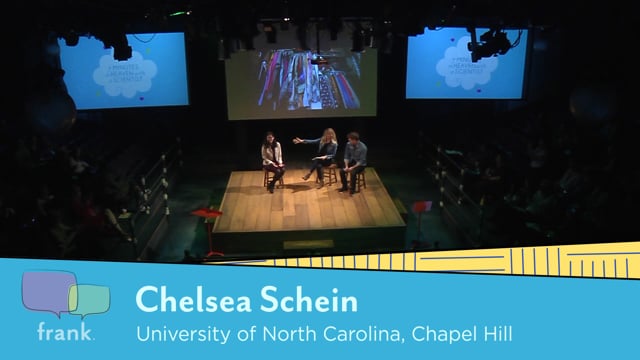 Seven Minutes In Heaven… With A Scientist
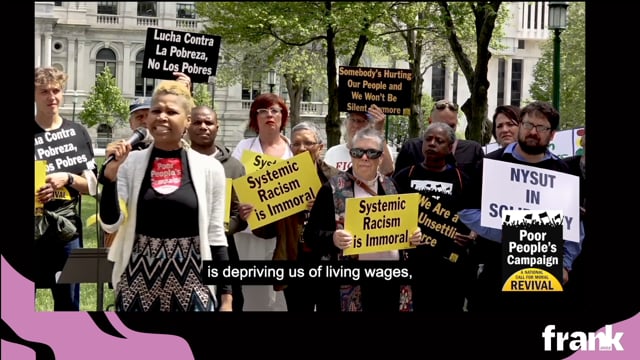 Moral Uprising with the Poor People’s Campaign
 The Unintended Consequences of Emotional Appeal