
Fresh From the frank Stage
Standout talks from the most recent 2023 gathering, featuring bold voices, urgent truths and unforgettable moments.

Amahra Spence
Liberation Rehearsal Notes from a Time Traveler

Shanelle Matthews
Narrative Power Today for an Abolitionist Future
Nima Shirazi
Irresistible Forces, Immovable Objects
The Speaker
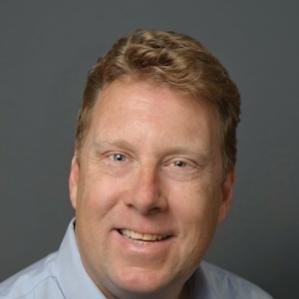
Jim Ross Founder and Owner of Telegraph LLC
Jim Ross is the founder of Telegraph, a national strategic communications firm with 20+ years of experience in public affairs and campaign strategy. A recognized expert, he’s managed political campaigns and shaped communications for all clients. He studied at Saint Mary’s College of California.
Watch Next
-
 Seven Minutes In Heaven… With A Scientist
 -
 Moral Uprising with the Poor People’s Campaign
 -
 The Unintended Consequences of Emotional Appeal
Timing is Everything
BusinessCommunicationsCreativityProblem SolvingPublic InterestPublic Service
Transcript
We’re starting with a video. 510. I think the biggest thing most people don’t realize is that minimum wage workers or low wage income workers are not teenagers. When you pay people more money, the community benefits by getting more money into the local businesses. Raising to $12.25 would mean a whole lot. De poder ahorrar un poquito. We need to raise the minimum wage. Raise the minimum wage to $12.25. Vote yes on measure FF. Vote yes on measure FF. Good afternoon everyone. Thank you. For those of you we didn’t meet in the beer line last night at the welcome rally. I’m Jennifer Weber. And I’m Jim Ross. And as Liz said, we were the strategists on the campaign this past fall on a ballot initiative to raise the minimum wage, establish a minimum wage, and also paid sick days in Oakland, California. So as the lead strategist, we oversaw the paid media, the earned media, the field plan and organizing, the coalition building. We didn’t do windows. We didn’t do windows. But we did work with and manage the steering committee, which was made up of labor and community organizations. And today we want to talk with you in particular about how we used the timing of the media and in particular earned media to drive the politics of the campaign. Measure FF, as we said, was an initiative. And what that means is that our coalition drafted the language that it wanted to be an ordinance in Oakland. And we went out and gathered a requisite number of signatures of voters to qualify that for the ballot. Once we did that, voters got to make that decision. We had some early guidance from polling. We knew that our issue was very popular. And we also got some good insight into who our best messengers would be, who the voters would trust and want to hear from during the campaign. And that helped us guide our campaign plan. So Tolstoy said that every unhappy family is different. Well, if that’s the case, then every campaign is an unhappy family. We put together a campaign plan. But just as importantly, we also developed what would our opposition’s campaign plan be. Because we wanted to run a campaign where we drove the discussion, where we got to drive the timing of the campaign and where we were advocating that we weren’t responding. One of the great sayings in politics is if you’re responding, you’re losing. And we wrote a plan so that we could drive the discussion. So it’s very important, obviously, have a plan. Over the course of the campaign, there were some really key milestones or points that we saw early on. So believe it or not, the first thing we did, as communicators this might sound strange, we decided not to talk to anybody. The first two months of the campaign, we went out and focused on gathering the 32,000 signatures. We needed to qualify this measure for the ballot, building infrastructure, and creating suspense. So in the world of politics, in the world of the little echo chambers that always develop in these things, people are always kind of, well, what’s going on? What are they saying? By not talking, we built suspense. So when we turned in our signatures, when we submitted our signatures and we did a huge communications effort, a huge push, it had real impact because we hadn’t been dripping and grabbing things out to folks. In fact, we were told later by our opponents that, oh, we didn’t think you were going to qualify. We weren’t worried about it. So it gave us not just a huge communications advantage, but it gave us a structural advantage as well. And that advantage gave us real momentum that helped us drive through the second landmark point that we had. That was, there was a possibility, we saw at the beginning of the campaign, that our opponents could get the Oakland City Council to place a competing measure, a watered-down measure on the ballot against us. That was something that, we looked at it and it was like, oh, it’s going to be tough for them to run a no-campaign in wind, but what they could do is get a watered-down measure and run it against it. And the amount of press, the momentum we built from our signature turn in allowed us to basically drive right through that. They tried to do something at the City Council and it failed, but really, that really created the momentum for us. And the whole nature of this campaign really just created an enormous amount of coverage and something that we really could drive every single day. Right. And as you can see from this slide, we did have really an extraordinary amount of media coverage for a local ballot measure in the Bay Area where there’s something amazing happening every day. And we had a story on average every three days during the time that we turned in the signatures to and through election day. And we were able to monetize that for our clients and provide that it, show that it had just a huge value. But one thing I want to say about this, and it’s been touched on by some speakers earlier today, and that is that the mechanics, the seemingly simple mechanics of earned media and what you do to get it really matter. Are you putting out an advisory? Are you pitching it? Are you just in regular communication with the news outlets so they know what’s going on? So a lot of the stories that we got, the coverage that we got, nobody sent a truck to our event. Nobody sent a reporter to our event. They used B-roll from past events. They read our news advisory about what was going to be happening later that day. So we were able to control that message as well. And so, again, those mechanics of just making that happen were really important in letting the outlets know about it. The other thing we did was we had to mitigate against some anticipated negative coverage. We knew that our local paper, the Oakland Tribune, would likely editorialize against our measure, saying it was too much too soon, that there were no exceptions for certain groups of people, certain nonprofit organizations wanted exceptions, you know, tipped workers, restaurants, et cetera. Our measure is, as Liz said, the minimum wage for everyone. So in order to mitigate against that negative editorial we expected, we really worked with columnists and one in particular at the Tribune to have her talk with people, have her talk with low-wage workers, get that story out so that she would have a positive opinion voice in that same outlet where we did get an editorial opposed to the measure. Another thing that we did was in our regular communications with our supporters, we told them what was going on. We gave them message points so that when they were having one-on-one conversations, whether on their social media feeds or at a coffee shop with a friend or over dinner with their family, if the topic of the minimum wage came up, they could just say, this is what’s going on and they really serve as messengers one-on-one for us. As this chart shows, we found early that the media was going to cover this. So we… Did we shoot that video? Oh, yeah. Go ahead. A campaign for a higher minimum wage officially kicks off this morning in Oakland. In an effort to get the city of Oakland to increase its minimum wage, the group Lift Up Oakland gathered at Fruitvale Plaza before setting out to collect signatures. People focused on raising Oakland’s minimum wage are gathering signatures to try to put the issue on the ballot. Yesterday, the Lift Up Oakland Coalition was among the groups hitting the pavement at the Fruitvale Bart station. And it’s just not enough for working families to survive on. They can’t make ends meet and they can’t put food on the table or close on their kids’ backs. The study says raising the minimum wage in Oakland could really boost the economy. It’s about human dignity. It’s about a person feeling proud about themselves when you can put food on the table. And unfortunately, as great as Oakland is and the greatest economy is in the Bay Area, unfortunately, a lot of people don’t have a chance to participate. Researchers at UC Berkeley found raising Oakland’s minimum wage to $1225 an hour could cause paychecks to go up at least $115 million. The study says that would mean fewer people would depend on social services and they’d spend more money at local businesses. I can’t build my own life on 1025. I think the biggest thing most people don’t realize is that minimum wage workers or low wage income workers are not teenagers. When you pay people more money, the community benefits by getting more money into the local businesses. Raising to $1225 would mean a whole lot. De poder ahorrar un poquito. We need to raise the minimum wage. Raise the minimum wage at $1225. Vote yes on mushroom FF. Vote yes on measure FF. In Oakland, the Union Backs Cafe to Raise the City’s Minimum Wage next year at $1225 an hour has submitted more than 33,000 signatures to get the proposal on the November ballot. The Lift Up Oakland Coalition has been gathering for the past three months. So in Oakland, an overwhelmingly vote to raise the minimum wage, there are 81% of voters approving measure FF. It will raise Oakland’s minimum wage from $9 an hour to $1225 an hour. That’ll start in March. So we wanted to show the commercial twice just to make sure you guys saw it. No, I cut both. Anyways, it’s my fault. Oh, it’s my fault. That’s how this relationship works. So you guys didn’t figure that out already? So we found out early, as you can see here, that the media was going to cover this issue. There was no doubt about that. It’s a great story. I mean, there’s a bunch of former journalist, current journalist here, has conflict. It has all of the great things that people love to hear. But what we found is that we needed to craft stories and create the right messaging. That was actually more of the challenge than you often have. I hate this saying when people say this to me, and it’s, I’m a pretty easygoing guy, but it’s a great way to get me to really get angry when they say, well, all press is good press. No, it’s not. No. And I’m a, I’m a, you know, everybody here is a communicator. I’m a political consultant. I communicate. Yes. But communications needs to serve a goal. And our goal here is to win campaigns. So that’s what we do. That’s our, you know, this is a tool that we use. And, you know, we found that, that we could get folks to talk about really great stories, stories that were personal and specific. You know, and that was, it was great. You know, the HRC presentation, all the stories today, the most powerful stories that you can tell are personal and specific. Think about what the most powerful thing somebody can say to you is, I love you. You’re hired. You have a raise. I mean, why are those powerful? They’re specific and they’re personal. That’s like, you know, the marriage, it’s, you can get married. So we were able to really craft those. And that’s why if you look at our coverage, you look at the PV spot, these are workers. These aren’t, you know, talking heads or, and, and, and, and General talked about some of the issues that generated. But you know, they’re real workers. That’s really important. The other thing that we had a real opportunity to do is, you know, so voters see ballot measures, legislation, as solutions to problems. So oftentimes you have to spend a lot of the campaign creating the problem. This time in the Bay Area, people already saw this problem. Wage inequality, it’s a problem. People believe that. So we could spend our time talking about why this is a solution to the problem and not creating the problem. The final thing that made this really powerful messaging is, you know, so much, people are so cynical about politics. I mean, probably rightly so. Maybe, I don’t know. But this is one of those things where it’s not voting for some guy or some gal who’s maybe going to go do something that’s going to maybe change something. It was a direct action that you could take to help people. Vote, you raised in the wrong way. I mean, who wouldn’t want to give those people a raise? I mean, look at them. Look great, you know? And, you know, that was a really powerful thing. And then the final thing that we did is we answered the obvious questions. So every campaign has an obvious question that it has to answer. And this case, ours is who’s going to be impacted? Not just negatively. People are, you know, small businesses and we answered that question. But also, who’s going to be impacted positively? That was the real question that we had to answer in this campaign. I think we did a very good job of answering who’s going to be impacted in this race. Right. And as Jim said, having the right spokespeople are important. We were not really surprised, but it was interesting that our polling showed that, again, voters were more interested in who the low wage workers, who would be impacted, how they would benefit from this measure. We thought we might see voters more concerned about how much is this going to cost me, how much our price is going to increase at the local business, and that perhaps businesses in favor of the measure would be more effective. But that wasn’t the case. So we had, as you can see from these photos, these were our press conference to turn in the signatures. We did not suffer from people who wanted to be in the camera shop or who didn’t want to be in the camera shop. Plenty of people from our coalition organizations, and there’s a mayoral candidate or two in those photos as well, wanted to be in the shot. So what we had to do in terms of managing the coalition and navigating that was really have them agree on the plan and focus on it to use workers as spokespeople. It wasn’t going to be the executive director of your organization who was going to be the spokesperson. Maybe on occasion we needed a spokesperson from one of the organizations, but that was not what was going to move us ahead and win this campaign for us. So that coalition navigation is really important. I’m sure you find it in the work you do. In a campaign that is being run by a coalition, it’s especially important. In that coalition, we really focused on a few things. We kept it small. We kept our steering committee about eight to 10 organizations, each made up of decision makers around the table. We told them you have to send somebody to our meetings, to our calls, who can make a decision on that call if it needs to be made. We focused on decision makers agreeing on goals. The steering committee had to be made up of organizations who brought resources, either people or money. It was not a feel good campaign. It felt good. You have to win and have to stay focused. So can you get people to events, people to do work, or do you have some money where we can hire people to do work? Basically the same thing. That was really important. The group again had to be small enough to act and to be nimble. So we had to be disciplined as well. We were very disciplined and I think some of the coalition members were surprised when I would not e-mail information. I would number copies of polling data at meetings and collect it back up and know that every number was in sequence so nothing was missing. I think a lot of them had never seen this before because, again, as Jim said, a lot of times you’re used to just going out and talking about stuff. But we were very disciplined because we had opponents that we were dealing with and we didn’t want to dilute that coalition. So the coalition was tasked with helping us find low wage workers who were spokespeople. A lot of them had to be very disciplined. A lot of them had members who were low wage workers, worked with restaurants who had low wage workers, and we ended up having some really great ones who you saw in some of the coverage. John Jones, who was in the TV spot and then on one of the news clips he had the security ball cap on, came to us sort of peripherally and I had to kind of convince one of our coalition members that he would be amazing because his story was so compelling. And again, that’s what it’s about, finding those compelling stories of people who are impacted. He is formerly incarcerated, is now, was working at a security guard at a local fast food restaurant, and raising his family about to welcome another child. And not only did he work his job, spend time with his family, they would come to our campaign events, but he also volunteered a lot with his church and organizing other low wage workers. And he turned out to be just really one of the most compelling spokespeople that we had. This was another woman essence and her son. One of our coalition members found her because they walked into a local shop. It was one of those kind of popcorn candy corn shops and she was working behind the counter and they were just struck by how dynamic she was and started talking with her. And this story in the San Francisco Chronicle, the largest paper in the area, this story came out the day after we turned in the signature. So we turned them in on a Friday. We had worked with the Chronicle to have the story come out on a Saturday and Essence was profiled and she just did a great job. So those are both great examples how we crafted the cover. Let’s go talk, right? And who talked mattered. But also the timing mattered and how we paced it, the pacing of the campaign, those really mattered. Like I said earlier, we used this media coverage to meet political goals. We had this specter of a competing measure all the way up until the end of July. The city council could have placed this on the ballot. They actually had a hearing about it. Had a bunch of folks there. And we used the media coverage that we did to really create pressure on them so that they wouldn’t move forward. And really just kind of defeated that before we even got to the ballot box. And I often say this, your campaigns are usually not won on election day. They’re usually won much further back before that, way before that. Really we won the campaign not in November but in July after that we blocked a competing measure. Couple of these things, research really matters. We did a fair amount of polling. We were fortunate to do that. We also had the UC Berkeley’s Labor Center. You guys heard in one of the clips they did a study on this. We were very fortunate to have that. We did a press conference leading into that city council debate that really helped drive the coverage and drive the discussion, and we did it early. And here’s one other thing. Always if you’re going to take a chance at a campaign, take a chance early. Don’t take it late. Everybody wants to do the October surprise. Do it early when you have time if it doesn’t go well to fix it. At the end of the day, you know, there are a couple of things that we’d like you to take away. One is run your campaign. Don’t let somebody else run it for you. Oftentimes your allies want to run it for you. The press wants to run it for you. Somebody wants to run the campaign for you. And timing and pacing are key. You know, the campaigns are all about pace. They end. It’s not like a lot of these projects that don’t end. Campaigns end. That’s what’s great about them because then you don’t have to see these people anymore. They don’t have to see me. I’m sure that it goes both ways. And then also the coalition management is as important as the external communications because your coalition and your steering committee have to agree and guide it. So work continuously to create that consensus with your steering committee. And when your campaign and raise the wage next week, Oakland will have the highest minimum wage in the country.
Watch Next
-
Seven Minutes In Heaven… With A Scientist
-
Moral Uprising with the Poor People’s Campaign
-
The Unintended Consequences of Emotional Appeal