Two franks
BusinessCommunicationsFrank KarelPublic InterestStorytellingThe Event
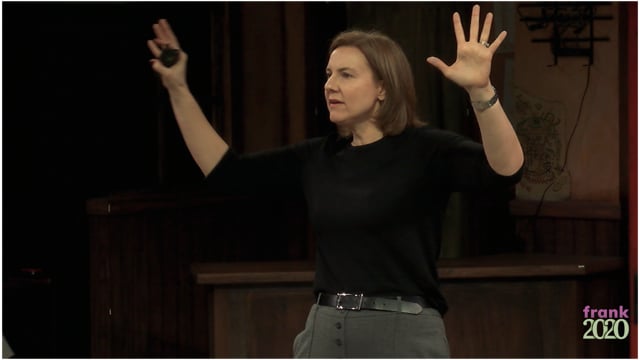
I was thinking about this work that we’ve been doing to define public interest communications and who public interest communicators are. And I think that we should have remarkably good looking. My goodness. So there are two Franks, right? And many of you in this room got to know Frank and got to work with Frank. And many of you have asked the question of this Frank, and why have you called this gathering Frank? So there are two Franks. There is the Frank Currup who I met in 1996. He hired me in the lowest possible position at the Robert Johnson Foundation Communications Office. My impressive duties included things like organizing the foundation’s massive supply of video dates, alphabetizing news clips, and making sure that the news clips were ready to go to the Board of Trustees. Now this was no small task because our president did not like the fact that the Burrells Clipping Service very carefully underlined in Ballpoint Manor, Robert Wood Johnson Foundation’s name. And so I kept in my desk a bottle of white alcohol and had a single brush in it. Because that was the only way to get that line out without actually winding out the foundation’s name. And you couldn’t go back because you only got one copy. So I had these menial tasks. But the great thing that is that Frank was a natural teacher. I learned everything I knew about teaching from Frank and from the people in this room. I painted war apart my teacher. He shredded them to my writing students. You have no idea. And then he would put them back together. And it was months. It was months in that job before I wrote anything that he thought was any good. I would put something in his inbox and I would put a sticky note on it and say, this is a playground for your pen. But I grew up as a communicator with him as my mentor. With many of the people in this room as my mentor. And he stuck me in the office next to him. So I got to watch him. I got to see how he did his work. I got to watch the parade of people who came into his office seeking his counsel. I got to watch him work late into the night. Reading, talking, networking to make sure that the advice that people came to ask for was actually good. I remember he was such a reader. He picked up this piece one day in the New York Times that he thought was kind of interesting. It was about mavens and connectors and how big changes move through society. He said, you know, this is really interesting. So I’m just going to call up the guy who wrote this and see if he’ll come over for lunch. And Malcolm Gladwell did. I’m going to spend the day. And that was before Malcolm Gladwell was cool because his hair is really short. But Frank thought big and he rewired my brain to think big. He rewired the brain for everybody around him to think big. And it was actually at Frank’s urging that the foundation decided to take on tobacco. Frank was paying really close attention to the research. And everybody knew that the cat was out of the bag that smoking was really bad for you. Everybody knew this, but we really knew it was big to that thing. We were afraid. But one of the things that Frank was paying really close attention to was research that was showing that it’s really hard to get people who smoke to quit. But some efforts that were getting young people to never pick up a cigarette in the first place turned out to work really well. He said, that’s where we’re going to put our money. And then he went and he got Joe Marks to have a bar strategy in that area. He paid close attention to the new advances in technology. The first time I saw Blackberry was in Frank Carrell’s hands. He was so excited. We had all three lines of tiny, he had the world’s tiniest blisters. But the other thing that he was mesmerized by was digital photography. And watching the industry move from film to digital. He said, this is amazing because the people who used to be able to afford cameras and equipment, now everybody came forward. Can you imagine, can you believe the stories we’re going to hear now that we never got to hear before? Because everybody can use this stuff. He, I learned in the words that he brought that. We can look it up. So, as Mike’s present for communications at the Robert Wood Johnson Foundation, one of the things that was important to him, yes, he believed in transparency. Yes, he believed in communicating honestly and consistently. But he also invested in communications ability of every foundation grantee. And he got the ones who were most promising to go and hang out with Kristen and learn how to identify strategic audiences. He dispelled the mythology of the general public and the value of raising awareness. He got that. And he got Kristen to teach us all how to do it so well. And then he brought the good man in so that the world would never have to suffer a bad presentation again. He built our field. He built the field of philanthropic communications, not with just the investments of resources and skill-building, but through evangelizing and connecting. He was Jehovah’s Witnesses and the Mormon Tabernacle Choir all in one personality. He didn’t believe in shoulds. He didn’t believe, and I told you so, or because I said so. He spoke kind of credibility of learning. Lynn Washington doesn’t think that we should say why we tell stories that I do. And the reason that I think we have to understand Frank’s story and his contributions is because we understand that you understand public interest communications. His is part of our sacred bundle of stories. His legacy is what defines our current, his legacy is our legacy. Another thing about Frank that’s important to know is that nobody could walk past him slowly without hearing about how much he loved his Amy Mabby, the University of Florida. And so when he was thinking about what his legacy would be, it included an endowed chair. Here. And that position would be for a practitioner, not someone from an academic background. And because Frank was smart, he knew that he had to get a practitioner who would only be here for a 10-year term because that experience gets really stale. So what is public interest communications? I tell my students that it’s any communications that an organization undertakes that transcends its own interests and contributes to the greater good. So Frank had three goals. One, establish a curriculum. And today we’re teaching undergraduates. So any of you studying public interest communications as an undergrad? Woo! But the class of you study English and political science and journalism. What am I missing? Psychology, right? You didn’t get to study public interest communications, but now we do and we’re better for it. We have to identify an advanced scholarship that can build the field. And today you’ll hear from people who are doing that. And the third was to build community. And that’s why we’re here. That’s what brings us here is to build and nurture this field. We rejected a lot of names for this meeting. One was the Carl Symposium. One was the Communications Colloquium. Unfortunately, Karen Hart pointed out that ain’t nobody got time for that. And so we decided to call it Frank. And the great thing is that once we knew that we had to call it Frank, this was not planned. It emerged. And you saw in it something that hurt you and connected you to something bigger. Frank believed that good communications is the accelerate on the fire of change. That without it, good ideas can fail to spread. A poorly framed message can harm a good idea before it can take flight. Or an idea can stall out when a group opposes it for the wrong reasons. What makes this so much fun is that our field is innovative by nature. There’s no tried and true solution for homelessness because we still have homelessness. There is no go-to solution for hunger or poor health because people are still hungry. People still live sicker and die younger than they should. And too often the insights that come from research and experience don’t make it into practice. We spend millions on campaigns that fail when they should have instead saved lives. And the price of our mistakes is too high. Our failures, our mistakes, our bad calls are not calculated in lost profits, closed stores, bad markets, or lost market share. But in lives that end too early, our dreams are go unfulfilled. We must be innovative because it matters so much. In the business of making the world better, there’s plenty of work to go around. And so we have the opportunity here with Frank to pull on the same group. We are not competitive unless it comes to who’s the best karaoke singer. We share our best ideas like favorite books and we pass them around. And I’m intensely proud of that. Frank knew that our field had so much more to do and he established the chair to take on that unfinished work. And he knew that we would behave exactly like we’re behaving right now and build this community. And as Frank grows with your help, imagine we had 30 crew captains. Wouldn’t everybody was a crew captain? Wouldn’t every single one of you was the thought leader who got more people to come to Frank next year? Wouldn’t that be fun? Can you imagine the karaoke competition that could happen then? So as Frank grows I think with your help, maybe with you on this stage next year, we can grow our community. We can grow Frank. And we can, if we get really good, we can move out of our parents’ basement. Thank you.




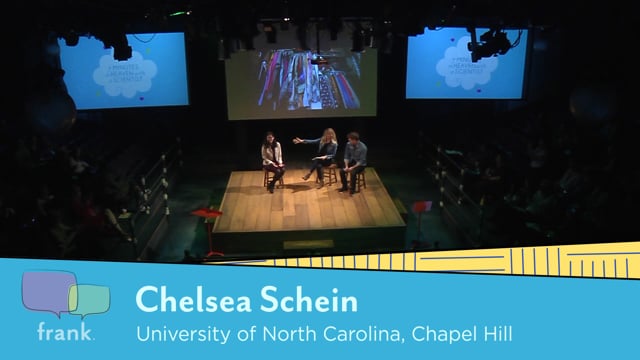 Seven Minutes In Heaven… With A Scientist
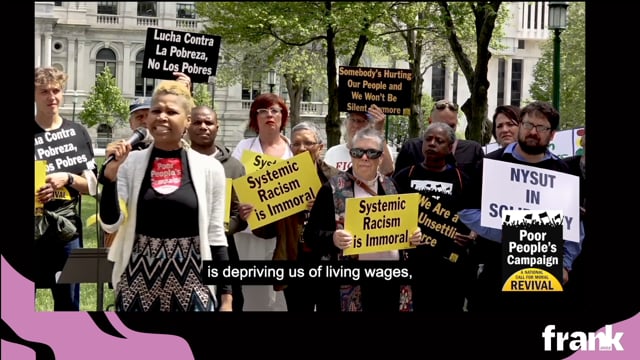 Moral Uprising with the Poor People’s Campaign
 The Unintended Consequences of Emotional Appeal