
Fresh From the frank Stage
Standout talks from the most recent 2023 gathering, featuring bold voices, urgent truths and unforgettable moments.

Amahra Spence
Liberation Rehearsal Notes from a Time Traveler

Shanelle Matthews
Narrative Power Today for an Abolitionist Future
Nima Shirazi
Irresistible Forces, Immovable Objects
The Speaker

Jina Yoo Adjunct Professor at Meredith College
Jinna Yoo is a researcher, educator and writer blending data-driven insights with storytelling. She teaches public health and communication, publishes on media and emotion and writes award-winning science fiction. Jinna bridges research and creative writing to inspire and inform audiences.
Watch Next
-
 Seven Minutes In Heaven… With A Scientist
 -
 Moral Uprising with the Poor People’s Campaign
 -
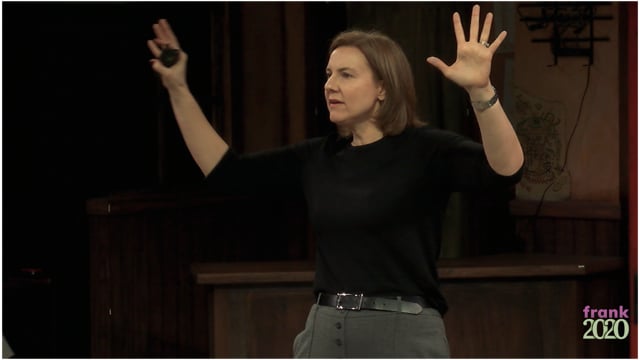 The Unintended Consequences of Emotional Appeal
Use the Right Emotion for the Right Task
Behavioral ScienceEducationEmotional IntelligenceGlobal StoriesHealthcareProblem SolvingPublic InterestStorytelling
Transcript
Hi, it’s my great honor to be here today. Today I will talk about using the right emotion for a positive social change. Why was I so intrigued by emotion? So I will start with the story because everybody here loves the story. I’m Korean and unlike the US where the gastric cancer or stomach cancer is not very common, stomach cancer is still one of the top cancers in Asia and many people die from stomach cancer every day. And as you can see from this graph, even among Asian nations, a Korean rate of gastric cancer is significantly higher, I mean almost doubled. Why are Koreans so vulnerable to gastric cancer? Some studies suggest that there is a link between H-pyronefaction and stomach cancer. Some studies include that Korean diet is one of the major risk factors. So we eat rice as our main meal and as you know rice has no taste. So we eat kimchi with rice. But have you tried authentic Korean kimchi? It’s like very spicy and very hot, very salty. And then Korean love salty food and spicy food. So that kind of causes stomach ulcers which can give us stomach cancer. So one good fact about the stomach cancer, although there is no good thing about cancer in general period, is that if it is detected earlier, then the 5 years of fiber rate is more than 95 percent. And the surgery itself is not too complicated. So pretty much you will live. So Korean government puts a lot of effort to educate people to get endoscopy screening every other year. And of course it’s 100 percent covered by the insurance and everything. Also Korean government sponsors various campaigns as you can see here. And it’s you know the white stuff that’s kind of creepy but it is concerning about the salt intake. The white stuff is kind of salt. And the catchphrase is saying that would you preserve your health in salt? But the government’s campaign effort has not been very successful. In 2009 a powerful one hour TV documentary was aired in Korea. It was a story of a single mom with a stage 4 stomach cancer. She had two beautiful children. They were poor. She was making her living by selling funnel cakes from the street kiosk. The documentary vividly portrayed her physical suffering from the stomach cancer and chemotherapy and all that. And also her emotional suffering from the concern for her children after her death. The program ended with a report of her death in July 2009 at age of 38. This documentary was just too sad. I mean I cried so hard so as my husband. You know I’m an emotional person so I cry all the time. You know I mean watching the master called priceless ads that just makes me cry too you know. But my husband he’s a Korean man and Korean men don’t cry in general. But then he cried so hard. It means the documentary was that sad. So first thing we did the next day with our fluffy eyes was to call our doctor to make an appointment for endoscopy screening. We are not the only ones. A lot of people reported that the story really moved them and they called their doctor to ask them about the stomach cancer screening. That was the moment that I realized the power of stories as well as power of sadness. This documentary was just a sad story about single mom battling cancer. There was no mention about eating or anything. But then this story was more powerful than any other health campaigns in Korea. Our study was funded by the NCI secret grant. This was originally funded to test effectiveness of the effectiveness of cancer survivors stories also known as narratives among African American women. The reason why we specifically focus on African American women is because there are serious breast cancer disparities still. Good news is that breast cancer mortality rate has been steadily dropping. But then bad news is that breast cancer mortality among black women is significantly higher than women in any other ethnicities. It should be also noted that instance rate of the breast cancer is highest among white women. But then the mortality rate is too significant significantly higher among black women. There are many reasons for that. But then one of the reasons is that black women are far less likely to get the regular mammograms than white women. And of course the low income black women appears to be the most vulnerable population in this case. So narratives are emerging as a promising venue for communicating cancer information because narratives have several unique benefits over informational message. Among these messages we focused on its ability to produce emotional response because emotion often plays an important role in communication in cancer communication. So with this grant we collected many breast cancer survivors from local from local women. And based on their stories we hired a professional production to create two equivalent videos. The one living proof that featured African American breast cancer survivors as they provide information in form of the personal stories. The second one the fact for life that video featured African American narrators who present the same information in a expository form. So we wanted to see which message is more effective. We collected data of research participants from St. Louis County and one of the most segregated cities in the U.S. unfortunately. The red part here is St. Louis County and the instance of late stage breast cancer is twice of expected rate for majority. So we reached out to this neighborhood using our research vehicle called Neighborhood Voice. We recruited about 489 African American women who are over 40. The mean age was 60.8 years old. 32 percent had less than high school education. 57 percent had less than $10,000 household income. So participants were really from the underserved areas in St. Louis. Those women were randomly assigned to watch either narratives or informational video. And then we at time one we measured a lot of per se welcome and telephone surveys were conducted at time at time two and time three which is three months followed and six months followed. The preliminary finding results indicated that narrative message indeed had several benefits over informational message. So for instance participants who had a negative message they had a higher emotional response. They had a better recall of the message. They had fewer counter arguments. They talked more about this video with their family members. They had higher intention to get a mammogram. So we are really happy about this result. Yay. But so based on this finding we wanted to know if the narrative messages are doing better. Why? What is the reason behind of it? So we developed this structural equation model and faced one question that really bothered us. As you can see this link narrative message are both producing negative emotions and positive emotion. But then this negative emotion leading to negative outcomes such as cancer fear, more risk per se risk and less more barrier and less recall. So I mean why then why the narrative message produced better per se welcome? That was our question. Then one day I remember reading about discreet emotions. According to this discreet emotion scholars we need to consider a unique role of each emotion instead of treating emotion as a whole single construct. So it is meaningless to ask when you are watching this video were you emotional or were you emotionally involved? That is a meaningless question to ask or either are you feeling positive or are you feeling negative? That’s also meaningless question to ask because human emotion is far more complicated than that. According to this scholars each emotion has a unique characteristic meaning each emotion can have a different impact on us. The idea of this discreet emotion came from functional emotion theories in Darwin’s work. Functional emotion theory has a few general assumptions that behaviors in response to emotional feelings are adaptive functions. Each emotion has a distinctive goal or motivation we call that action redness or action tendency and each emotion is organizing, motivating our behavior. So it works like this. First you perceive an object or event which is perceived to be an appraiser for personal warping. So you see something and you feel something because of some reason. Second this appraiser leads to a certain state of action redness. That certain emotion you just felt that gives you an urge to do something about it and this emotion tendency influence future perception, cognition and behaviors with the goals set by the emotions action tendency. So we thought that maybe it’s worthwhile to try a functional approach in our studies. So what we did was we decided to attain only negative emotions because cancer related communication usually allows various negative emotions. So we deconstructed negative emotion and ran the EFA and then found these three factors solutions. So step-by-step is factor that cluster together and fear that cluster together as a fear and anger is frustrated or was cluster together as anger. So let’s study about this emotion. What do they do to us? When are you feeling sad? When you physically or psychologically lose something or someone you really care about that makes you sad. Just thinking about it makes you sad right? But when you’re sad you tend to focus on problem-solving activity to get rid of that sadness. So it motivates your careful or systematic information processing. So in various health contexts sadness is positively related with positive attitude change. So we hypothesized that this was really predicting attention. When are you feeling afraid? Fear is around when a situation is perceived as threatening. So when you’re watching really scary movie what do you do? You close your eyes. My son is doing closed eyes, they close ears and they’re doing like ah like that and watching him doing that is more scary you know. Why do we do that? Because fear’s action tendency is to escape or to avoid action to avoid the problem-solving. However, First Nations scholars believe that the moderate level of fear actually motivate people to engage in problem-solving behaviors because to prevent that fear the event from happening. So we believe that mammogram information may be functioned as a self-execute in our study so we hypothesize that fear will be positively related with attention. When are you angry? When someone or something interferes with your goal or you feel angry. So if it intentionally induced, surprisingly there is a positive relationship between the anger and attitude change. If someone makes you angry you want to get a revenge right? Then what do you do? You’re thinking and thinking and thinking about it like what do I do? How do I get him? You know keep thinking about it right? That increases your systematic processing. But however this is an if it is unintentionally induced it interferes with the method processing as a form of resistance. Then the participants in our study may be thinking that why the heck should I listen to this scary breast cancer video on this nice sunny day then it will make them angry reactant to the message. So we hypothesize that anger will be negatively predicting attention. So this is our basic framework. This model helps us understand the association between message types. So informational and narrative message has an impact on psychological state. The three emotions that I was talking about have an impact on information processing. We use attention variables and that have an impact on attitude and outcome. So we use a counterargument variable. And this was our proposed model with our actual variable. This is just a preliminary finding indicating that narrative message produced significantly more sadness than informational message. But fear and anger there was no statistical difference. So we could make an assumption that only difference between these two messages is due to sadness. And every path except for the angle path is significant and the model of it was very good. So it looks like sadness facilitated the process by helping participants to pay more attention. So they have developed less fear kind of argument. So we believe maybe sadness is a valuable emotion to induce in cancer communication context. And we also believe that sadness is active as a dominant emotion in this case. Contrary to our prediction, fear inhibits participants from engaging in persuasion process. My scholars have been saying that the most important element of fear appeal is not the threat itself but then communicating about what can be done to prevent that threat. So we did not think our message was that scary and we kept giving them demographic information but they still think it was scary because there’s a negative relationship between fear and attention. So anger was not a significant mediator in this case. So what is the takeaway message from this presentation? Use the right emotion for right ask. So with respect to my title you did not have to listen to my dirty presentation for last 20 minutes. It had it all. Yeah so actually I called my husband last night and I told him that you know what I think my presentation is going to be the nervous of all you know. But this question is not a simple question to ask. First of all we have to think about what is right emotion. This question is not only asking what kind of emotion we have to induce but then also we have to asking how do we induce that emotion. It’s very hard to induce emotion at the first place. Furthermore human emotion is far more complicated than that. So often time we feel multiple emotions at the same time. So while watching the documentary of the single mom battling cancer I was sad. Just watching it just makes me really sad. I mean the last scene of the documentary was at her funeral and her kids just didn’t even realize her mom their mom died you know and they just playing around and watching it is really sad. The same time I was scared you know and she and I at the same age. We were Korean we love spicy food you know if she has stomach cancer maybe I would have stomach cancer too you know I was scared. At the same time I was really feeling guilty. I mean this mom would do anything to leave one more day with her kids. But I just remember yelling at my boy you know because he spilled milk on the brand new carpet you know. So I was feeling this mixture of emotion. How do we take care of that research. That’s a good research question. This part of question is asking them what kind of context is acceptable to use humor or happiness in serious issues like war or gun control or terror prevention issues. It’s also asking what kind of audience we are dealing with. We have to really care about their gender age or socioeconomic status. So let’s say we want to create really effective anti-smoking campaigns for teenagers by using emotion. Yeah a lot of time you use fear. But then look at that that’s gruesome picture but it doesn’t really have ethical information. Is it effective emotion to induce among teenagers. What about this disgust. A lot of fear appeal actually use fear with disgust. Is it effective. We have to remember that using disgust can bring anger as a reactance. So you don’t want to make your audience angry at your message. What do you think this is inducing guilt. But then we have to remember that adolescents they are highly reluctant to guilt appeal. Choice campaign. Anger. It’s the campaign makes people angry at typical companies. Do you think it’s effective emotion to induce among teenagers. These are the questions that we have to really think hard. And then after that we will have to even think harder how to induce that emotion. My experience research experience saying that instead of having one chat campaign or one side written message maybe it’s better to have a story and have a plot have a main character so we can feel relate to. So it is going to be our mission statement for positive social change and be happy. By the way happiness will interfere with your message processing skill. Thank you.
Watch Next
-
Seven Minutes In Heaven… With A Scientist
-
Moral Uprising with the Poor People’s Campaign
-
The Unintended Consequences of Emotional Appeal