So one day I went to answer an email on my iPad and I wanted to type the word yes lots of S’s and lots of exclamation points to convey my great enthusiasm. But the auto correct on the iPad is very, very aggressive and I happened to type very quickly so I kept ending up with Y-E-S which was not the level of enthusiasm that I wished to convey. And so I became very frustrated and I went to Slack to complain to my colleagues and I said, I guess auto correct doesn’t want me to sound like a teenage girl. And my colleague Emily Brewster immediately writes back, auto correct has no idea of the power of teenage girls to change language. And I love that story partly because I think her comment really encapsulates what we do at Merriam-Webster. We have a two part mission which partly is to propagate our irrational love of the English language and also to help people understand language better so they can better understand and communicate with the world around them. And if I were to rephrase that for the theme of this year’s conference I would say we play with language but we don’t play with meaning. And I think that having not only a really clear sense of what we do but very clear boundaries on what we don’t do gives us a lot of power. It’s what’s commonly referred to as the power of creative constraints. And so I wanted to tell you a little bit more about how we do that as a sort of case study. So some of our constraints include we have very rigorous criteria for defining. We generally use data to connect to public events and we’re socially and politically objective. We stick to the words. One of the questions that I am almost always asked every single time someone finds out that I work for the dictionary is they say oh my God can you get a word into the dictionary? And I’m always very pleased and proud to tell them that as chief digital officer and publisher of Merriam-Webster I cannot get a word into the dictionary. And that is because we have rules. So this is sort of a fun chart that basically tells you all the ways that the word you really thought was great will not get into the dictionary. We have very rigorous criteria for entering a word into the dictionary. A word has to have widespread, long-term, meaningful and organic use. And what that means is that we look at how words are actually used and we have to see that a word is used in a particular way in a wide variety of edited text over a long period of time. So it’s not something everybody’s talking about for a month and then it disappears. All sounds kind of obvious, right? But it’s not. So when I was a kid I learned that the longest word in the dictionary is anti-disestablishment tarranism. Anybody else learn that? This is not a word in the Merriam-Webster dictionary. Okay, because anti-disestablishment tarranism is never used with any meaning. It is used as an example of a very long word. That’s it, right? You could reverse engineer what all these combining forms probably mean, but nobody uses it that way. And organic refers to the fact that we are descriptive and not prescriptive. So we describe how language is actually used. We don’t sit on high and prescribe how language should be used, what should be a word, or what a word should mean. So people often reach out to us and they say, you know, you should change the definition of this word, right? You should. You should mean something else. And you know, maybe it should. Maybe it shouldn’t. But that’s not our place to decide. We’re a lag indicator. So by the time we enter something into the dictionary it is because it is being used in this way. The reverse is also true, right? So people get upset that we have made changes to the dictionary and therefore, you know, civilization as we know it will end. So my colleague Peter Sakolowski, he’s our editor at large. This is his pinned tweet, okay? Most English speakers accept the fact that language changes but they don’t accept the changes made in their own time. So this is why, you know, I get letters saying that I’m going to hell in a handbasket because there is a sense to, of literally, now that means figuratively, but I do not get letters over the fact. Don’t shoot the messenger, okay? We’re describing how language is used. So, but you know, I don’t get any letters about the fact that we no longer use the and thou. Right. So because we make decisions based on the evidence, I like to say we’ve been data driven for nearly 200 years. But for most of that time, the data was about how we create the dictionary. We didn’t know how people used the dictionary. Of course until we went online. And so now we have data about how people use the dictionary. And we’ve seen a couple of really interesting things. One is what the top lookups are, right? The words that are the most looked up. Interestingly, this is a fairly static list. It doesn’t change very much over time. And I want to point out that this is a representative sampling and not an ordered list. But the words that are looked up the most tend to be words that are not uncommon. Right if a word is really rare, then you don’t encounter it and then you don’t need to look it up. But they’re words that have meanings that are either sort of nuanced or maybe context dependent. And so people need to look those up. But then we saw something else, which is what we call trending words. So occasionally, sometimes more than occasionally, we will see a word that is not normally looked up at a high rate jump in to the top lookups. And we can usually trace that back to a statement or event on the public stage. Right. And we see this all at the same time in order to send a word into the top lookups. So there are two things about this. One is it’s really gratifying to us because it tells us that words matter. It tells us that people care enough about language that when they hear or read something that to them raises a question of meaning, they turn to the dictionary. And so we think this is incredible. But it also gives us a platform to connect to public events. Right? These lookups are driven by public events. This gives us something to report on and to talk about in a way that connects us to events through the prism of language and allows us to maintain our objectivity. So the way that we do this is pretty also rigorous because we want to be very careful to make it clear that we are making statements based on data. So we have this chart emoji. And we put that every single time we talk about this because we want people to understand that we’re reporting on data lookups. And we use words like top lookup and trending. We have a sort of SWAT team that when we see these are usually able pretty quickly to put together a short article that says a little bit about the word and what the context is, what the event is, why it’s trending, maybe some history. And so we compose that too. Occasionally we have multiple words that will trend from one statement. So in this case, and the screenshot’s a little bit cut off, but obsequious and factotum trended from the same event. Yeah, some people remember that. And again, we’re just reporting lookup data. So people make a lot out of these tweets about lookups that were driven by political events. But people look up words for all sorts of reasons and we report on all of the lookups. So just as some examples, pipe dream trended after a lottery winner said my pipe dream came through. At the end of August, Sizzigie trended because of the solar eclipse. So that’s a fun word we don’t get to use very often. And I must say pop culture does drive a lot of lookups. So sorry about mother trended when Kim and Kanye were reported to have engaged one and actually trended again a few weeks ago when that baby was born. So whether it’s that we’ve added new words to the dictionary or reported on a trending lookup, people often then ask us, well, what does that mean? What does it mean that you added this word to the dictionary? And it’s always really easy for us to answer that question. I don’t know. I don’t know what it means that is not our place. We stick to the words. And so by sticking to the words, we are able to play with language, have a lot of fun, and also maintain our objectivity and tell the truth about words. Thank you. Okay, so this is really fun. We’re going to continue your talk in conversation with the one and only Amy Lynn Smith, who is, you know, Amy, she’s an incredible award winning journalist. She uses storytelling really to talk a lot about healthcare, women’s rights, LGBTQ rights, and you guys are going to sit down and have a conversation. I’m just going to bring some chairs out. But I just want to ask you a question that I don’t know if you know the answer to. Do you pronounce it dotard or dotard? Dotard. Dotard. Dotard. No, no. Yes, this was a topic of conversation. Thank you so much. I can imagine that it was. Because I think we all saw it and were jealous that, you know, we had to let a creepy dictator give us a really incredible description of a person who is the dotard. And that was amazing. I loved it. All right, good. I just wanted to know that. Now we have chairs out. That was my banter. That was my get the chairs out banter that I do. Great. Please welcome Amy Lynn Smith, everybody. Boom. Oh, you’re coming from behind, of course. Yeah. I’m right here. I am so excited. I’m so excited to talk to you. I feel like this is my chance to play because I’m going to be playing. I’m so excited to play because I’m such a word nerd to have the chance to talk to you about this. It’s such a pleasure. I’m so fascinated by the work you do. And I have some questions about, you know, how you approach bringing this, what you describe as your team’s a rational love of language to the digital space. So tell us a little bit about the origin story of how you have brought this digital presence and modern voice of Miriam Webster that we know and love to life. Sure. And many people who work at Miriam Webster have been there for a really long time. You know, if you are a lexicographer, no, no, just kidding. You know, if you’re a lexicographer and you come to work for Miriam Webster, that’s kind of the place you might stay. I’m not a lexicographer. Also to be perfectly honest, I’m not a lexicographer. I mentioned earlier my title is chief digital officer. I’m sort of a product manager and a strategist. And the thing that happened to me when I came to Miriam Webster about three and a half years ago was honestly our public persona was maybe what people might have expected. You know, it was kind of dry and corporate and our social media presence, to be honest, was really boring. And inside we’re having conversations like the one that I showed where somebody has a quick and sassy answer. But this, you know, I grabbed that story and I could have grabbed many other stories. This is my life every day in Miriam Webster. And so I thought, this is incredible. My colleagues are so smart. They’re so funny. You know, they’re fast. They’re witty. Like why is this not our public facing voice? And I think one of the reasons that this has worked so well is because this is not a marketing construct. It’s who we really are. Fantastic. And that really reflects the power of authenticity. Yes. And I know we’ve talked about that a little bit. It’s so clear in what you’re all doing. And I’m sure I’m not the only one in this room who’s curious about what it’s like to work at Miriam Webster, sort of a peek behind the curtain at a day in the life. So one of the things I’d love to hear a little bit about is how you turn these top lookups and trending words into these smart and pithy social media posts that everybody has certainly seen and you gave us a few examples of. Sure. So first I want to say, you know, whenever you hear these stories and, you know, there’s a little bit of time on stage to talk about it. It sounds really easy, right? I had this epiphany. We’re going to put our inside voice on the outside and everybody will love us. And here we are. I just snapped my fingers. I mean, no, right? So it was hard and it took us a while. You know, we were, first of all, there was a lot of other work to be done in terms of forming a content studio. When I say we’ve got a SWAT team and people write this content, well, we didn’t do anything like that before. We write definitions. And so, you know, we had to convince people that this was a thing they should turn their attention from lexicography to writing these articles and convince them that this is a thing that they would want to do. We had to convince everybody that it, you know, wasn’t too risky or scary to go out there with this sassy voice. We had to, you know, build some of the technology to support writing and publishing new types of content. So all of this takes, you know, a lot of work and people don’t always respond maybe the first time that you say something and you have to commit to something over time. So we were doing this for a little while, you know, for some months before people started taking notice. And our first viral tweet actually was, we were talking about sandwiches in the office and the definition of a sandwich. And it was before Memorial Day and we decided to put together a, you know, slideshow of, you know, what’s a sandwich. And we came down firmly on the side, the hot dog is a sandwich. And apparently people have very strong, deeply felt beliefs about whether in fact the hot dog is a sandwich. And so exactly, you know, there was a lot of response to this and like who knew, right? Like that wasn’t the thing that we went out going, this is it, I’m going to catch lightning in a bottle with my hot dog tweet. You know, but we did. So you have to really, you know, you have to lay the groundwork. You have to think about the ecosystem and say, well, if I’m going to do this, right, I need to have content to tweet about, right, I can’t just say randomly sassy things. You should do that too. And content to tweet about and all of the infrastructure and everything that’s necessary. Now of course everybody’s quite keen because it’s gone very well. Absolutely. So it sounds like such an incredibly fun place to work. It’s really fun. So but I’m going to get a little bit more into some of the procedural stuff before we talk a little bit about the content in terms of how you are using data to connect with public discourse. So for example, how do you know why a word is trending or what’s causing a word to trend? Sure. I mean, this is right. This is on our website. And so we have analytics tools on our website. Every definition page is unique and has a unique page name. And so we’ve built out some tools so that we can just look at a list and say, oh, this has this many lookups in this period of time. And the list that we look at is ordered. And so we’re accustomed to looking at it. So if I see socialism and serendipity, it’s not really remarkable to me. But then you’ll see something else jump up. And actually subsequently, since this became a thing for us, is we built a little bot that actually pings us and tells us when something is trending according to whatever parameters we’ve given. And we look at that and say, where is this coming from? Is this organic? Right? If it’s our own word of the day, that kind of doesn’t count. And is this organic? And then we look and see what happened. And so usually it’s pretty easy to tell what happened. Either we know because it’s something that everybody has turned into. And in fact, sometimes there’s little bets and conversations going on and it’s like, watch for this one to trend. And sometimes we’re right and sometimes we’re not right. But sometimes you just know because everybody’s talking about it. But honestly, you can do a quick search and say, what pops up? When I put in this word, is this a huge headline somewhere? We are doing other work during the day. So we can’t be watching this every second. But sometimes it’s really obvious. And so we’re able to see that. Occasionally people will leave a comment on the page that tells us why they’re looking it up and that can be helpful. Occasionally we don’t know. So we either have to let it pass by in silence or we have actually gone out on social media and said such and such a word is trending. Does anyone know why? Because again, it’s social media. So we’ll just say, we don’t know. And sometimes people will tell us. And it could be like, this was on a television show. And so it was a blip. It went by. It’s not showing up on a Google search. But so many people were tuned in. Fantastic. I love how you engage people at times when it’s appropriate. You have your own team, obviously, of brilliant people and fun people, clearly. Probably a lot of hot dogs. But we all, I think most people are so familiar with your tweets, they might not be as aware or might forget that you also have a wonderful website. And one of the sections that’s so appropriate to the theme at Frank this year is the Words at Play section. I’d love to hear a little bit more about how you play with words without playing with meaning. Sure. So we really, we have two different sides to our work. So one is the actual creating of the dictionary and writing definition content. That has very rigorous rules as we talked about. And the tone is very dry because it is meant to be, you know, straightforward, objective reporting. This is the way the word is used. And this is what it means. And we created this Words at Play blog to reflect the other side of that, which is those types of conversations that we have and the fun that we have and the way, you know, people talk about things internally. And so that can be everything from right lists about, you know, what constitutes a sandwich. You know, sometimes it’s word history. Some of our, some of our content appeals more broadly and some more narrowly. So we do some really kind of word nerdy stuff because we like it. And some other people like it. And so we might talk about, you know, etymology. We do a lot of differences between things that, you know, are commonly confused or surprising about language. And we have a feature within Words at Play that we call Words We’re Watching. So when I talked about the criteria for entry, right, this has to have widespread and long-term use. It’s not like suddenly one day you wake up and go, oh, look, this word’s been used this way for a really long time. Usually we’re aware and we’re watching it. And we literally have a watch list. So we’re watching language. And one of the ways that we can talk about words that are trending, um, but not yet entered into the dictionary is to talk about this and say, hey, we’re watching this. Here’s why. Here’s why we think it might stick around. Here’s what we’re seeing. And so we’re able, again, to connect with current events in a way that still keeps our actual dictionary, you know, really rigorous and objective. Fantastic. And because you love language like I do, like all of us do, um, I have to ask a couple of personal questions about language. Um, first of all, do you have any language pet peeves? I want to know what, what is, what is your top language pet peeve? And is it really hard to resist correcting people at everyday conversations? Because you know, so what’s in a language? Yeah. So I’ll give you, um, sort of a two part answer to that. One is, you know, I am a word nerd and I have to confess that when I was 11 years old, I think I wrote to William Sapphire. Anybody remember the on language column, the back of the New York Times Sunday magazine, I wrote to William Sapphire when I was like 11 years old to that he should cover my pet peeve, um, which was the use of try and instead of try to. But, but working at the dictionary has made me much less judgmental because lexicographers don’t have a knee jerk reaction to correct. They have sort of a trained response to observe. And so instead of being like, you know, oh my God, irregardless is wrong. They’re like, irregardless is a word. Antidispositionalitarianism, not a word. Irregardless is a word. And, you know, it’s more like, oh, irregardless really. I wonder who else, I wonder where else I might find that. Let me just see if that pops up again. And so it’s a really different attitude, um, and a much more, I think, inclusive and accepting attitude. So I’ve learned a lot in that regard. And I mean, I love the way the tone of Miriam Webster’s social presence is very much friendly and it’s open to everybody. You’re all learning, but we’re not feeling like we’re being scolded. And I think that’s really great. Last question I have to ask, um, do you have a favorite word? Well, it’s like asking to pick your favorite child. But, but I do like to answer this with something that might initially sound surprising, which is one of my favorite words is why the word why. And that is because the word why really solves problems. You know, it gets to solutions. It’s inclusive. You don’t dig your heels in the sand. You ask people why, why do you think that? Why do you want that? Why do you need it? Um, and, and that helps you really collaborate and get to solutions. So I would say don’t underestimate the power of small words. Fantastic. Well, thank you so much, Lisa. It was really a thank you.




 Seven Minutes In Heaven… With A Scientist
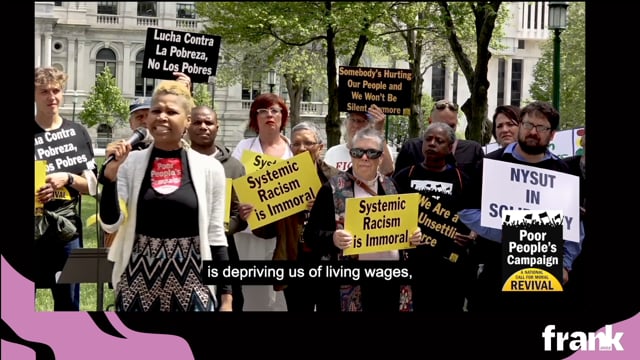 Moral Uprising with the Poor People’s Campaign
 The Unintended Consequences of Emotional Appeal