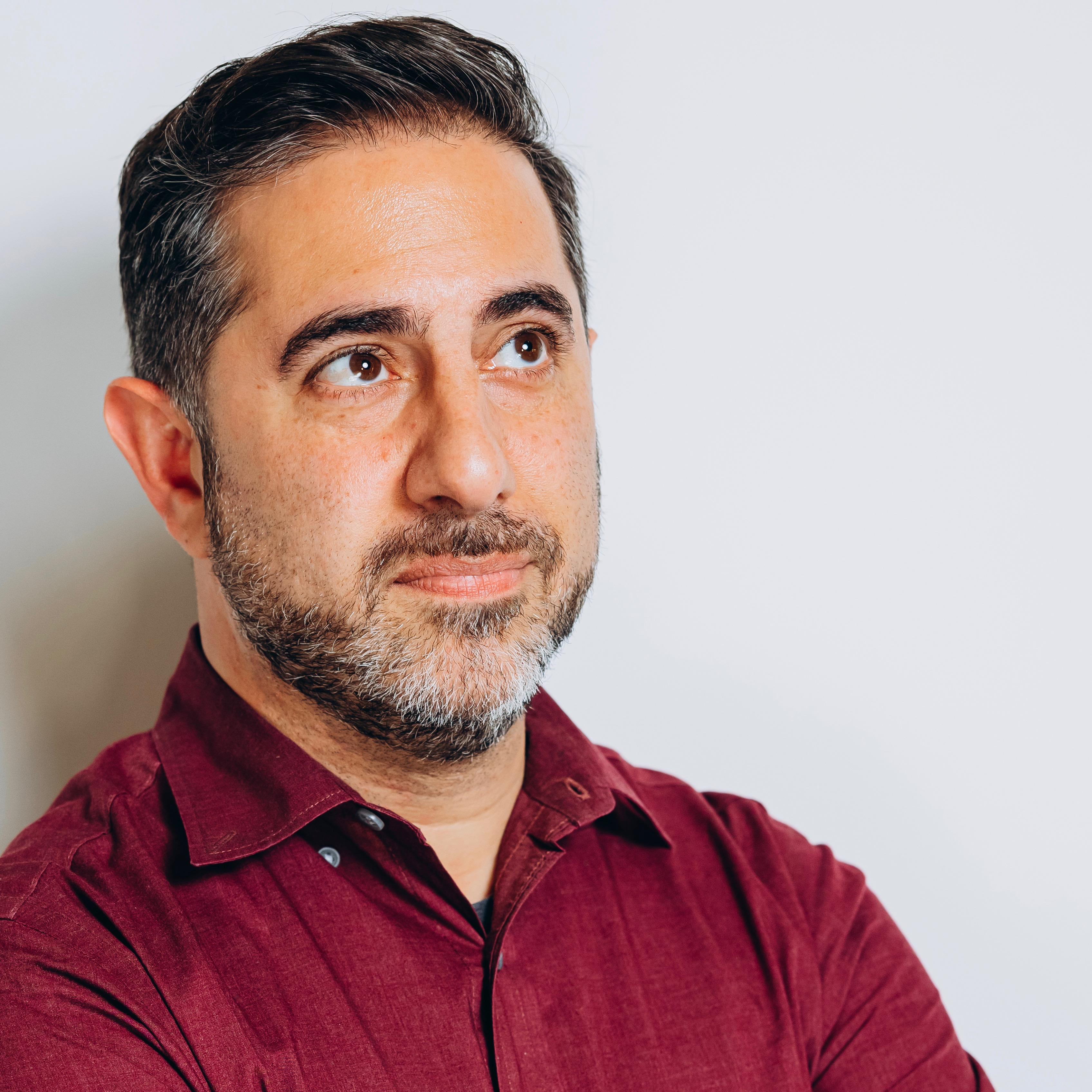
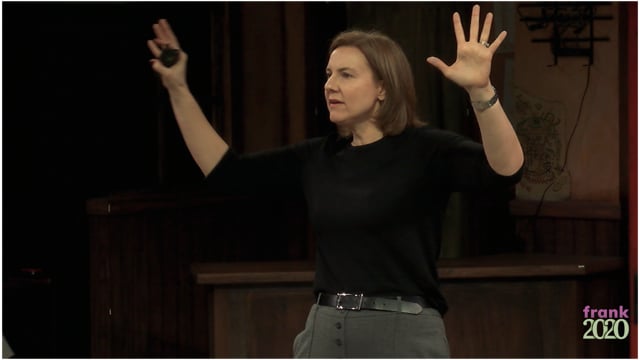
So I’m here to talk about building the next generation of strategic communicators across social justice, communication strategies. I’m not talking about staff and professionals. I’m talking about strategists who come from movements and move us all forward. But before I talk about next generation, I have to talk about the people who have come before. So one of my favorite places in the world, if space is our theme, is a dance party, a really good dance party. And my twin brother, Vivian Forevermore, you can clap because she’s gorgeous. [? Applause. ?] My twin brother Vivian Forevermore teaches me that a good dance party is not about just scamming in that cutie across the room, or your latest and greatest outfit, or the really cheap well drinks. A good dance party out there on the floor with that bass and that flashing lights, you can find freedom. You can find freedom for a song. And you can find freedom for the whole night sometimes, until you and your friends stumble out of the club into the dawn. And my brother teaches me that you can find freedom, depending on who you choose to dance with, and who chooses to dance with you. So there we go. So some of you may know Mervyn Marcano. Some of you may not, but you definitely know his work. So I was lucky enough to meet Mervyn on a phone call with a handful of comms nerds, trying to figure out how to support the amazing rebellion happening in Ferguson. Trying to figure out how to use our connections and expertise to help shift the media narrative towards one of freedom and justice and towards one of Black Lives Matter. And so Mervyn, drawing on his many years of experience, he went down to Ferguson. And he walked alongside people. And he slowly built relationships. And then for the next several years, he traveled the country supporting the movement for Black Lives. And what Mervyn teaches us about strategic communications, like all movement building, is that I can only travel at the speed of trust. And trust isn’t something that is taken. It’s not something that you can expect. Trust is something that you have to earn and can only be given. Trust is both the destination and the path that we take to get there. So back when I was a baby activist before the internet, and the photocopy machine and the fax machine was all I needed to do communications work, I met Nisha. And so Nisha and Non taught me the finer points of nonviolent direct action. And so for those of you who don’t know what that is, it means going limp when the cops grab you at a protest. It means wearing your message on your shirt. So when the photographers come, it gets in the paper because there were papers back then. Oh. Papers. Right. But Nisha taught me something else that’s really, really important. She taught me about righteousness. So being a white guy, I’m super familiar with self-righteousness. Right? That deep, unfounded belief that no matter what I say, in any moment, it is correct. But Nisha’s righteousness requires something very different from us. It requires vulnerability and moral action. And it is within taking that moral action that you will make real risks and take real risky actions. And you will make real mistakes. But when we’re focused on the vulnerability of righteousness, those mistakes allow us to learn and continue to be righteous as we move forward. When I was 25, I moved from New York to Miami. And I was a skinny white boy punk rock bike messenger tattooed kid. And I went to the Miami Worker Center. And I walked into the room the first day of the internship, the luncheon. And I was surrounded by these church leaders and these labor organizers and these teachers and these nurses. And these true visionaries of what the world would be like if we all had freedom and justice and safety. And they were all black women. And I walked in there and I felt like I was trespassing. And I felt very self-conscious of who I was walking into that space. And up to walk, Miss Mary Alice Wadley from Why Not Mississippi. And she said, can you go get me a cup of coffee? And I was like, yep. And I ran to the kitchen. And I grabbed two mugs. And that started a summer’s long conversation with Miss Mary Wadley. And we talked about her beautiful children and her inspiring grandchildren. And we talked about her being the first union shop steward in the state of Florida when SEIU started organizing here. We talked about what it was like growing up in Why Not Mississippi. We talked about my family, my dad’s trip from Ireland to the US, what that meant for us. And we built a relationship. And when it came time at the end of the summer to figure out, am I going to go back to New York and stay in New York? Am I going to stay here? It’s Miss Wadley who got me to stay in Miami and follow her lead for the next seven years. And what I learned from Miss Wadley is that we can build relationship across difference. But to be really clear and to honor Miss Wadley’s memory and who she was as a leader, we’re not talking about some kumbaya, color blind. We are all one kind of bullshit relationship. We’re talking about a relationship built on deep care and love and trust that could also hold the complexities of power and privilege while we aligned ourselves around shared values for the world that we wanted. So I have to talk about these people when I come up here on this stage. It would be easy to think I’m just validating myself. But I have to talk about them because if we’re going to talk about the next generation, we have to lift up the generation that’s come before. And when we’re talking about communications or narrative change or cultural change, oftentimes the people that we think of don’t look like the people that I just talked about, nor do they come from where these people come from. And so this brought me to where I am today. I lead the reframe program organization. One of the things we do, along with others, is we build the next generation of strategic communicators across social justice. It’s this generation we believe will unfurl narratives, like beats from a turntable, that will get us all up and dancing towards freedom. And at reframe, we believe that this next generation, we actually have a moral imperative and a strategic imperative that this next generation is smart black women. You can clap for that. Yes. Yes. Yes. Right? We believe that this next generation must have fierce, queer Latinos. It must have creative, working class black men. Right? It will have smart white women. It will have inspiring Filipinas. It’ll have powerful trans people. And it will include some white folks. But they will all white men. And it will all be aligned around a vision of the world where the slamming of prison doors is ash on our tongue. Right? Right? Where sexual abuse and sexual assault is a horrid memory of a time’s past when power was all wrong. And where the cracking of the earth for oil is a bodily nightmare that would wake adults from sleep. OK? And so at reframe, we bring together amazing and inspiring grassroots strategists and communicators and narrative shifts people like Abril from Lucha, who’s here in this room. You can clap for her. Yeah. Yeah. Yeah. Yeah. Yeah. Yeah. Yeah. Yeah. Yeah. Yeah. Yeah. Like Nayila from Dream Defenders, also here today. Yeah. Yeah. Yeah. Yeah. Yeah. Like Jacob from Narrative Initiative, give it up. And like Bula from Power. And so we bring them together to build authentic vulnerable powerful relationships so they can walk alongside each other and collaboratively write those songs that that will get us up and dancing towards freedom. And then we come to places like this. I meet more folks and try and get you all to write those songs with us. Seth had mentioned something that’s pretty obvious. I’m the white guy on stage. I’m talking about race and gender in the next generation. And it’s uncomfortable for me. And it’s uncomfortable for me because my advice, typically to white dudes and other people with relative power and privilege, is to sit down and shut up for a very long time. And my advice to white dudes is not out of a hatred for white dudes. It’s not because I want us to disappear, but what I do want to see is I want to see our collective unearned power and privilege that is extracted from the abuse and trauma of other people to disappear. And so I believe in a world of power with as opposed to a world of power over. And I think when white dudes will step back, they’ll discover that the podium is often better fashioned to dance for, that building trust requires listening and hearing, that righteousness requires vulnerability, and that relationships require accountability. And that when they step back, they may discover that the song that we all need to write is better when written with others, and most likely is better written by others. And when it’s time to play that song, my fellow white dudes, you might get a triangle. And my advice to you is revel in the glory of being a small part of that song. So before I close, I have to talk about one more person. Jen Soriano is the co-founder of Reframe, but she is also an amazing artist. She sings heart-rending songs. She writes essays that make lateral leaps between biology and spirit and psychology and art. And she is a mother to a really awesome little kid. And so when we started Reframe, Jen said to me, Joseph, you’re the white guy. Play your role. Put on a tie, walk into the glass-fronted foundation buildings in New York City, and raise the money for the next generation of strategic communicators that we want to build, and raise the resources so they can continue to do that inspiring work. But Jen also teaches us something else from her life. Jen teaches us that you can’t just play one role. You can’t play the role that is only meted out to you by your power and privilege. You can’t play the role that is only meted out by oppression. You actually have to lean into your strengths and your righteousness. You might get a triangle. You might get a tuba. Maybe you get some turntables or a trumpet, but you have to play many powerful roles. And so I’m here today asking you all to actually join us in building this next generation no matter where you are. Right? I want you all to go back home wherever you are doing this amazing work that you do. And I want you to lean way in to building trust, to being righteous, and taking risks and making mistakes, and to building authentic and accountable relationships so that you will be someone else’s lineage of that next generation. And if you take that, then I invite you to actually dance with me. And we can find freedom in at least one song, if not all night. Thank you. [? Thank you. ?] Thank you. That was so awesome. Thank you.




 Seven Minutes In Heaven… With A Scientist
 Moral Uprising with the Poor People’s Campaign
 The Unintended Consequences of Emotional Appeal