
Fresh From the frank Stage
Standout talks from the most recent 2023 gathering, featuring bold voices, urgent truths and unforgettable moments.
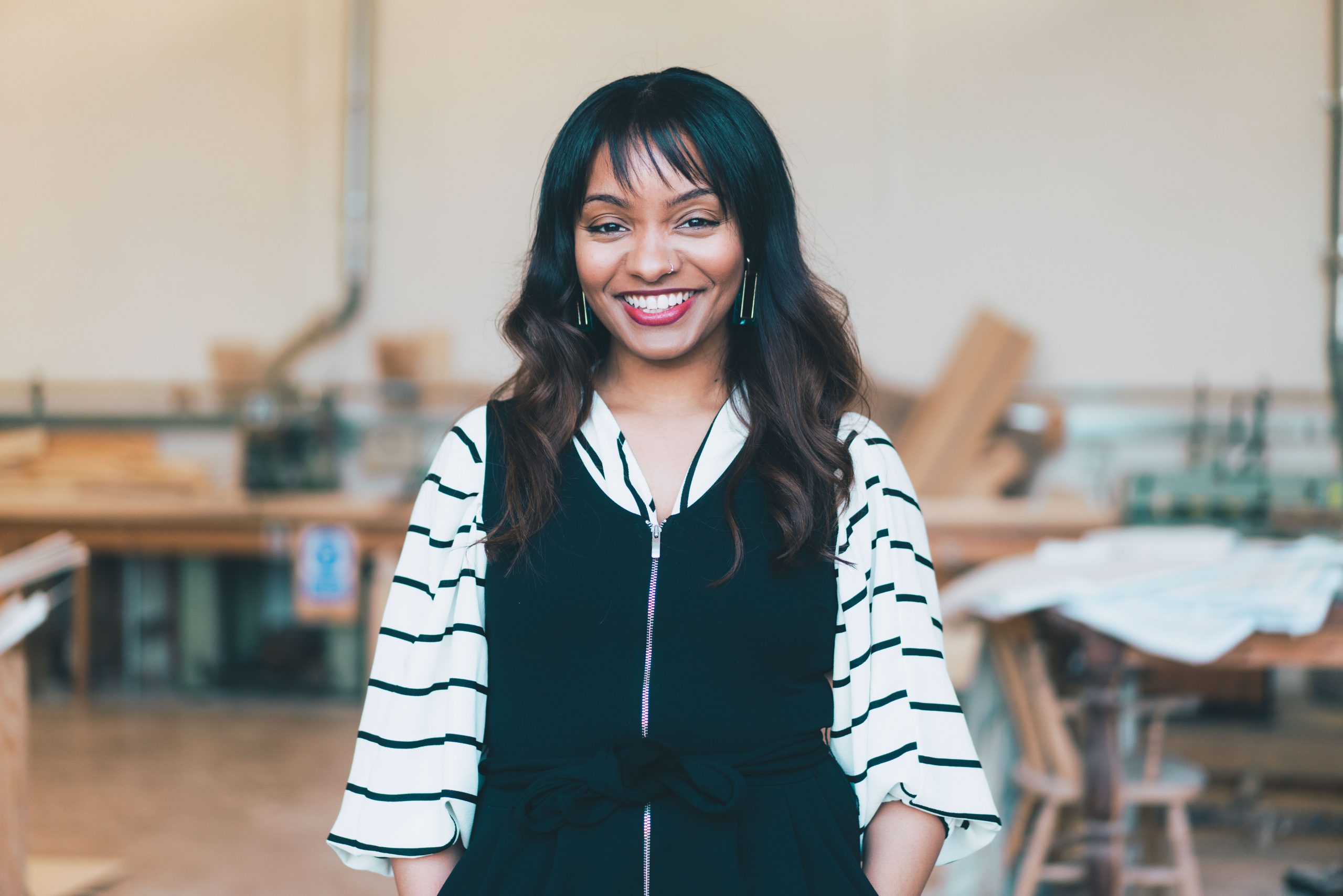
Amahra Spence
Liberation Rehearsal Notes from a Time Traveler

Shanelle Matthews
Narrative Power Today for an Abolitionist Future
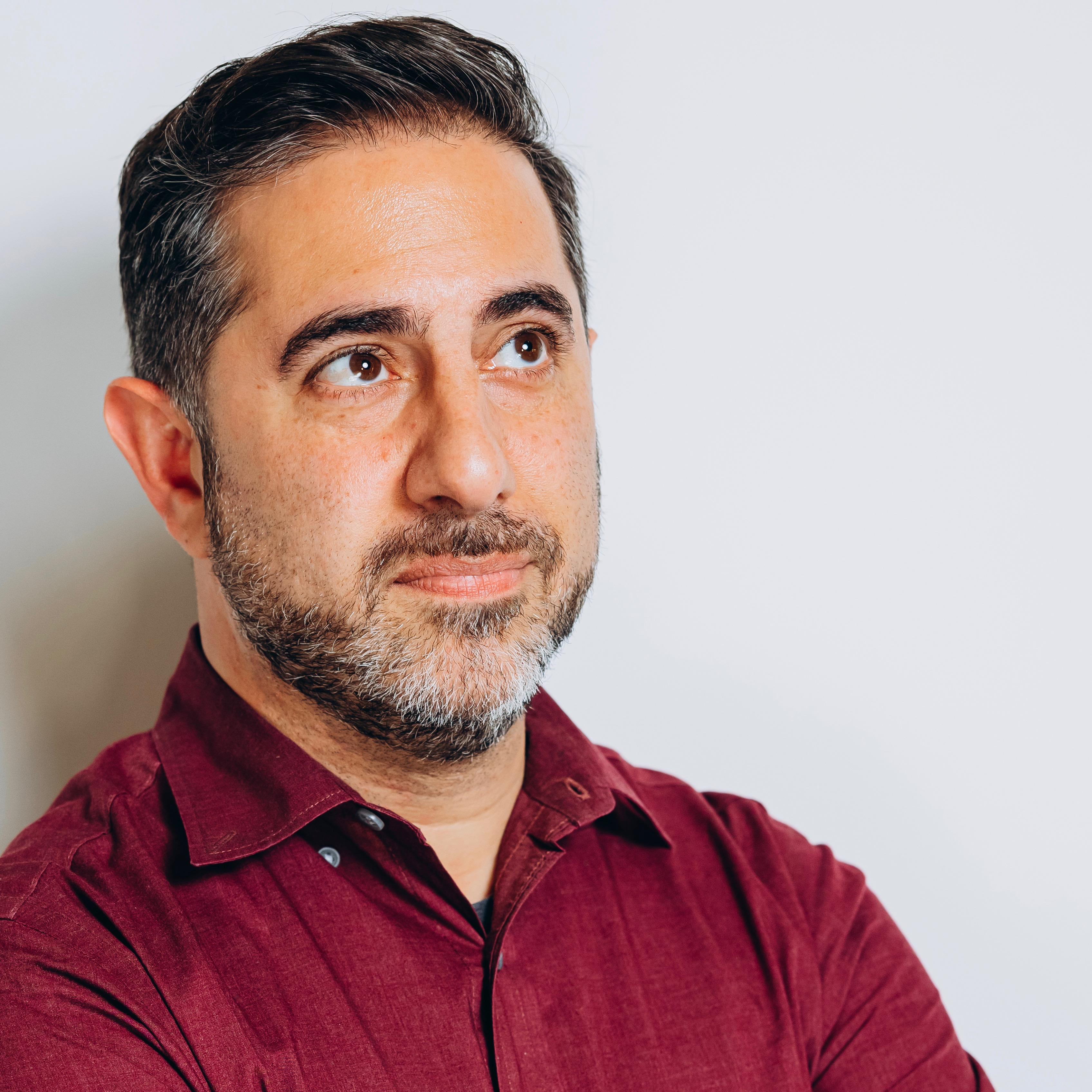
Nima Shirazi
Irresistible Forces, Immovable Objects
Why Detroit’s Story Matters
CommunicationsEducationProblem SolvingPublic ServiceStorytelling
Transcript
Alright, so I come from a city with a, depending on where your first impression in Detroit is, it’s either a very bad reputation or it’s not the whole story. When I was a kid, I would go out of town and by out of town I mean the suburbs of Detroit and people would ask me, do you own a gun? Does everybody in Detroit own a gun? When I was a freshman in college, the movie Eight Mile came out with Eminem, who’s seen it? And a lot of people saw that and thought that all of Detroit looked like, you know, where Eminem wrapped in rap battles and things like that. And so I’ve always sort of carried this kind of burden on me coming from Detroit and telling people, no I don’t have a gun, I’ve never been shot, I’ve never committed a crime and thousands of people in Detroit have the same story as me. So I begin with, it’s the green button, right? Oh, the big green button. There are two green buttons, okay. So I begin with a quote from our longtime mayor, Coman Young, he was the first black mayor in Detroit during a big wave of African Americans ruling larger cities. We must not let the doomsayers and the naysayers cause us to lose faith in our city and ourselves and each other. Without love and without hope, there can be no future for anyone. What he was sort of saying there was that no matter what point in time, people are always talking bad about Detroit and it’s always people outside of Detroit that have something to say about Detroit, but nobody knows Detroit better than Detroiters themselves. Some of the things you may have heard about Detroit is all of our negative problems, right? We have a high crime rate, great, we were the murder capital, we fight with DC over that title sometimes, our poverty, our unemployment, our illiteracy rate, the motor city, right? But we’re not really the motor city because we lost a lot of the car factories and we lost a lot of the automotive workers. We have a lot of blight. We are the poster child for a white flight in America. We are a city that’s 82% black, our suburbs are complete opposite, mostly white. But now we kind of have this new thing going on in Detroit right now that has cropped up in literally the last five years or so. We’ve got a lot of happy, mostly white millennials coming to save our city. Every time you look up, can urban farming save Detroit? Can arugula save Detroit? That was a literal headline a couple of years ago. It’s an artist’s paradise. You just come bring your paintbrush and your spray cans and do whatever the fuck you want in Detroit. The Q-line, if you’re not familiar with the Q-line, the Q-line is a trolley in Detroit that opened last summer and it goes exactly 3.3 square miles from the center of downtown to a northern part of downtown. The city is much larger than that, but everybody thinks it’s so great. So how I got to this place as becoming Chief Storyteller of Detroit, I wrote a book, How to Live in Detroit Without Being a Jackass. I was editor of a city mag in town and I was doing a lot of freelance writing, trying to explain Detroit from the perspective of someone like me. I grew up in Detroit. I never left Detroit. And yet I saw so many people coming to Detroit and trying to, it’s either people who are new to Detroit telling Detroit story or people who would drop in from other places and then leave and tell Detroit story, but you weren’t hearing a lot from people who actually lived here, especially people of color too. So I got noticed by the Mayor of Detroit. I’m proud to work for him. And he asked me if I would create a platform, a website and a cable channel. We have four cable channels to tell the stories about Detroiters. I come from a journalism background. And what I do is I built a team where we go out, photograph, take video and write about Detroiters. So what exactly we do is one, we’re trying to help our community learn more about each other. Detroit is 140 square miles. We are one of the biggest cities by land mass, but we are one of the smallest major cities by population. Yet still, we’ve got an east side of town. We got a west side of town. We got a southwest part. And all of these different communities don’t know about each other as much as they should. Our southwest part of Detroit is mostly Latino and Middle Eastern part. So they’re language barriers too. But even when I was growing up in Detroit, there’s a section of southwest Detroit called Mexican town. And it’s exactly that is where a lot of the Mexican American population lives. But you would only go there because it’s the more touristy part of town, but you wouldn’t go explore the rest of southwest Detroit. So what we’re trying to do is show people all of these different communities that exist in Detroit. We’re trying to create equity in news coverage. One of the biggest issues we’ve had in Detroit, and not just Detroit, but every major city has been touched on in some of the other talks, is that our newsrooms in Detroit are declining. We’re seeing fewer and fewer journalists that have the capacity to cover a city as big and diverse in Detroit. We also have some diversity issues in our newsrooms. It is hard for a person of color who has grown up in Detroit to get a job in a Detroit newsroom. The old thing was, you know, leave Detroit, do your time in a couple of other cities smaller than Detroit because we are a major news market, and then come back. But the opportunities are getting smaller because there are fewer opportunities to get into those newsrooms. And it makes it that much harder for people of color. So what happens is a lot of the coverage about Detroit tends to focus on what? Mostly white sometimes. Mostly suburban coverage. And so you’re losing out on a lot of different stories about our immigrant communities, our LGBT communities, our Muslim communities. We, you know, typically in the past, we check in on the Muslim community around Ramadan. We check in around the LGBT community around Pride Month, you know, and we never talk to them again. So, and the other thing we’re trying to do is flourish the city’s narrative, not control the city’s narrative. So I work for the government. I do news for the government. And put news and government together, what do you get? Propaganda, right? So when I took this job, it was very new to a lot of people. And of course I took this job after our presidential election and the P word was at the top of people’s minds. And people are just like, oh, you’re just trying to spin the Detroit story. You know, you’re just trying to conceal what’s really going on in Detroit. And I’m like, no, no, no, no, no, no. I cannot change personally a lot of things going on in Detroit. Our crime problem, I leave that to our police department. Our unemployment problem, I leave that to our workforce development department. What I try to do is try to fill in some of our news coverage gaps so that we learn more about each other’s community. So we have a website, the neighborhoods.org. In Detroit, the common question is, I see a lot of things going on downtown, but what’s going on in the neighborhoods, I wanted this to be the answer to that question. And so we write. We write stories about people in Detroit. None of these people have a platform. Back home, our local billionaire, Dan Gilbert, he’s the owner of the Cleveland Cavaliers, literally since the time I landed here in Florida. And now he’s bought two more buildings downtown. So literally the Comerica building and the old police headquarters announced today. But people like our Dan Gilbert, our Mike Illiches, our Maroons, our typically white, male, wealthy entrepreneurs in Detroit, get the glut of media coverage. I’m looking for the people that don’t have a platform. And I want to put them on that same platform. So the woman to the left, her name is Roxanne. She works in the front desk at one of the new apartment buildings. She bought a house in Brightmore. And Brightmore is a neighborhood that growing up in Detroit has such a negative reputation. It still does. But people are buying houses there. People are renovating that neighborhood over there. And she was in a situation with her boyfriend where she was abused. After we wrote about her story, after she talked about how she renovated this house her own after watching a bunch of YouTube videos, she got invited to speak at women’s conferences. She started doing a lot of talks around town. And this is, like I said, we found her. We found a young gay couple that moved from the suburbs to Rosedale Park because we wanted to show, like I said, I didn’t want to just focus on gay people during Pride Month. I wanted people year round. We’re in the South. I feel like we all know what chitolings are. But this business makes $100,000 a year of selling chitolings online. And people don’t know that. So we decided to talk about that. We also want to talk about some of the things that the city is doing outside of downtown. So a lot of the narrative downtown is kind of fueled by your Dan Gilbert’s and my villages and things like that. But talking about our grant making program or talking about some of the development going on in the neighborhoods or how to get people jobs, pointing people in the right direction as far as here is what the city is doing for you. But most importantly, I just want to show the people I grew up with, the people I see every day in the neighborhood I live in, the people in their marching band, these kids at the roller rink. These are all screenshots from one of the videos that we’ve done. And I hired some really good videographers too. They have documentary making backgrounds. And we’re sort of redefining what public access television is too. So we’re not just doing city council meetings and things like that anymore. We’re trying to take public access to the next level with this as well. Showing some of our Muslim communities, showing that some of our immigrant communities, our urban farming communities, all with the goal of getting people to learn more about Detroit right now. So we believe now is the time for you to let go of some of those preconceived notions about Detroit. To give Detroit a second chance, again, people just kind of have their own idea of what Detroit is. But like I said, you have to actually get to know Detroit on a more molecular level so that you can really understand it. To learn more, and last but not least, respecting who’s already there. Detroit is 680,000 people who never left the city. Mostly people of color, mostly people who may be marginalized to some degree. Here stories matter just as much as anybody else’s. And we need to start listing more to them. And we don’t want to miss out. Everybody has a story, and I don’t want to miss out on any of those stories. So now’s the time to learn more about Detroit, and now’s the time to make Detroit’s story heard. Thank you. Thank you.