Only 60 seconds in it for subpoem. He can’t refuse it. Didn’t seek it. Didn’t choose it, but it’s up to me to use it. I must suffer if I lose it. Give a count if I am using it just a tiny little minute. But eternity is in it. This poem is by Dr. Benjamin E. Maze, a minister, educator, scholar and social activist during the civil rights movement. The poem, my pace, my breath, speak to the urgency I feel when it comes to understanding factors that impact health, ranging from knowledge and beliefs to relationships and community to institutions and policies. Today I’ll share who I am, how it manifests in my life and work, and hopes for the future. Who I am starts with my history. I am Jimmy B. and Simone’s daughter, Jelana. My paternal grandfather, Clifford, was born around 1904. He was a jazz musician, a Georgian pig farmer, and I’d say a cowboy. He always wore a cowboy hat and boots, as did my father, and so do I. I love my cowboy boots. My maternal grandmother, Jojean, was born in 1927 in North Carolina. She was a college graduate and businesswoman. Today I am a proud daughter and sibling of accomplished scientists, respected healthcare providers, and beloved university professors. In my history, I see loving images of my parents, my twin brother, and two older siblings. I’m here because of my family and being connected to and my love for Black people and culture. It’s given me confidence, strength, community, perspective. I’m also here because of what W.E.B. Du Bois coined as the double consciousness, which has kept me safe navigating the world as a Black person. As a behavior scientist and educator, I tell my students that food says a lot about a person, where they’re from, their culture and religion. Like my mom’s mac and cheese, it’s tied to family traditions and my culture and being Southern. It’s nostalgic, but let’s be clear. This isn’t Velveeta shells and cheese, and it’s absolutely no breadcrumbs or rice crisps. This is Southern Mac with about six ingredients and a whole lot of love. Sharp cheddar cheese, butter, milk, eggs, macaroni noodles, and a dash of salt. Seemingly basic, it significantly impacted my life. So listen. In the South, you know the day of the week by the smell emanating from the kitchen. Red beans and rice on Monday, fried fish on Fridays, and mac and cheese on Sunday, accompanied with at least 10 other dishes and a dozen people, not in my family. At age eight, I began to see the relationships between food and health. Too young to convey, I had to figure it out. In college, my family questioned my taking the Atlanta neighborhoods course. Dr. LaFever drove us around in a 12 passenger van. I learned the history of Atlanta’s oldest Black communities and went to my first neighborhood meeting. Each month, I witnessed the power of community, social cohesion, collaboration, and collective decision making to enact change. My mind was blown and I continued to be thankful for Spelman College. Life-long exposure to STEM, questions about food and health, and Atlanta neighborhoods gave me a high level of awareness, which motivates me to ensure improved, equitable, accessible, just and anti-racist population health, and facilitate early exposure to STEM for Black and Brown people. I was a postdoc at Stanford and Dr. Abbey King’s lab, where we created the Our Voice methodology. We did individual neighborhood walks with residents. They used our Discovery Tool mobile app to capture geocoded photos and record audio narratives of features that promoted or hindered their health. Citizen scientists were trained in advocacy skills, prioritized the data, and presented salient issues to the community and local decision makers. Together they identified feasible solutions. Further research led to rerouting city buses to increase food access, planting shade trees and blighted communities, and installing speed traps and painting curbs on busy roads for progesterions. Because we listened to the community. We listened about their lived experiences. Our Voice empowers and it illuminates the intersectionality of societal issues. Still using this method, years later, food access in New Orleans was impacted by transportation, crime, social norms, along with lasting effects and traumas from Hurricane Katrina that still persist 20 years later. Audre Lorde’s 1992 quote still rings true. There is no such thing as a single issue struggle because we do not live single issue lives. Diverse voices and perspectives should not only be at the table but heard and valued. I am often the only one there. But there’s a kicker. We’re not a monolith. Being black doesn’t mean that I or others relate to every black experience, issue or lived a hard knock life. But the trauma of racism, discrimination, bias, microaggressions, racial profiling, and the fact that we can’t just be, that is what binds us. Advocates for social change must understand the realness of positionality, power and privilege, and work collaboratively to address systemic racism. It cuts across all social determinants of health. Social relationships are built at the speed of community’s trust. When with communities, I practice humility. I’m open to learning, adapting, approachable, not dressed formally and avoid all jargon. I work and consult across sectors as I simultaneously teach undergraduate and graduate students. I literally don’t have time to teach but I am an engaged professor. Regardless of the course, I apply cultural equity and anti-racist lens. And while I’m drained from speaking on topics where I’ve experienced trauma, someone has to. Forstapomi can’t refuse it, didn’t seek it, didn’t choose it, but it’s up to me to use it. My platform is used to challenge students to understand the power, dispel myths, understand context and value history. So that well-intended real-world efforts don’t do more harm than good. As a civic science fellow at the Aspen Institute, I co-designed and manage our future as science. With James to build curiosity about and passion for and competence in STEM for young people of underrepresented identities, we link STEM and social justice to make it relevant to lived experiences. The late rapper and poet Tupac Shakur said, I’m not saying I’m going to change the world but I guarantee that I will spark the brain that will change the world. There’s more to say but I have only just a minute, only 60 seconds in it. My final calls to action are to self-reflect and check your assumptions, biases and single story narratives. Listen to community to uncover, understand and create solutions to root causes. Don’t retreat into a convenient bubble when tasked with stretching your thinking around race, your power and privilege. Be vulnerable, experience discomfort and jump right back in. And finally, be a changemaker and disrupt the status quo. Thank you.



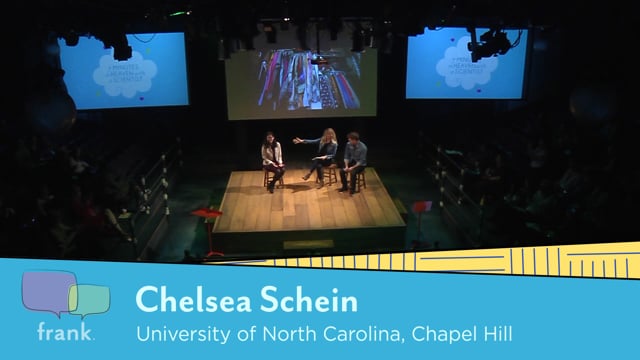 Seven Minutes In Heaven… With A Scientist
 Moral Uprising with the Poor People’s Campaign
 The Unintended Consequences of Emotional Appeal